Elon Musk testifies in San Francisco trial over $44 billion Twitter takeover
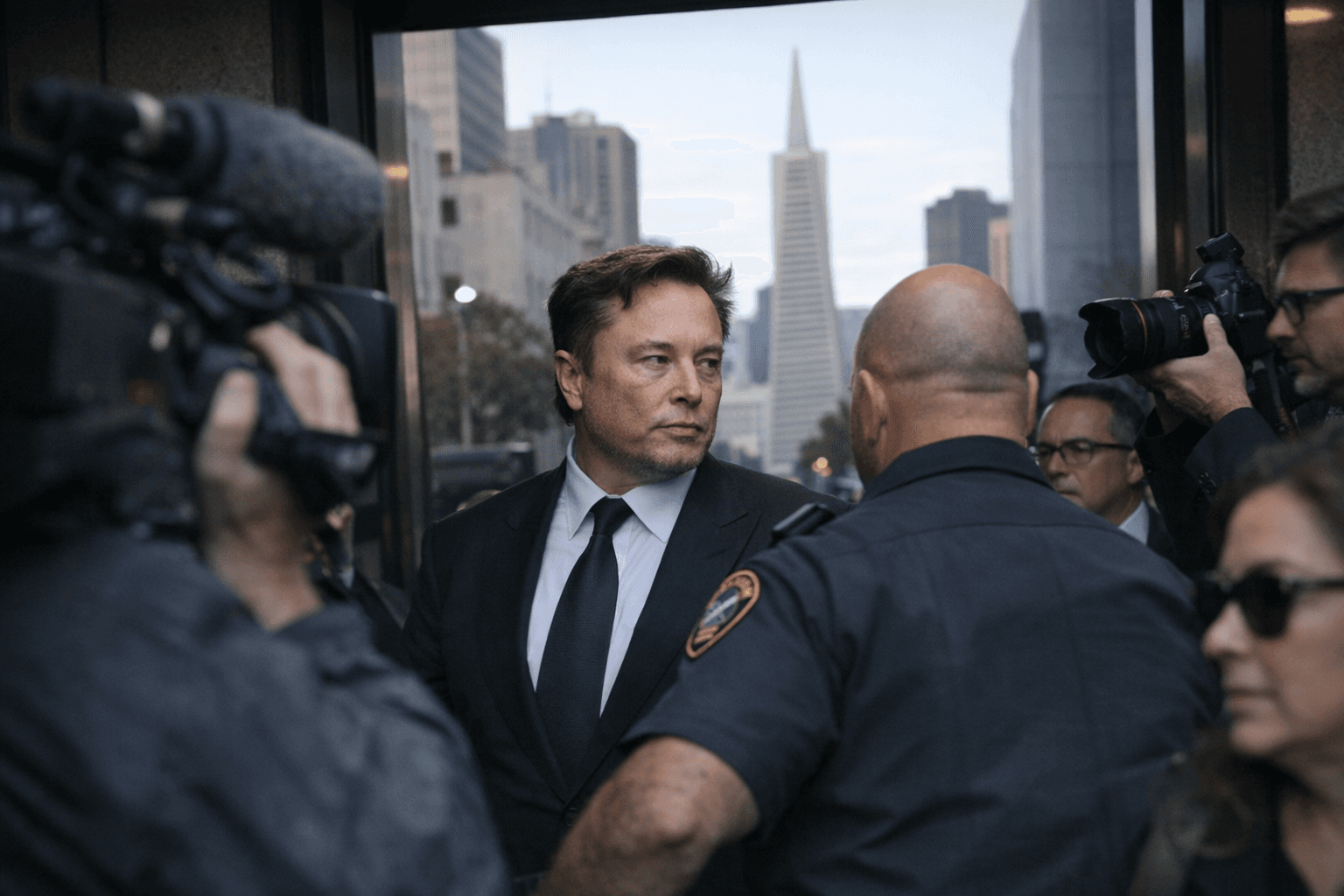
Musk took the witness stand March 4, 2026 in federal court as former Twitter shareholders claim his statements depressed stock before his $44 billion 2022 acquisition.

Elon Musk took the witness stand March 4, 2026 in federal court in San Francisco as former Twitter shareholders pressed claims that his public statements deliberately depressed Twitter’s stock ahead of his $44 billion purchase in October 2022. The plaintiffs, who sold shares between May 13 and Oct. 4, 2022, allege in an October 2022 complaint that Musk’s statements “were carefully calculated to drive down the price of Twitter stock” and that those actions violated federal securities laws.
The case is being heard in the U.S. District Court for the Northern District of California and centers on the narrow window of sales that preceded the finalization of Musk’s acquisition. Early reports said Musk was expected to take the stand on March 3; later accounts and courtroom updates show he did testify the following day. Court filings name the class of former holders by the sale dates, but the plaintiffs’ attorneys and the specific statements alleged to have caused the decline have not been disclosed in the material available so far.
At issue for the court will be whether social-media statements by a prospective buyer can be treated as misleading communications under securities law when they coincide with public trading in the target company. The plaintiffs seek to recover losses tied to the period they sold shares and argue those losses were the direct consequence of what they describe as calculated public comments. The litigation tests how traditional securities doctrines apply in a market where executives and potential acquirers routinely communicate with millions of followers online.
The lawsuit builds on a pattern of litigation involving Musk’s social-media activity. In a separate 2018 case related to his tweets about taking Tesla private at $420 per share, Musk spent about eight hours on the witness stand in San Francisco and faced a nine-member jury that ultimately absolved him of wrongdoing. During that earlier testimony, Musk defended his use of Twitter as “the most democratic way” to distribute information and said, “I think you can absolutely be truthful (on Twitter),” adding, “But can you be comprehensive? Of course not.” Those exchanges are being cited in the current trial as contextual background rather than evidence of the present allegations.
Legal experts and market watchers say the trial could have broader policy implications for enforcement and corporate governance. A ruling that expands liability for statements made outside traditional filings could prompt companies and executives to tighten disclosure practices and alter how potential acquirers communicate during negotiations. Conversely, limits on liability would leave regulators and private litigants with fewer tools to police reputation-driven price moves that occur on open platforms.
The record in the current trial remains incomplete in public reporting. The complaint filed in October 2022 frames the plaintiffs’ claims and the exact tweets or statements they allege were false or misleading, and trial transcripts and exhibits could reveal whether internal communications or contemporaneous market data corroborate the plaintiffs’ theory. For investors and corporate managers, the case underscores an enduring tension: rapid, public communications can move markets, but the legal standards that attach liability remain rooted in precedent crafted before social media reshaped information flows.
This article was produced by Prism’s automated news system from verified source data, official records, and press releases, then run through automated quality and moderation checks before publishing. The system is built and supervised by the people who set the standards it runs under. Read our full AI policy.
Did this article answer your question?