Elon Musk Unveils $25 Billion Terafab Chip Factory to Power a Galactic Civilization
Musk announced a joint Tesla-SpaceX-xAI chip fab in Austin costing up to $25 billion, targeting terawatt-scale computing for AI satellites and robots.
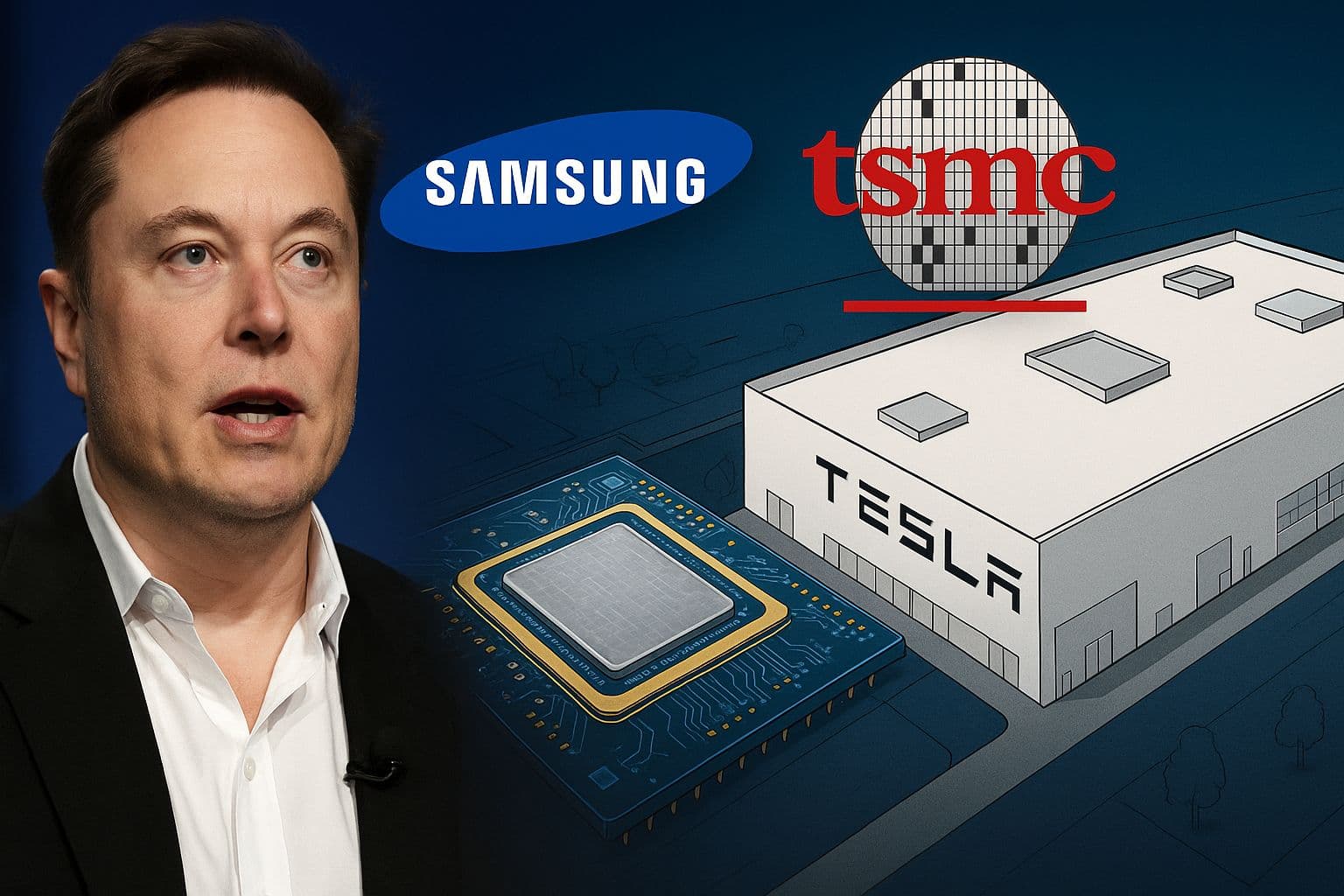
Standing inside Austin's defunct Seaholm Power Plant, Elon Musk called his newest venture "the most epic chip building exercise in history by far" and unveiled Terafab, a proposed $20 to $25 billion semiconductor fabrication facility that he says will supply chips for Tesla vehicles, Optimus humanoid robots, and a fleet of one million orbital AI satellites.
The announcement, made Friday night, positions Tesla, SpaceX and xAI as joint operators of what would be, if built to specification, the largest chip fabrication facility ever attempted. The ambition is staggering on paper: Musk described an initial target of 100,000 wafer starts per month, scaling eventually to one million, a figure that Electrek calculated would represent roughly 70 percent of TSMC's entire current global output from a single facility. Neither Tesla, SpaceX nor xAI has ever fabricated a chip.
Musk framed the project not as a business choice but as a necessity. "We either build the Terafab or we don't have the chips, and we need the chips, so we build the Terafab," he said. His argument: the global semiconductor industry is moving too slowly to supply what his companies need at the scale they require.
The facility's intended output is split along two tracks. An edge inference chip would power Tesla's Full Self-Driving software, the Cybercab robotaxi program and the Optimus robot line. A second, radiation-hardened variant is designed for SpaceX's orbital data-center satellites, which the company asked the Federal Communications Commission in January to authorize at a scale of one million spacecraft. Musk said 80 percent of Terafab's compute output would flow to space-based applications, with 20 percent directed at terrestrial use. At full scale, he projected the facility would support one terawatt of computing power annually in orbit and between 100 and 200 gigawatts per year on the ground.
The corporate structure behind Terafab has been reshaped in recent months. SpaceX acquired xAI in February, and Tesla made a separate $2 billion investment in xAI while integrating the Grok chatbot into its vehicles. Musk said he expects xAI to consume the vast majority of Terafab's chip output. Financing remains an open question: Tesla's CFO acknowledged the $20 to $25 billion cost estimate is not yet included in Tesla's 2026 capital expenditure plan, which already exceeds $20 billion. A separate report suggests SpaceX is expected to pursue a $50 billion IPO to help fund its broader ambitions, though no timeline or structure has been confirmed.
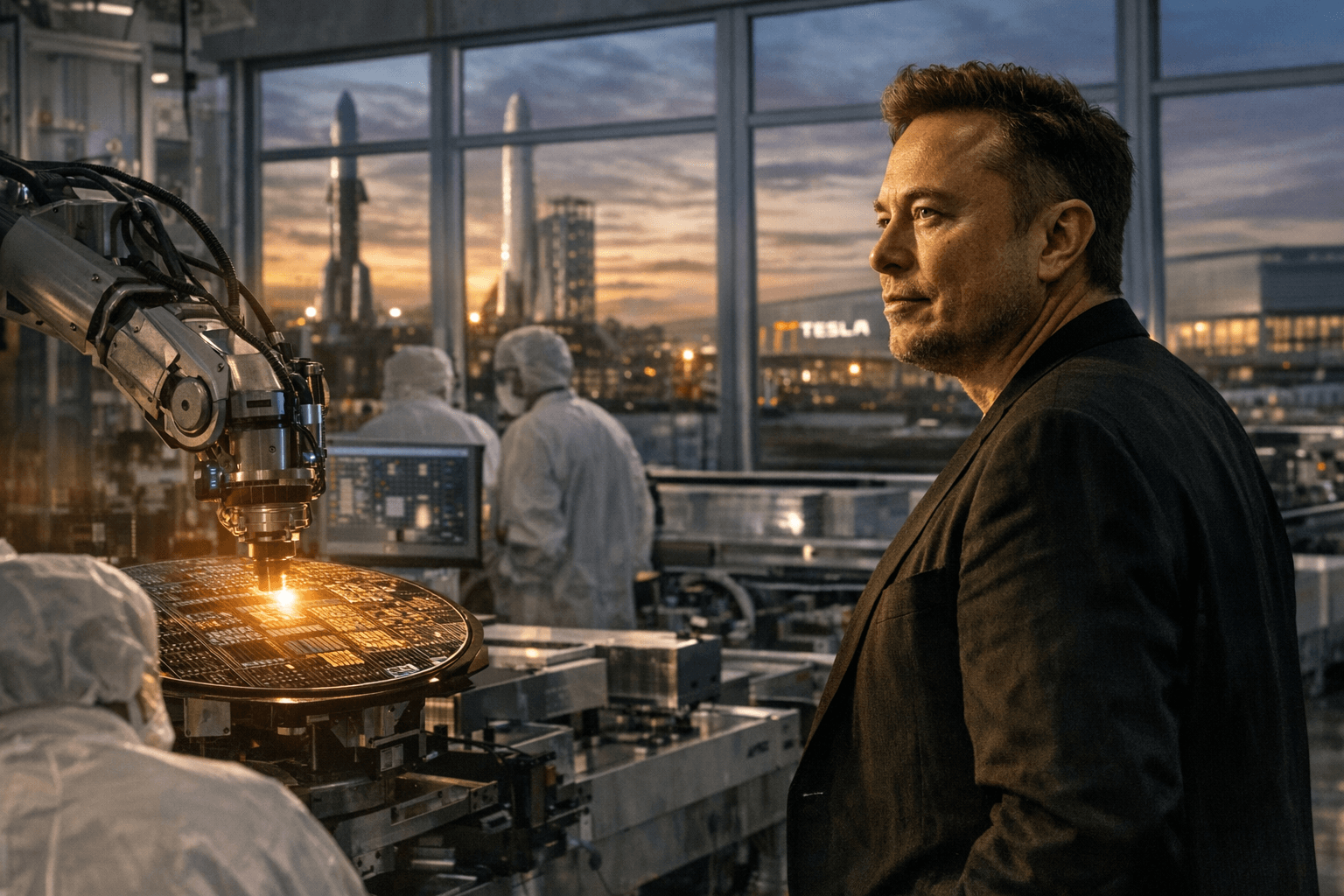
Musk added that millions of Optimus robots would help build and operate the facility itself, an assertion that stretches the current demonstrated capabilities of the robot line considerably. He offered no construction timeline, no groundbreaking date and no schedule for first silicon production.
The scale of the claims drew immediate skepticism. BusinessTimes noted Musk "has no background in semiconductor production and a history of overpromising on goals and timelines." Electrek, which first published detailed production figures from the presentation, described the project as potentially "reek[ing] of desperation," noting the companies are proposing to leapfrog an industry they have never participated in as manufacturers.
Musk closed the presentation with a broader vision that included animations of satellites launched from a lunar mass driver. "We're starting a galactic civilization," he told the crowd. Whether Terafab becomes the foundation of that civilization or joins the long list of Musk's delayed megaprojects will depend on financing, regulatory approvals and engineering execution that, for now, remain entirely unresolved.
This article was produced by Prism’s automated news system from verified source data, official records, and press releases, then run through automated quality and moderation checks before publishing. The system is built and supervised by the people who set the standards it runs under. Read our full AI policy.
Did this article answer your question?