Emerging London Fashion Week designers fuse sustainability, inclusivity and celebrity appeal
London grads and indie labels leaned into craft, inclusive sizing and celebrity dressing — think adiré beaded gowns for Lizzo and XXS–XXXXL ranges, hand-sewn tracksuits and shows staged like living rooms.

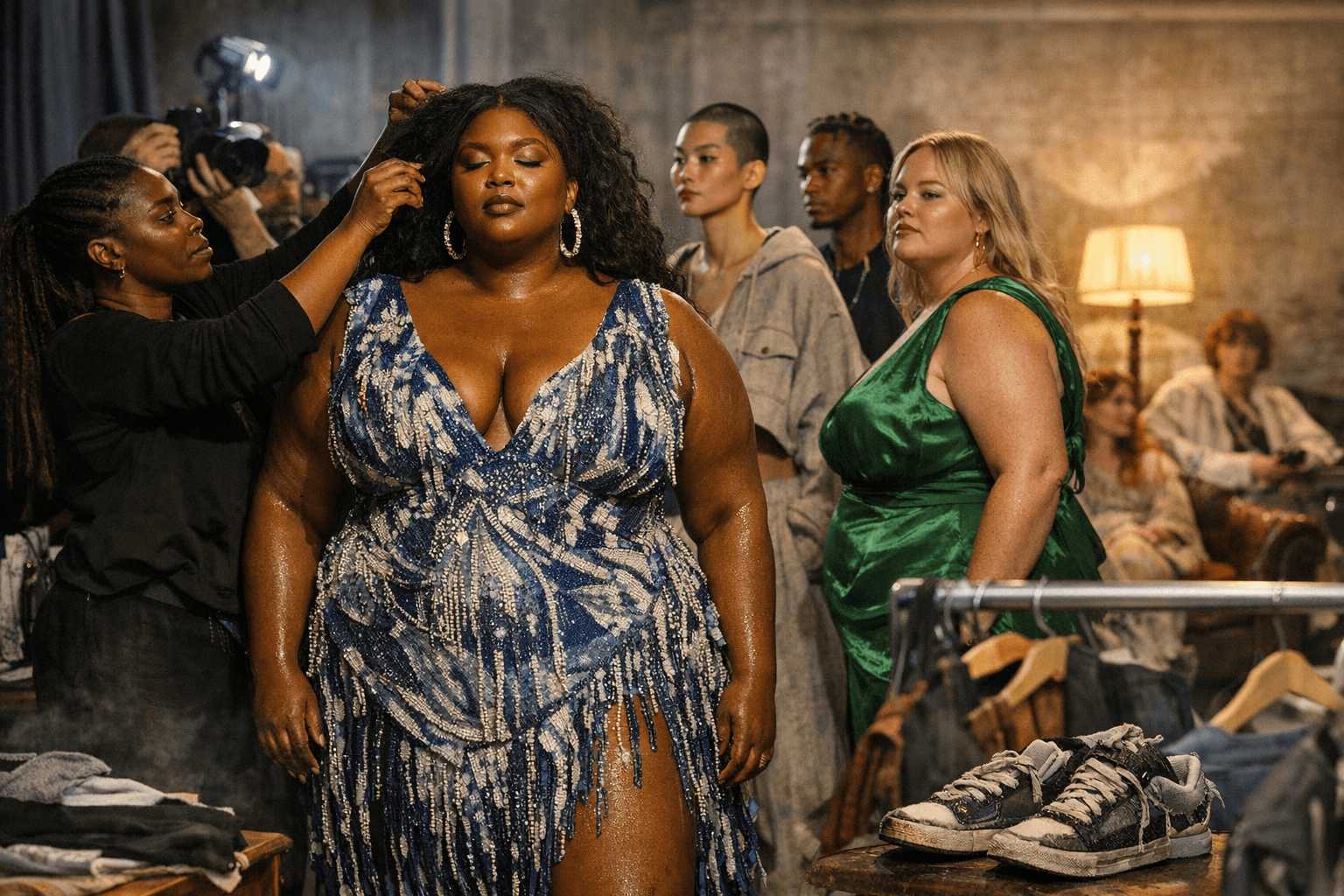
From the front row it looked like London finally stitched its contradictions together: Kanyinsola Onalaja’s adiré-dyed demi-couture gowns with handmade beading — the same pieces Jennifer Hudson and Lizzo have worn — shared the week with Kazna Asker’s hand-sewn tracksuits that splice Middle Eastern fabrics into British streetwear. The Observer put it bluntly: “From dressing A$AP Rocky and Lizzo to producing pieces in inclusive sizes, we meet the new London talent championing thoughtful design.” This feels deliberate - and necessary.
The city’s identity this season is rooted in the 2025 momentum TeenVogue flagged when it noted spring-summer 2025 marked London Fashion Week's 40th anniversary, and in a sustained incubator model that prizes school-to-runway speed. Ayerhsmagazine’s assessment that “It’s not about doing things bigger. It’s about doing things better.” framed how designers from Central Saint Martins and Istituto Marangoni are moving fast: “many of these students have gone on to show their collections within a year or two of graduating. That pipeline from classroom to catwalk is something few other cities can offer at this scale.”
Onalaja’s story embodies that pipeline and the market pull. Nigeria-born and trained on the London campus of Istituto Marangoni, she builds demi-couture around adiré resist-dye techniques and heavy beading while offering sizes from XXS to XXXXL. Her shortlisting for the British fashion council/Vogue Designer Fashion Fund 2026 places those craft-forward, size-inclusive pieces in the same conversation as commercial growth and editorial attention.
Kazna Asker brought the politics with her tailoring. A Central Saint Martins graduate who “became the first designer to present a Hijab collection at the 2022 MA Fashion show,” Asker also won the Debut Talent Prize at Fashion Trust Arabia in 2022 and is a British Fashion Council New Gen recipient. She grew up in Sheffield — a city noted for one of the UK’s biggest Yemeni communities — and her CV includes local activism: fighting for the rights of POC teachers at Sheffield town hall and co-organising fundraisers for Yemen and Palestine. Those commitments show up in clothes described in the Observer as merging traditional Middle Eastern fabrics with British youth-club culture.
Beyond the Observer roster, London’s commercial and retail signals are clear. Elitetraveler highlights Selasi, launched by Ronan Mckenzie in 2020; Talia Byre, the Talia Lipkin-Connor label born from a Central Saint Martins graduate and a tribute to Liverpool’s Lucinda Byre boutique; and Liberowe, founded by Talia Loubaton in 2021 and already stocked at Net-A-Porter, Harrods, and Bloomingdale’s. Us Fashionnetwork notes Joshua Ewusie, a 27-year-old British creator, is due to stage his second show with E.W.Usie, while Pauline Dujancourt cautioned that “maybe there's a bit more room for younger brands in London at the start.”
Institutional and digital forces are nudging this change. The British Fashion Council's NewGen initiative provides funding for emerging talent and is running in partnership with Pull&Bear this season, while Ayerhsmagazine forecasts that “The future of LFW will likely focus on deepening the industry’s relationship with sustainability, digital innovation, and inclusivity,” adding that “we might see more AI-influenced design, virtual garments, or even AR-based runway experiences.” For now, the headline is practical: craft, inclusivity and celebrity cachet are selling stories and stock — and London’s pipeline is built to keep them coming.
Know something we missed? Have a correction or additional information?
Submit a Tip