Emily Scarratt Calls for More Female Coaches After Landing Red Roses Role
England's record scorer Emily Scarratt has urged more women into coaching after landing her Red Roses role, as data shows just 14% of elite women's sport head coaches are female.
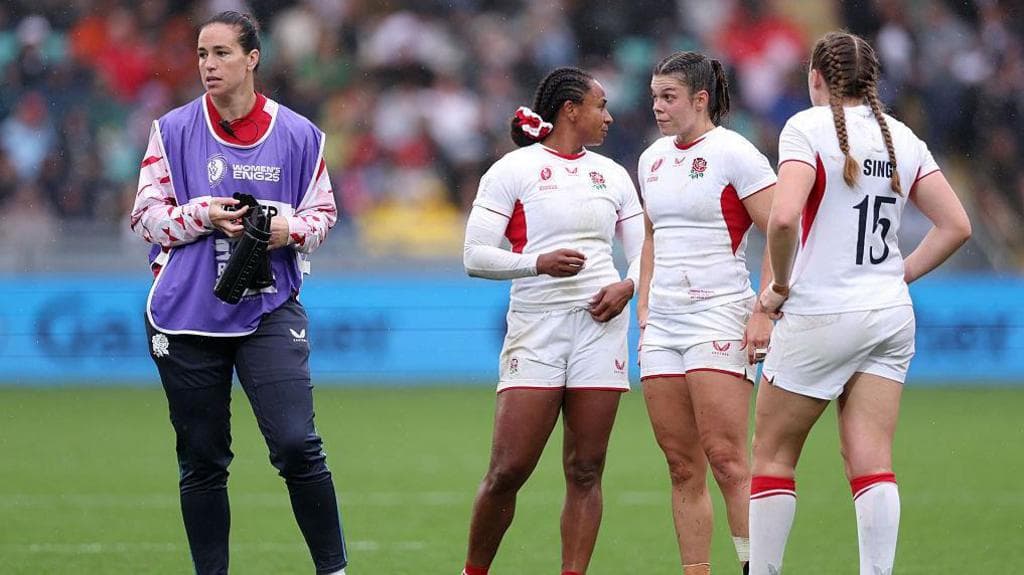
Emily Scarratt spent 119 Test caps being coached almost exclusively by men. Now, three months into her own coaching career with the Red Roses, she is using her platform to ask why the pipeline that produced her never looked more like her.
Scarratt was appointed England's lead attack and backs coach for the 2026 Guinness Women's Six Nations in January, roughly three months after retiring from playing following England's 2025 Women's Rugby World Cup triumph on home soil. The appointment made her one of the most decorated athletes in the sport to move directly into elite coaching: she left the game as England's all-time record points-scorer with 754 points across 119 caps, an 11-time Women's Six Nations champion, and a two-time World Cup winner.
But the statistic that frames her appointment most sharply is not in her playing record. All six head coaches competing in the 2026 Women's Six Nations, including England's John Mitchell, are men. In the National Women's Soccer League, just two of 14 head coaches, 14 percent, are women. The pattern is consistent across elite women's sport on both sides of the Atlantic.
Prior to Title IX, over 90 percent of women's collegiate sports teams in the United States were coached by women. Today, more than 50 years later, that number has fallen to 41 percent across all three NCAA Divisions, with only 7 percent of those coaches being women of color. The expansion of women's sport, paradoxically, drew more men into coaching roles as salaries rose and prestige grew, while structural support for women entering the profession lagged.
A national report from USTA Coaching and the Tucker Center for Research on Girls and Women in Sport, published in March 2026, found that insufficient pay and workplace conditions are the primary drivers of women's attrition in collegiate coaching. The report outlines an evidence-informed framework for change, including leadership accountability, compensation transparency, inclusive access to professional networks, sustainable work expectations, and modern facility standards. Its central finding is blunt: "Recruitment without retention is not progress."
Licensing and mentorship gaps compound the pay issue. The pathway to elite coaching typically runs through assistant roles at club level, access to senior coaching certifications, and proximity to established coaches who can advocate for advancement. Scarratt's own route illustrates how deliberate that journey must be: she completed her RFU Level 3 coaching qualification while still playing, began coaching Loughborough University's men's BUCS 2 side, progressed to the women's BUCS squad, and then moved into a specialist backs role at Premiership Women's Rugby club Loughborough Lightning before her Test appointment. Few players with her profile have invested that methodically in qualifications before the whistle blows on their playing career.
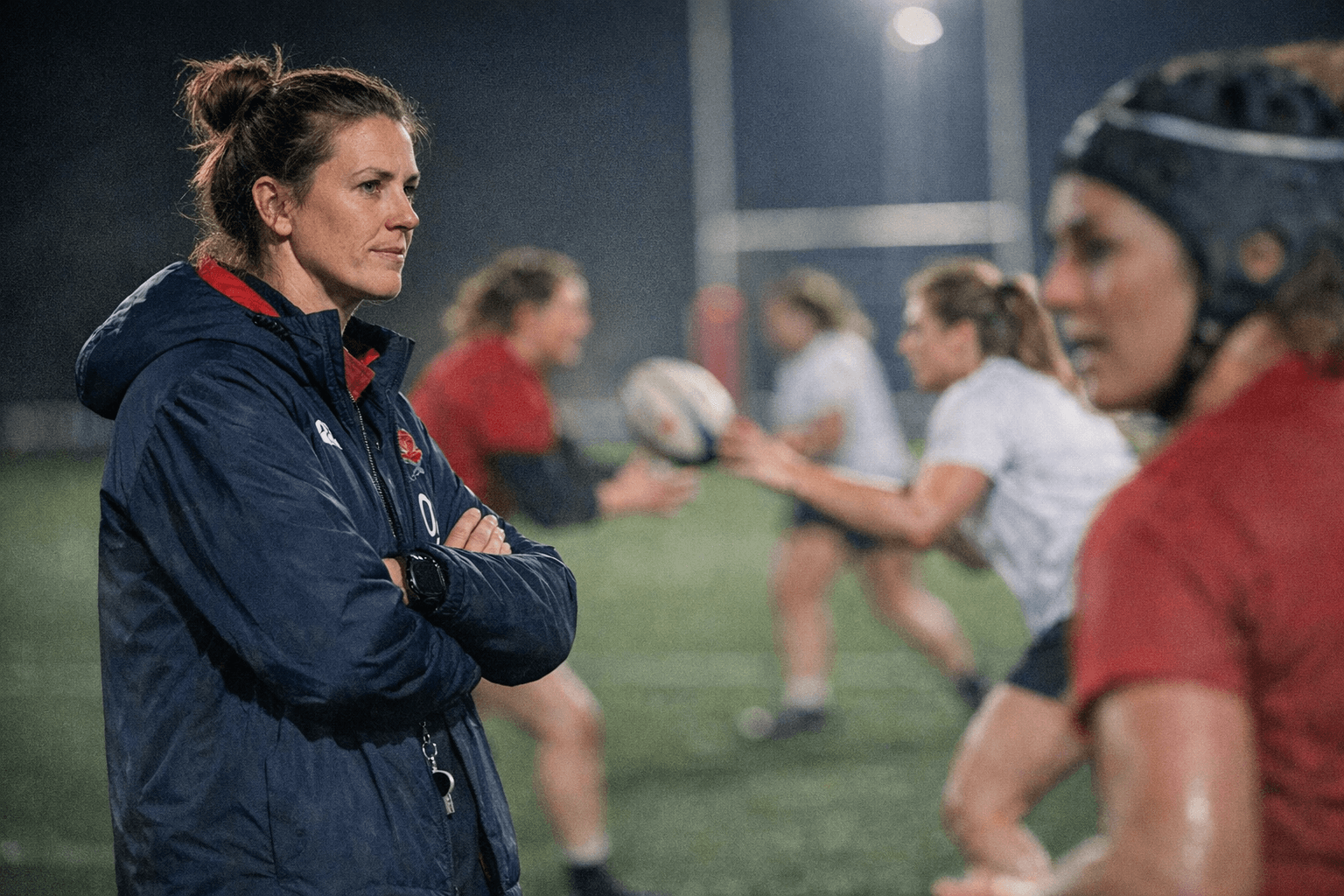
Research in sport coaching confirms that as women advance in their careers, the institutional support provided by sport organisations often diminishes, creating additional barriers to career progression and limiting access to the networks critical for reaching higher-level positions.
Scarratt has spoken directly to the cultural dimension of the problem: playing her entire career without a single female rugby role model. "People ask me, 'Oh, who was your role model when you were growing up?' And I can't name a single female rugby player," she said. She has argued that female coaches create a more comfortable communication environment for players, drawing on her own experience of being coached predominantly by men throughout a 17-year Test career.
Programs designed to close the gap are beginning to show measurable results. WeCOACH, a U.S. nonprofit founded in 2011 and dedicated to recruiting and retaining women coaches, reports that its graduates remain in the coaching profession at rates well above the national average, providing evidence that structured support can outperform attrition. In the NFL, 15 female coaches were on sidelines during the 2024-25 season, up 25 percent from 2021, spread across 10 separate staffs, meaning almost one-third of the league's 32 teams had at least one female coach. The trajectory in rugby, while lagging, is moving in the same direction: research shows that organisations supporting women leaders report higher employee engagement, lower turnover, and stronger collective intelligence. At the 2025 Women's Rugby World Cup, 32 percent of coaching staff across all squads were female, more than double the 15 percent recorded in 2021.
Scarratt's appointment sits alongside that of Sarah Hunter, the former England captain who has already transitioned into the Red Roses' defence coaching role, giving the current set-up two high-profile former players now working alongside Mitchell and forwards coach Louis Deacon. The dual appointments represent the most visible expression yet of a deliberate RFU effort to build a coaching succession pathway from within the playing group.
England open their 2026 Six Nations campaign against Ireland on Saturday, April 11, at Allianz Stadium, with a 14:25 BST kick-off. Victory in the tournament would deliver an eighth consecutive Women's Six Nations title. The growth of the women's game provides its own argument for structural investment in coaching diversity: the opening match of the 2025 home World Cup drew nearly 43,000 fans at Sunderland's Stadium of Light, compared with a maximum of 2,500 at Surrey Sports Park in 2010. A game growing that fast cannot afford to draw its coaches from half the population.
This article was produced by Prism’s automated news system from verified source data, official records, and press releases, then run through automated quality and moderation checks before publishing. The system is built and supervised by the people who set the standards it runs under. Read our full AI policy.
Did this article answer your question?
.jpg&w=1920&q=75)