Engineers inspect Nancy Grace Roman telescope mirror, hunt microscopic contamination
NASA engineers completed a meticulous inspection of the Nancy Grace Roman Space Telescope primary mirror in a pristine cleanroom at Goddard Space Flight Center, searching for microscopic dust and residues that could degrade the observatory’s infrared performance. The check marks a key step after full assembly at Goddard and ahead of final testing, shipment to Kennedy Space Center, and a planned launch to Sun Earth L2.
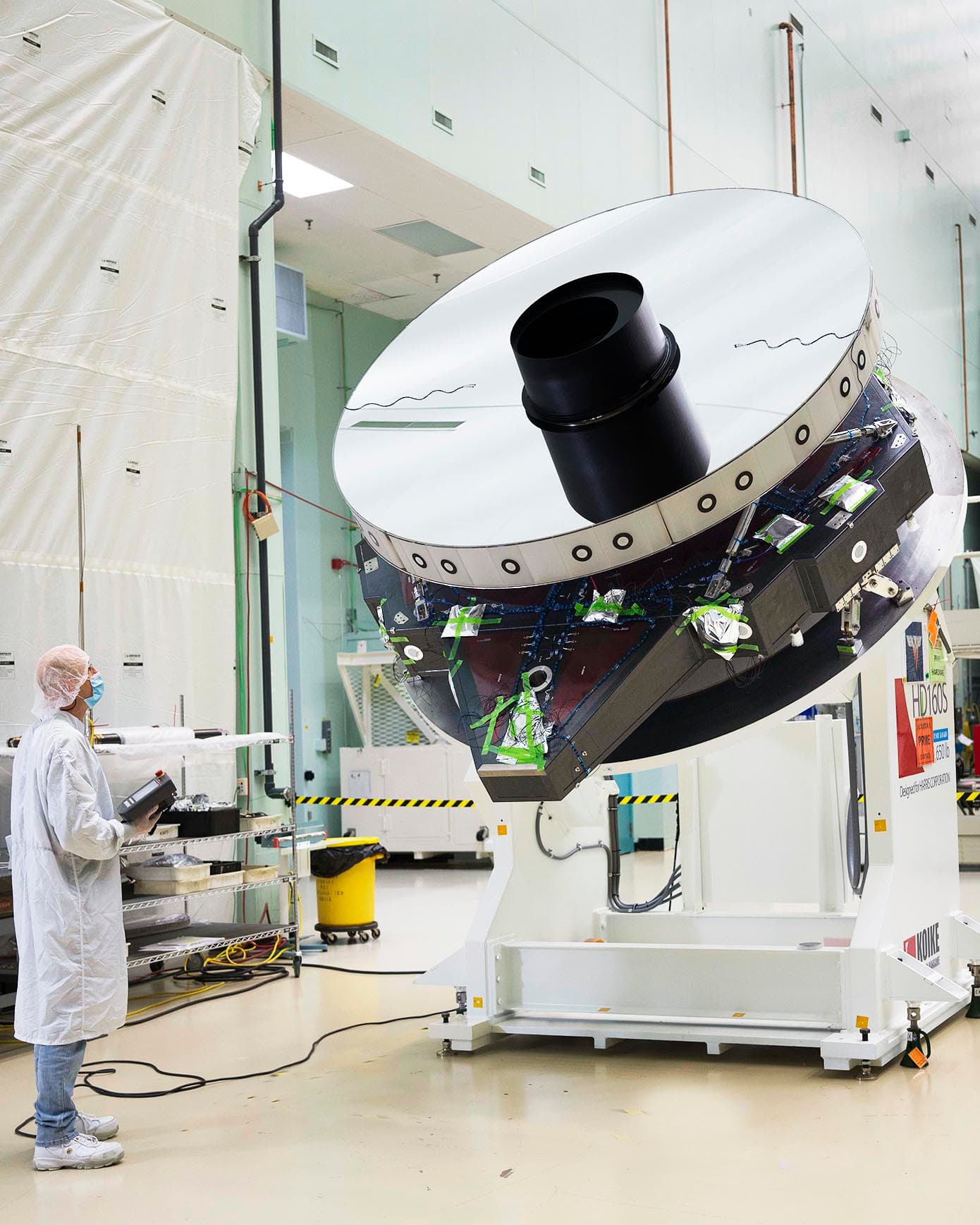
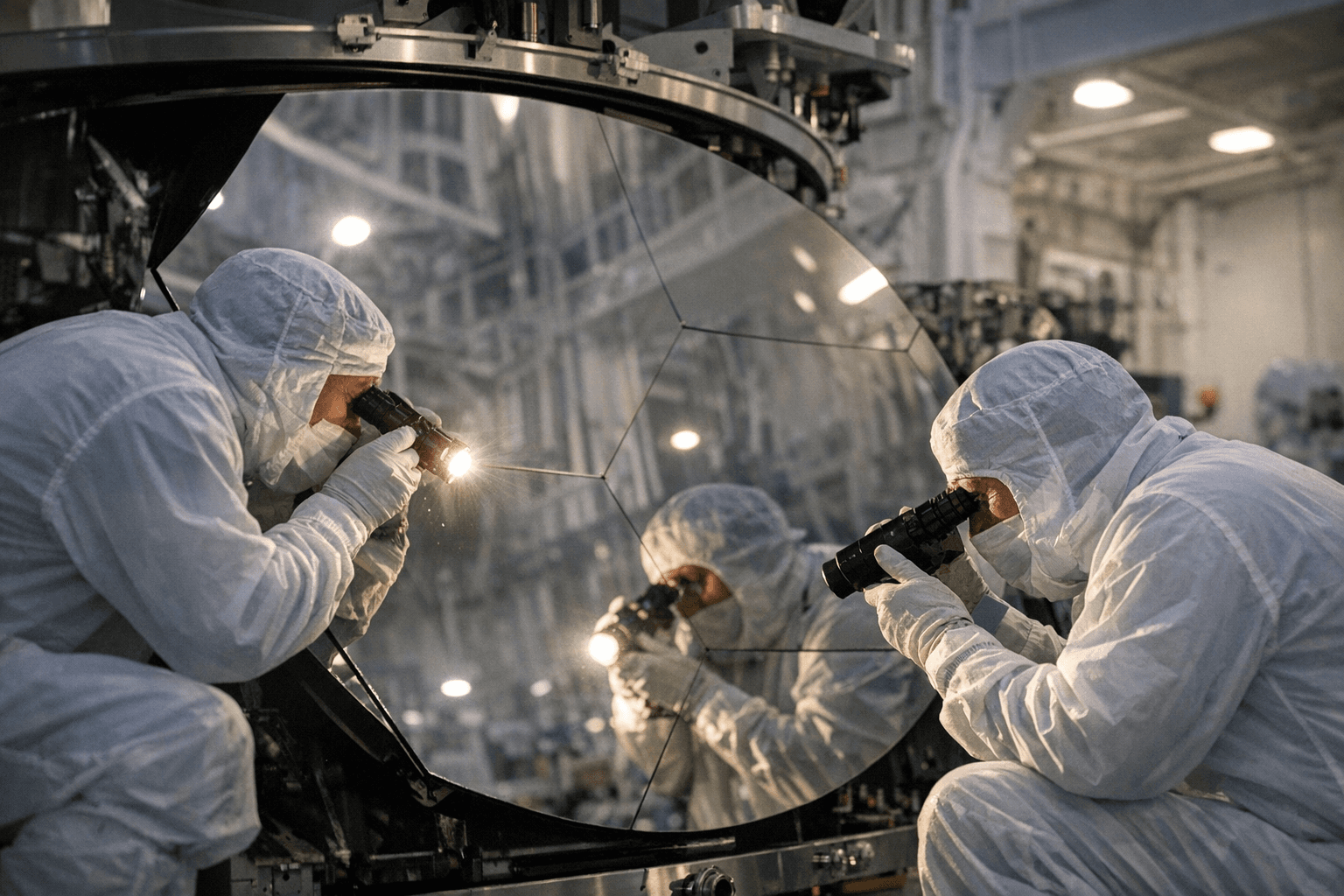
In a near total darkness and silence at NASA’s Goddard Space Flight Center in Greenbelt, Maryland, engineers and scientists swept narrow beams of visible light and ultraviolet lamps across the primary mirror of the Nancy Grace Roman Space Telescope to reveal microscopic contamination. The inspection, carried out on December 25, 2025, took place in one of Goddard’s largest sterile cleanrooms, described by NASA as cleaner than an operating theater, and was photographed by Fernando Molina.
The exercise used straightforward but exacting techniques. Teams scanned the mirror by eye with powerful flashlights and ultraviolet illumination to make tiny particles and thin films visible against the reflective surface. Those contaminants, imperceptible under ordinary lighting, can scatter incoming infrared light and compromise the telescope’s sensitivity, particularly for the wide field astronomical surveys and the technology demonstration the mission will perform.
The inspection comes after a major assembly milestone. On November 25 technicians joined the inner and outer segments of the observatory inside the same Goddard cleanroom, completing the full observatory assembly at the facility. With the two main sections mated, the spacecraft entered final testing and verification, a campaign that includes optical checks such as the December mirror inspection and environmental tests that simulate the launch and space environment.
Roman carries two principal instruments. The Wide Field Instrument will conduct large area infrared surveys, providing datasets for studies of dark energy, galaxy evolution, and exoplanet populations. The Coronagraph Instrument developed at NASA’s Jet Propulsion Laboratory is a new technology demonstration designed to test high contrast imaging techniques that could enable future exoplanet direct imaging missions.
Once Goddard’s testing is complete, the observatory will be prepared for transport to NASA’s Kennedy Space Center in Florida for launch processing. The program plans to move Roman to Kennedy in summer 2026 following final verification work. NASA and JPL list a scheduled launch target of May 2027, while project officials say steady progress could allow an earlier launch as soon as fall 2026. The mission is slated to ride a SpaceX Falcon Heavy toward its operational orbit near the Sun Earth L2 region, roughly a million miles from Earth.
Engineers say the mirror inspection is more than ceremonial. Roman’s science return depends on pristine optics, and identifying even a single microscopic particle can trigger cleaning, containment, or additional inspection steps before the observatory leaves Goddard. Those remediation decisions affect both the schedule and the risk profile for later environmental testing and shipment.
As Roman enters its last phases on the ground, program managers have emphasized precision and caution. The telescope’s combination of wide field capability and an on board coronagraph promises to expand near infrared survey science and demonstrate technologies that could shape the next generation of space telescopes. Ensuring the mirror’s cleanliness now is a small, painstaking step with outsized consequences for the mission’s performance and for the researchers worldwide who will rely on its data.
This article was produced by Prism’s automated news system from verified source data, official records, and press releases, then run through automated quality and moderation checks before publishing. The system is built and supervised by the people who set the standards it runs under. Read our full AI policy.
Did this article answer your question?


