England collapse as New Zealand dismiss Brook, Root and Stokes at Lord's
England’s batting method was tested at Lord’s as New Zealand struck three times in five balls, turning a 99-run cushion into a nervy warning for the series.

England’s aggressive Test blueprint was jolted at Lord’s when New Zealand removed Harry Brook, Joe Root and Ben Stokes in the space of five balls, exposing the fragility of a philosophy built for pressure and pace. The collapse came in England’s second innings of the first Test, with four wickets falling for one run in 11 balls, even after England had seemed firmly in control.
The three-match series opened at Lord’s before heading to The Kia Oval on June 17 and Trent Bridge on June 25, and this match immediately became a test of England’s wider direction after the 4-1 Ashes defeat in Australia over the winter. Durham opener Emilio Gay made his Test debut in place of Zak Crawley, while Ollie Robinson marked his return to England duty after more than two years away by delivering a career-best 5 for 39.

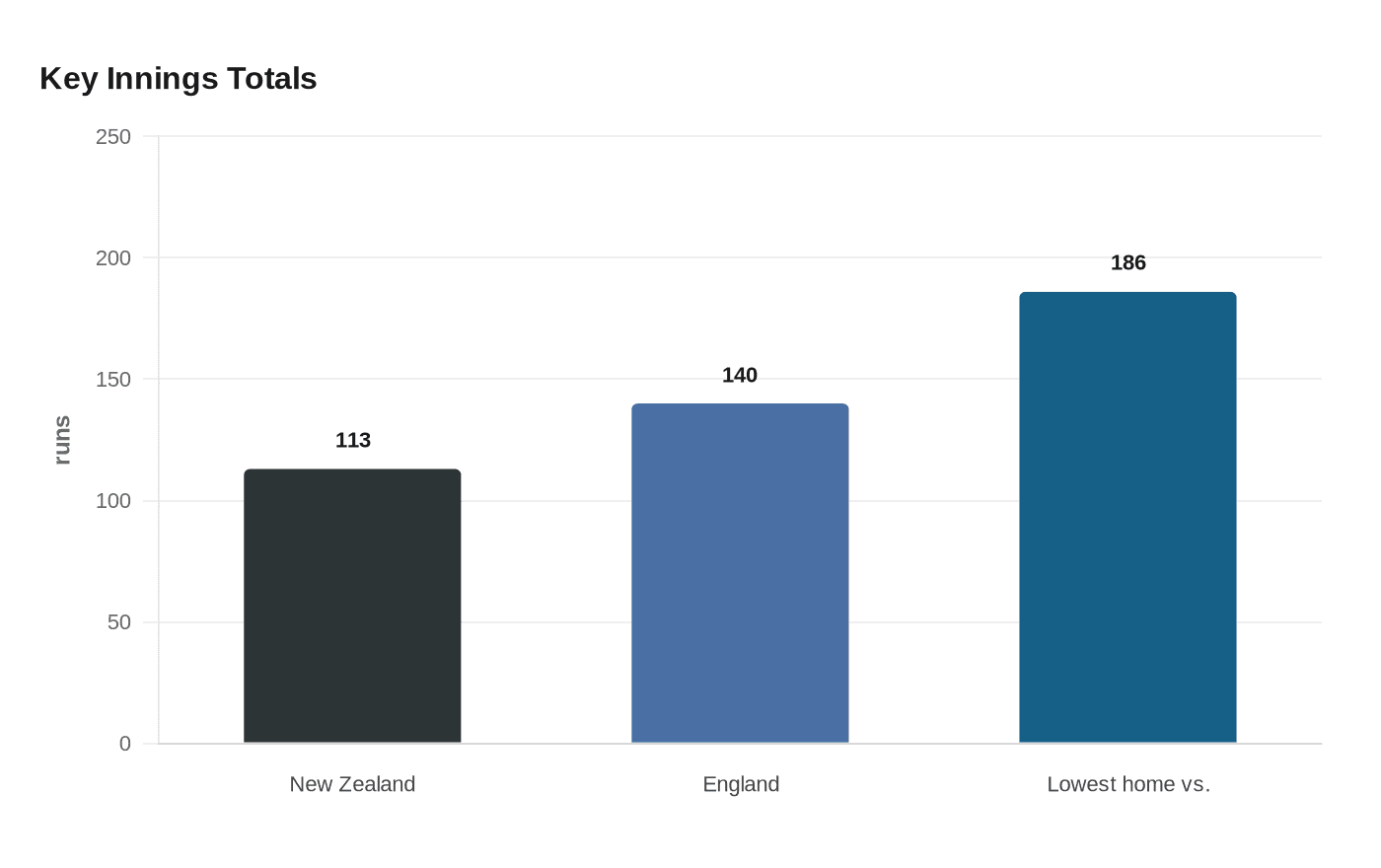
Robinson’s spell helped bowl New Zealand out for 113 in 29.5 overs on day two, after he had already wrecked the top order the previous evening. New Zealand had won the toss and bowled first with Matt Henry, Kyle Jamieson, Will O’Rourke and Nathan Smith in the attack, but the visitors then had to recover from 29 for 6. Glenn Phillips counter-attacked with 34 and Jamieson finished unbeaten on 38, dragging New Zealand to a total that still left England with a first-innings lead of 27.

England’s own first innings had been shaped by pressure and murky, rain-interrupted conditions. They were 118 for 8 at one stage before scrambling to 140, with Harry Brook’s fighting fifty the main resistance. That total stood as England’s lowest first innings at home against New Zealand since 186 at Lord’s in 1999, but it was still enough to give them control when Ben Duckett and Emilio Gay pushed the lead to 99 by lunch on day two at 72 for 1.
Then came the collapse. New Zealand’s disciplined attack tightened the squeeze, and England’s middle order, including Brook, Root and Stokes, could not withstand it. For a side that has backed bold scoring and constant intent, the passage at Lord’s suggested that method still needs proving against sustained, accurate bowling in the highest-stakes moments.
This article was produced by Prism’s automated news system from verified source data, official records, and press releases, then run through automated quality and moderation checks before publishing. The system is built and supervised by the people who set the standards it runs under. Read our full AI policy.
Did this article answer your question?