England women mark 500th international, celebrating landmark history and legacy
England’s 500th women’s international is a snapshot of change: from a 1921 ban and empty pathways to European titles, packed crowds and an unfinished push for equality.
1. A landmark that carries a century of change
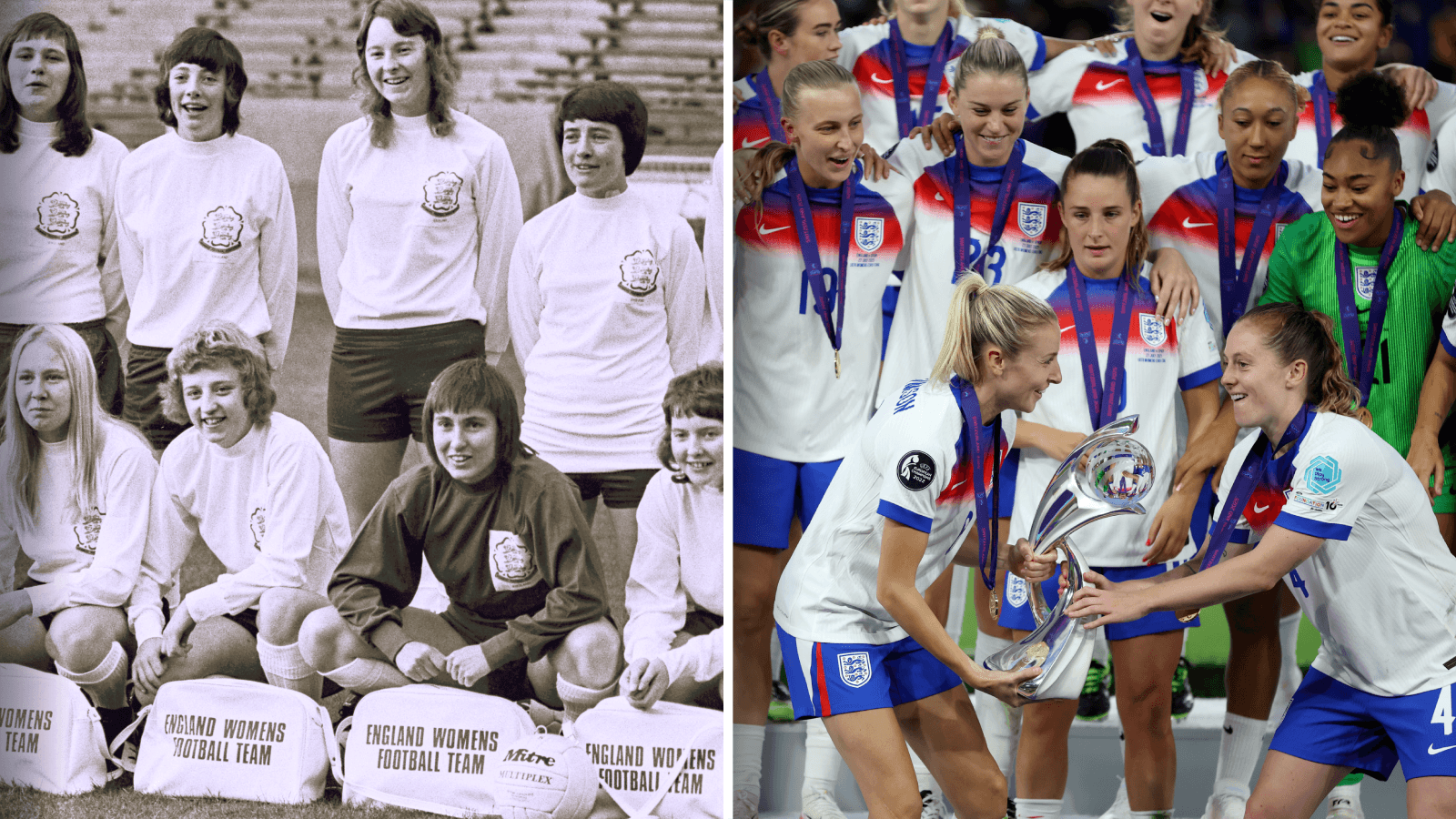
England women’s 500th official international is more than a neat round number. It is a measure of how a sport that was once pushed to the margins became a central part of the national game, with a team now celebrated for sustained success rather than mere survival.
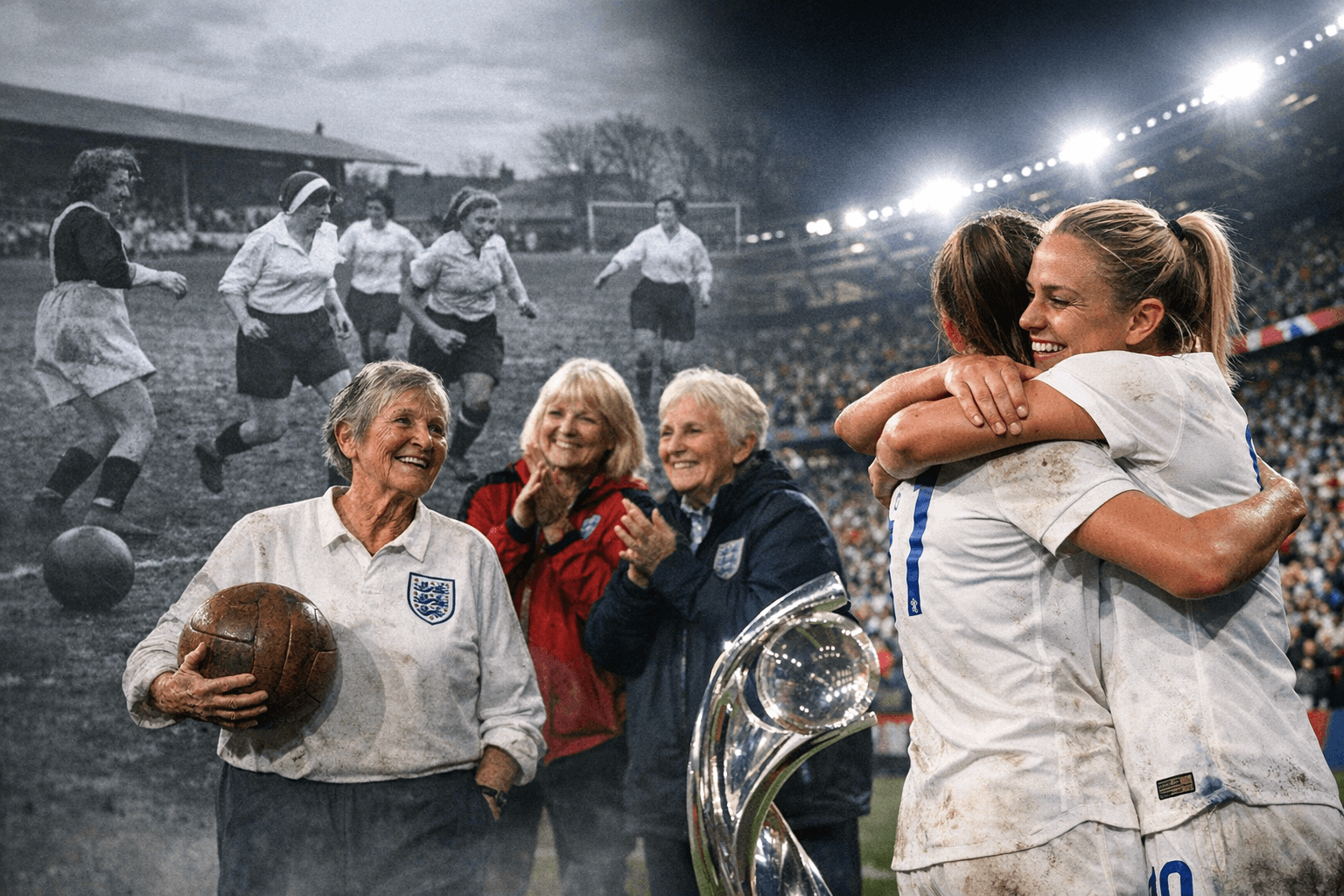
That milestone arrives as England face Iceland in Reykjavik on Saturday 18 April 2026, with a week of celebrations beginning at game 499 against Spain at Wembley Stadium. More than 50 former Lionesses were invited back for that occasion, underlining how this story is not only about the present squad but about every generation that kept the team alive.
2. The game that set the tone at Wembley
The celebration began in front of one of the most familiar stages in English football: Wembley Stadium. Against Spain, the 499th match became a gathering point for former players across decades, many of them forming a guard of honour as the teams walked out.
That scene was deliberate. It linked the first generation of officially recognized Lionesses with the group now led by Sarina Wiegman, Leah Williamson, Lucy Bronze and Lauren Hemp, and it reminded everyone that the modern team stands on the work of women who played long before there was money, prestige or reliable support.
3. The 1921 ban that slowed everything down
To understand why 500 matches matters, the history has to begin with exclusion. In 1921, The FA imposed a countrywide ban on women’s football, preventing women from using affiliated grounds and effectively stalling the game for about 50 years.
Before that ban, the women’s game had been growing fast. By 1921 there were about 150 women’s clubs in England, and some matches drew crowds of up to 45,000, proof that interest was already there long before institutions were ready to recognize it.
4. A sport with momentum before it was stopped
Those early crowds are important because they challenge the idea that women’s football had to be invented from scratch in the modern era. The scale was real, the support was real, and the appetite from spectators was already visible in the stands.
The ban did not erase that history, but it did interrupt it. It meant that when the game finally started to rebuild, it was doing so after half a century of lost development, lost investment and lost opportunity.
5. The 1971 turning point and the hard rebuild
The FA lifted the ban in 1971, opening the door to a formal England women’s side and a new phase of recovery. That did not instantly repair everything the sport had lost, but it gave players a chance to compete on something closer to equal institutional footing.
The first official England women’s team was selected through Women’s Football Association trials, a reminder that the women who built the program did so through their own structures, their own labor and their own insistence that the game deserved a future.
6. The first official England match
England’s first official women’s international came on 18 November 1972 against Scotland in Greenock. England won 3-2, with goals from Sylvia Gore, Lynda Hale and Jeannie Allott, while Mary Carr and Rose Reilly scored for Scotland.
That match mattered because it was the start of the official record from which the 500-game milestone is counted. It also gave the Lionesses a visible beginning, even though the team’s roots stretched back to the women who kept football going through years when the system offered them almost nothing.
7. Why the first team still matters now
The first official side was not built by accident. It came through Women’s Football Association trials and under manager Eric Worthington, a structure that mattered because it created a legitimate pathway at a time when institutional support was still thin.
That early setup speaks directly to the present. Today’s debates over pay, facilities and professional standards are really debates about whether women’s football will finally receive the infrastructure it should have had decades ago, instead of asking players to keep proving the value of the game over and over again.
8. Spain as a thread through the modern era
Spain has become one of the reference points in England’s recent rise, and that adds a sharp edge to the 500th-match celebrations. England beat Spain 2-1 in the 2022 Women’s Euro quarter-final, a result that helped define the team’s growing confidence on the biggest stages.
The rivalry took on even more meaning in Basel on 27 July 2025, when England retained the UEFA Women’s Euro title by beating Spain on penalties. That win made England only the second team ever to retain the women’s European Championship, turning a long history of underinvestment into a run of elite, repeat success.
9. Basel and the proof of permanence
The 2025 title defense was not a one-off triumph; it was evidence that England’s success has become durable. Winning on penalties in Basel against Spain showed a team capable of handling pressure, and of doing so repeatedly against the best opposition in Europe.
That matters because sustained success changes how institutions behave. It strengthens the case for better training environments, deeper player pathways and more serious investment from clubs, broadcasters and governing bodies that now have no excuse to treat the women’s game as secondary.
10. The audience has grown, but the work is not finished
The 500-game milestone also lands in a landscape that looks very different from the one that existed after the ban. Formerly sidelined players are now being brought back to Wembley in large numbers, and national celebrations are built around them, not around apology alone.
Still, the unfinished business is hard to ignore. The debate is no longer whether women’s football deserves to exist; it is whether pay, stadium access, medical support and youth infrastructure will match the scale of the audience and the expectations placed on the players. Progress is unmistakable, but the standards are still catching up to the achievement.
11. What 500 matches now represent
England’s 500th official international connects the pioneers, the rebuilders and the champions. It tells a story that runs from the 1921 ban and the long silence that followed, to the first official match in Greenock, to the guard of honour at Wembley, to the trophy lifts that have made this team a continental benchmark.
The legacy is not nostalgia. It is proof that when women’s football is allowed to grow, supported properly and seen on equal terms, it produces crowds, history and trophies. England’s 500th match marks how far the game has come, and how much more it can still become.
This article was produced by Prism’s automated news system from verified source data, official records, and press releases, then run through automated quality and moderation checks before publishing. The system is built and supervised by the people who set the standards it runs under. Read our full AI policy.
Did this article answer your question?

.jpg&w=1920&q=75)
