England’s health visitor numbers nearly halve, caseloads soar above safe limits
Some health visitors now cover more than 1,000 families, far above a 250-child ceiling, as England’s early-years safety net thins and missed needs pile up.
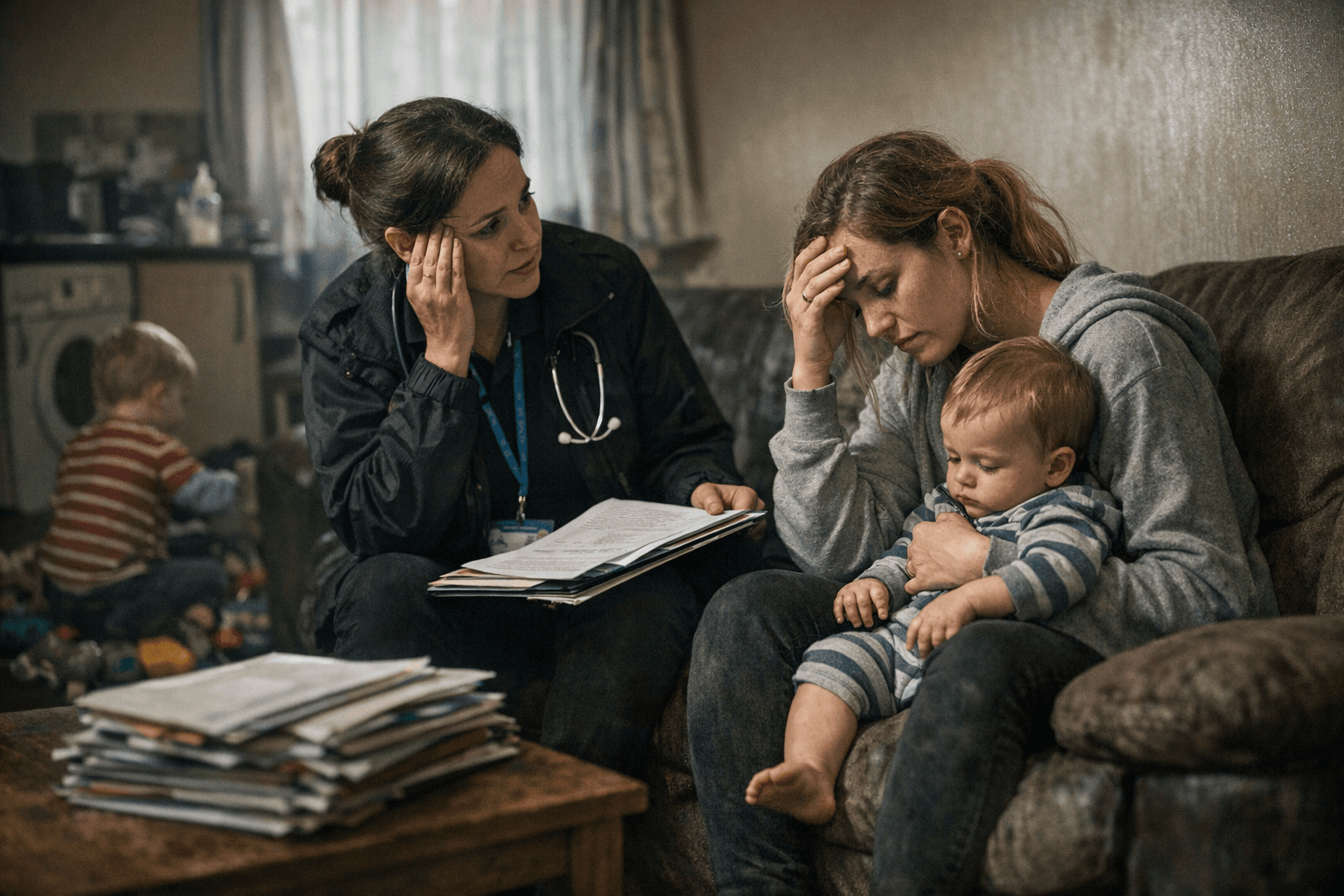
A health visitor carrying more than 1,000 families cannot do the work the system expects: babies miss developmental checks, feeding problems deepen, and safeguarding concerns surface only when they have already become crises.
That is the reality behind a workforce that BBC analysis says has almost halved in England over the past decade. The Institute of Health Visiting has warned that caseloads have become “unmanageable”, with some practitioners now responsible for more than 1,000 families each, far beyond the recommended ceiling of 250 children per health visitor.
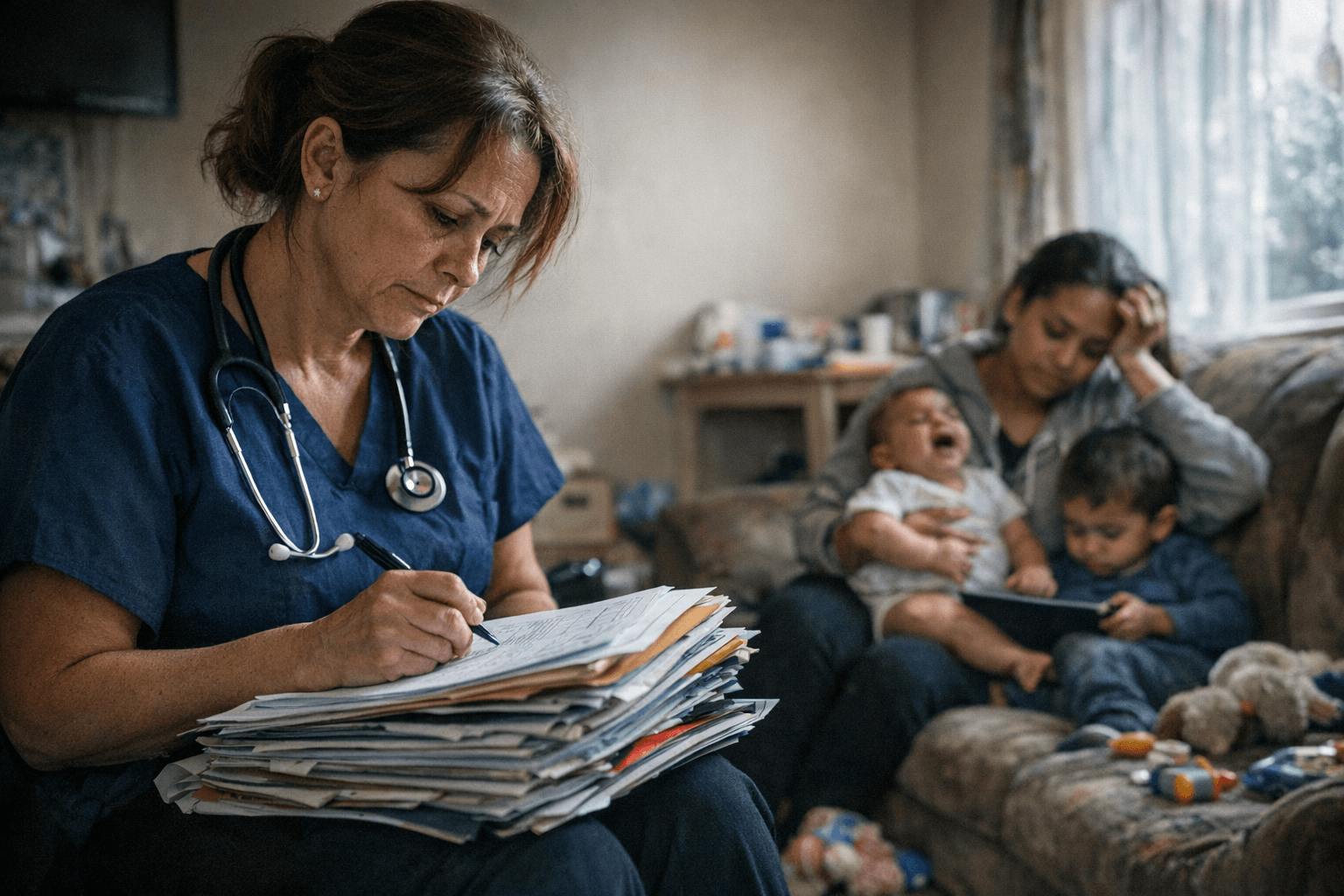
University College London’s study, published on 26 March 2026 and based on freedom of information requests to 147 English local authorities, found that the number of health visitors fell by 21% between 2016 and 2021. The loss was only partly offset by a one-third rise in Clinical Skill Mix Staff such as community nursery nurses and staff nurses. Nearly eight in ten local authorities saw a decline in the proportion of qualified health visitors in their teams.
The pressure shows up in the size of the lists. UCL found caseloads had passed safe levels in 74% of local authorities, with some caseload-holding staff responsible for more than 1,000 children. The researchers estimated that restoring recommended caseloads would require about 3,100 additional staff across English local authorities under a 50:50 mix of health visitors and lower-banded staff, at a cost of around £120 million a year in extra wages and about £80 million in one-off training costs.
The squeeze has come alongside falling investment. Local authority spending on universal health visiting dropped by almost 20% in real terms between 2016-17 and 2023-24, even as demand grew. The Royal College of Paediatrics and Child Health said 84% of respondents in the 2024 UK health visiting survey reported higher demand over the previous year, while 73% said staffing shortages affected their ability to support families when need was identified. In England, 86% said poverty was a major issue and 82% pointed to safeguarding concerns below the Children’s Social Care threshold.
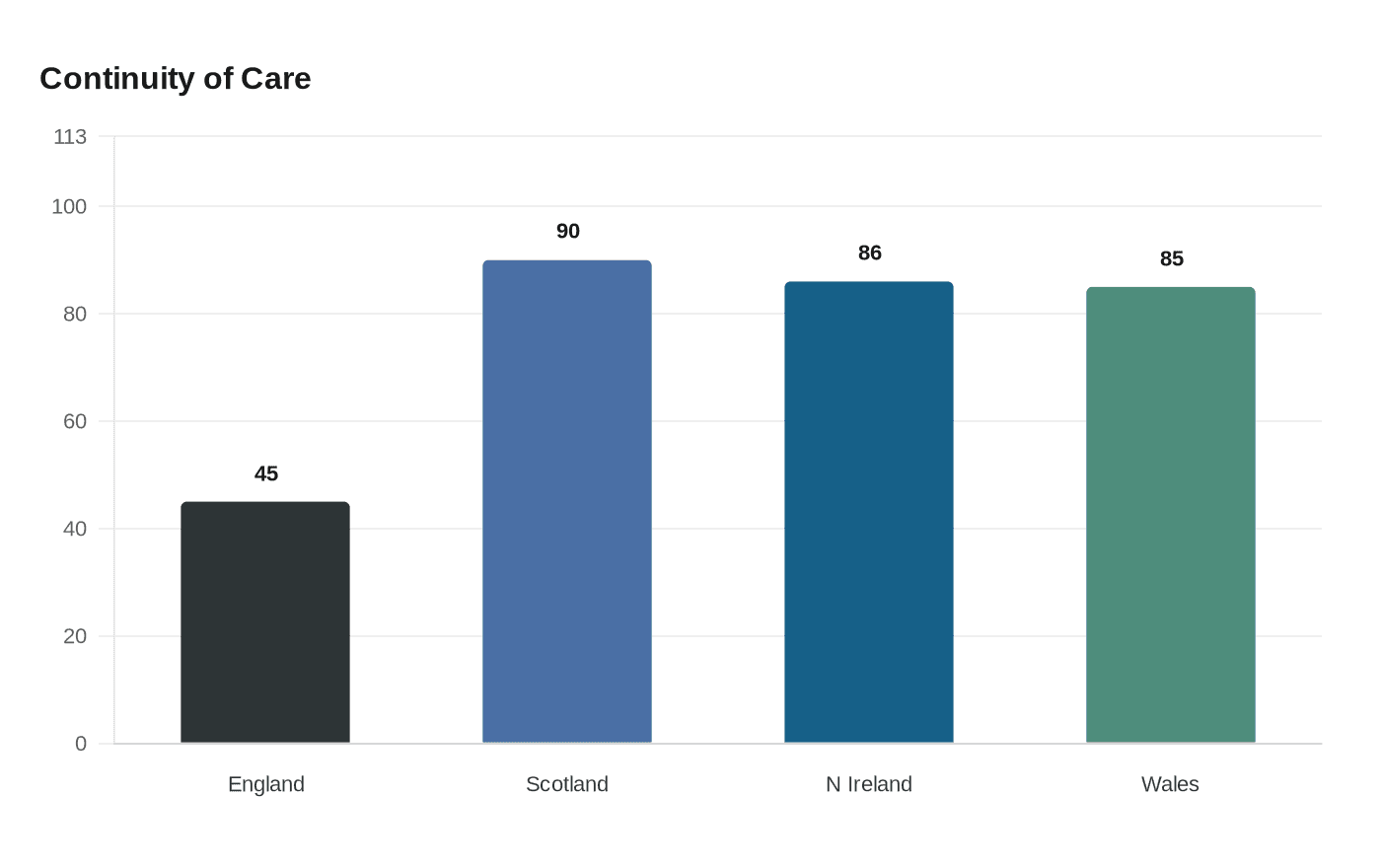
The consequences reach well beyond the service itself. In England, only 45% of health visitors said they could provide continuity of care all or most of the time, compared with 90% in Scotland, 86% in Northern Ireland and 85% in Wales. In January 2026, the House of Commons Health and Social Care Committee said the last decade had seen a “collapse” in health visitor numbers and called for at least 1,000 more health visitors, plus a sixth mandated early-years visit as capacity grows. Paulette Hamilton, the committee’s chair, said children were at risk of obesity, asthma, tooth decay and missed vaccine-preventable diseases, and said Family Hubs still “barely touch the sides” of what Sure Start centres once provided.
The first 1,000 days of life, from conception to age two, are widely recognised as a critical period for brain development and long-term health. With NHS England having brought health visiting under its mandate in April 2013, and commissioning shifting to local authorities from October 2015, England’s early-years safety net now looks increasingly stretched, uneven and too often available only after the damage is done.
This article was produced by Prism’s automated news system from verified source data, official records, and press releases, then run through automated quality and moderation checks before publishing. The system is built and supervised by the people who set the standards it runs under. Read our full AI policy.
Did this article answer your question?