Enhanced Games open in Las Vegas, allowing steroid use
Enhanced Games opened in Las Vegas with athletes allowed to use steroids, EPO and human growth hormone, turning anti-doping rules into the main act.

In a purpose-built arena at Resorts World Las Vegas, the Enhanced Games turned one of sport’s oldest taboos into a public experiment: athletes were allowed to compete while using performance-enhancing drugs. The debut placed a direct challenge in front of the anti-doping system that governs elite sport, while promising cash, spectacle and a new model built around supervised enhancement rather than prohibition.
The inaugural event took place on May 24, 2026, during Memorial Day weekend, with about 42 athletes entered across swimming, track, weightlifting and a strongman exhibition. Enhanced said the venue included a four-lane 50-meter pool, a six-lane sprint track and a bespoke weightlifting stage, all designed to support what the company framed as a showcase for human performance and sports science.

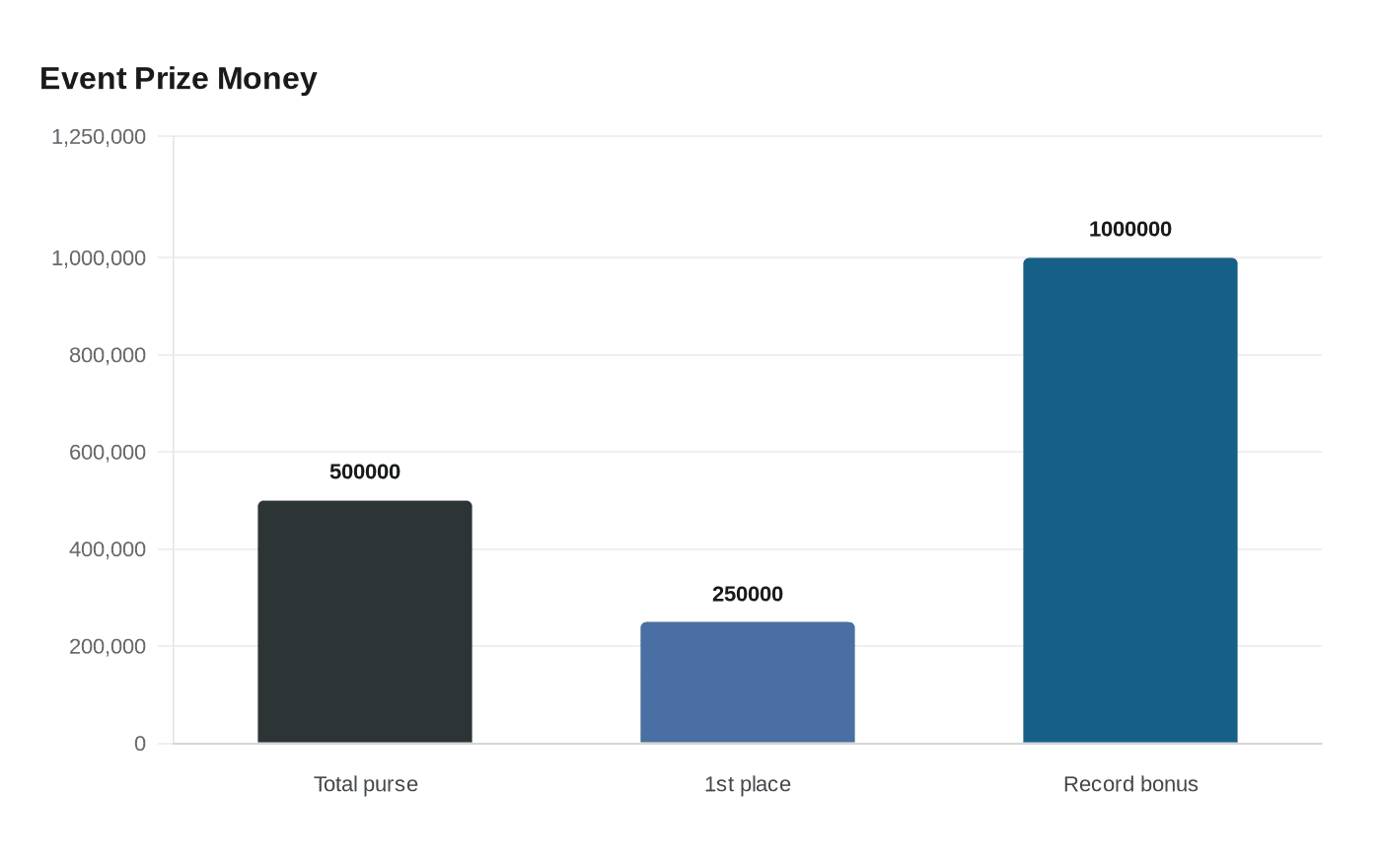
The financial pitch was as bold as the concept. Enhanced promoted a total purse of $500,000 for each individual event, with $250,000 for first place, appearance fees and a $1 million bonus for breaking the 100-meter sprint or 50-meter freestyle world records. The money and the open rulebook are central to the event’s appeal, and to the criticism that it rewards pharmacological escalation rather than fair competition.
James Magnussen, the Australian former world champion and Commonwealth gold medallist, was one of the headline names. He retired from conventional elite swimming in 2018, then returned for the Enhanced Games, making his participation a focal point for the wider argument over whether the event is visionary, reckless or simply an expensive act of transgression. Greek swimmer Kristian Gkolomeev reportedly swam the 50-meter freestyle in 20.81 seconds, a performance organizers celebrated, though it will not count as an official world record because the event sits outside the sport’s traditional governing bodies.
The controversy has followed the Games from the start. The World Anti-Doping Agency condemned the concept in May 2025 as “dangerous and irresponsible.” World Aquatics and USA Swimming also warned athletes away, and Enhanced later filed an antitrust lawsuit against those groups before a federal judge dismissed it. The dispute goes beyond one weekend in Las Vegas: it asks whether elite sport can remain a credible business, a public health environment and a measure of human equality if the use of testosterone, EPO and human growth hormone is no longer hidden, but promoted as part of the product.
This article was produced by Prism’s automated news system from verified source data, official records, and press releases, then run through automated quality and moderation checks before publishing. The system is built and supervised by the people who set the standards it runs under. Read our full AI policy.
Did this article answer your question?