Equatorial Guinea government resigns after vice-president says goals missed
Equatorial Guinea's cabinet quit after the vice-president said it had met barely 10% of its targets, but he did not say which targets were missed.
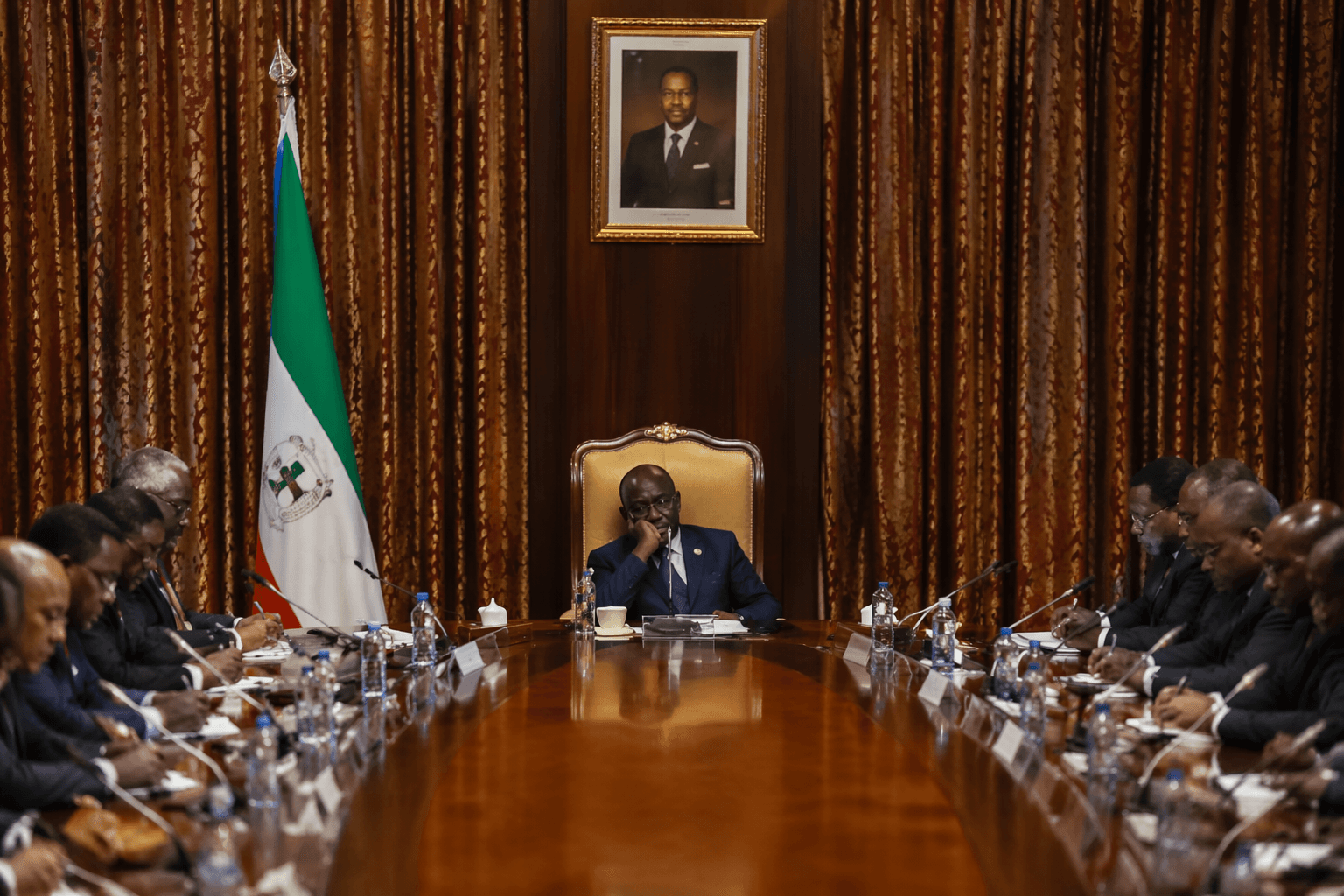
Equatorial Guinea’s government resigned after Vice President Teodoro Nguema Obiang Mangue said it had failed to meet its objectives, setting off a fresh test of whether the shake-up is real accountability or simply a reset inside one of Africa’s most opaque political systems. Manuel Osa Nsue Nsua, the prime minister appointed by President Teodoro Obiang Nguema Mbasogo in 2024, presented the resignation of all members of the government.
Nguema Mangue said the cabinet had achieved only about 10% of its goals, but he did not identify which targets were supposed to be met. That omission matters in a system where public benchmarks are rarely explained, making it difficult to know whether ministries were judged on economic output, service delivery, budget discipline or loyalty to the presidency.

The ruling Democratic Party of Equatorial Guinea said the government had worked on public administration, infrastructure, public services and economic development. It described the resignation as part of a periodic institutional reorganization meant to adapt state structures to new priorities. That framing suggests continuity as much as change: ministers may be replaced, but the center of power remains with the presidency.
The resignation comes as pressure grows around Teodoro Obiang Nguema Mbasogo, who has ruled Equatorial Guinea since 1979 and is the world’s longest-serving president. The BTI 2026 country report said Obiang won his last election in 2022 with more than 99% of the vote, while the country faced mounting pressure to rescue the economy and manage succession to his son, Teodoro Nguema Obiang Mangue, widely known as Teodorín.
Equatorial Guinea’s economy depends heavily on oil, leaving the government exposed to volatility and long-running questions about diversification, spending and the management of state assets. Bloomberg reported that the cabinet resignation was followed by a review of more than 50 state companies and agencies, part of a broader crackdown on waste.
For Malabo, the central question is whether this is the start of meaningful correction or another controlled purge that rearranges titles without changing how power is exercised. The answer will depend less on the resignation itself than on whether the government publishes the missing targets, explains who failed them, and shows that the next round of appointments brings real oversight.
This article was produced by Prism’s automated news system from verified source data, official records, and press releases, then run through automated quality and moderation checks before publishing. The system is built and supervised by the people who set the standards it runs under. Read our full AI policy.
Did this article answer your question?