Essential bonsai care guide - watering, light, soil, repotting, pests
Practical how-to for daily and seasonal bonsai care covering watering, light, soil mixes, repotting timing, fertilizing, troubleshooting, and pest control. A concise primer to keep trees healthy year-round.

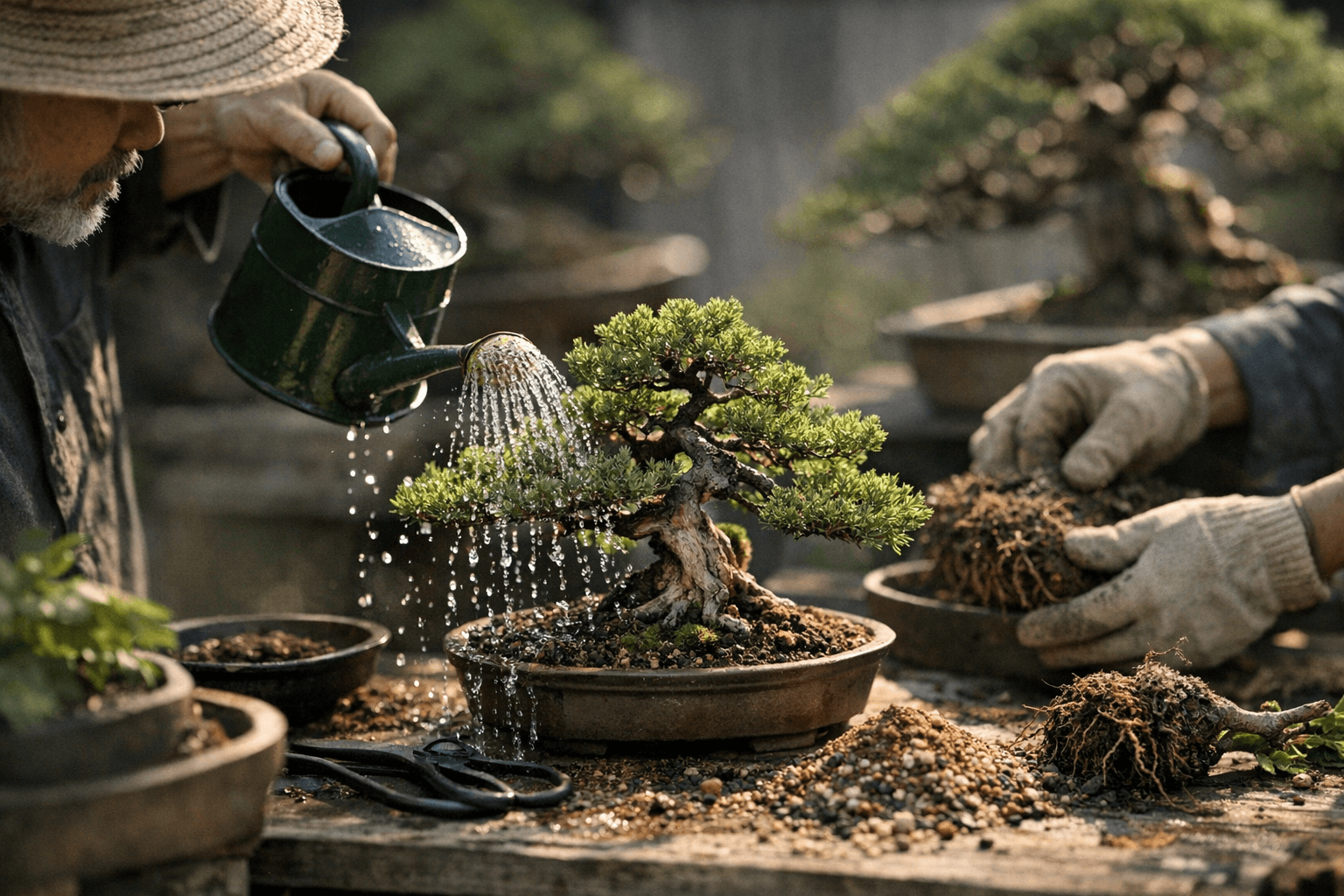
Good bonsai care rests on a few reliable routines you can use every week and at each season. Start with watering: check soil moisture with a finger, chopstick, or moisture meter and water only when the mix is starting to dry. When you water, do so thoroughly until you see runoff from the drain holes or until the pot feels noticeably heavier. Avoid brief surface wetting; soak-through watering flushes salts and restores even moisture. For indoor trees, empty saucers after runoff to prevent standing water.
Light and placement determine how your tree grows. Treat outdoor species as outdoor plants: full sun or morning sun for most temperate bonsai, aiming for several hours of direct light daily. Indoor tropicals need bright light near east- or south-facing windows and 6 to 8 hours of strong light; supplement with LED grow lights when natural light is insufficient. Adjust placement seasonally - shade intense summer sun and harden off newly moved specimens.
Soil and repotting are the backbone of health. Use well-draining mixes such as akadama, pumice, and lava rock in roughly equal parts for many species, or substitute local inert grits like crushed granite, expanded shale, or horticultural grit if akadama is unavailable. Young trees typically need repotting every 1 to 2 years, semi-mature trees every 3 to 5 years, and mature specimens every 5 to 7 years or longer. Repot in spring before bud break for temperate species and during active growth for tropicals. When repotting, untangle roots, remove about 20 to 30 percent of the root mass when necessary, replace old media with fresh mix, and check that the nebari sits level.
Fertilize through the active growing season on a steady schedule: organic or balanced N-P-K feeds every 2 to 4 weeks. Begin to taper feeding in autumn and stop fertilizing outdoor species once they enter dormancy. For indoor tropicals, reduce feed frequency in winter rather than stopping entirely.
Watch for common problems and act early. Yellowing leaves can come from overwatering, underwatering, or nutrient imbalances; leaf drop often follows light shocks, repotting stress, or sudden temperature changes. Mold on the soil surface usually signals poor drainage or persistent surface moisture - scrape the top layer, improve circulation, and adjust watering. Pests to know are aphids, scale, spider mites, and mealybugs; control with manual removal, insecticidal soaps, horticultural oil, or targeted systemic treatments when scale is severe. Improve airflow and sanitation to reduce infestations.
Seasonal checklist keeps tasks manageable: in spring repot, prune, and restart regular fertilizing; summer shade from peak heat and monitor water daily; autumn reduce feeding and begin hardening off; winter protect hardy species with appropriate cold shelter and keep pots only slightly moist. Keep a log for each tree - dates of repotting, feeding, and pest treatments help build experience faster than guessing.
Get back to basics: consistent watering, correct light, a fast-draining mix, timely repotting, and vigilant pest checks. Master those and you’ll see better nebari, finer ramification, and healthier bonsai year after year.
Know something we missed? Have a correction or additional information?
Submit a Tip