Essential foil maintenance checklist to prevent corrosion and seized bolts
A compact buyer and maintenance checklist outlines daily rinsing, periodic disassembly, and battery care to keep surf, wing, SUP, and e-foils reliable. Follow practical steps to avoid common failures.

Whether you ride surf foil, wing foil, SUP foil, or e-foil, a short, practical maintenance routine can save hours of downtime and dollars in repairs. The core advice is simple: rinse and dry after every session, inspect and disassemble on a schedule, protect threads with marine grease or anti-seize, and treat batteries and storage as priority items.
Start every post-session with a thorough fresh water rinse of the entire setup, board, mast, foil, and hardware. Salt is the main enemy of long-term reliability; rinsing removes salt crystals that corrode bolts and eat away at laminate edges. After rinsing, dry components with a soft cloth and remove water from connectors and cavities whenever possible.
Set a routine inspection rhythm. Every few months, or sooner for frequent riders, fully disassemble the mast-fuselage-wing stack and inspect parts for hairline cracks, core or laminate delamination, worn threads, and loose hardware. Pay attention to the junctions where the mast meets the deck and where the fuselage joins wings; these are common stress points for core failures and hidden cracks. Catching these early prevents catastrophic in-water failures and expensive repairs.
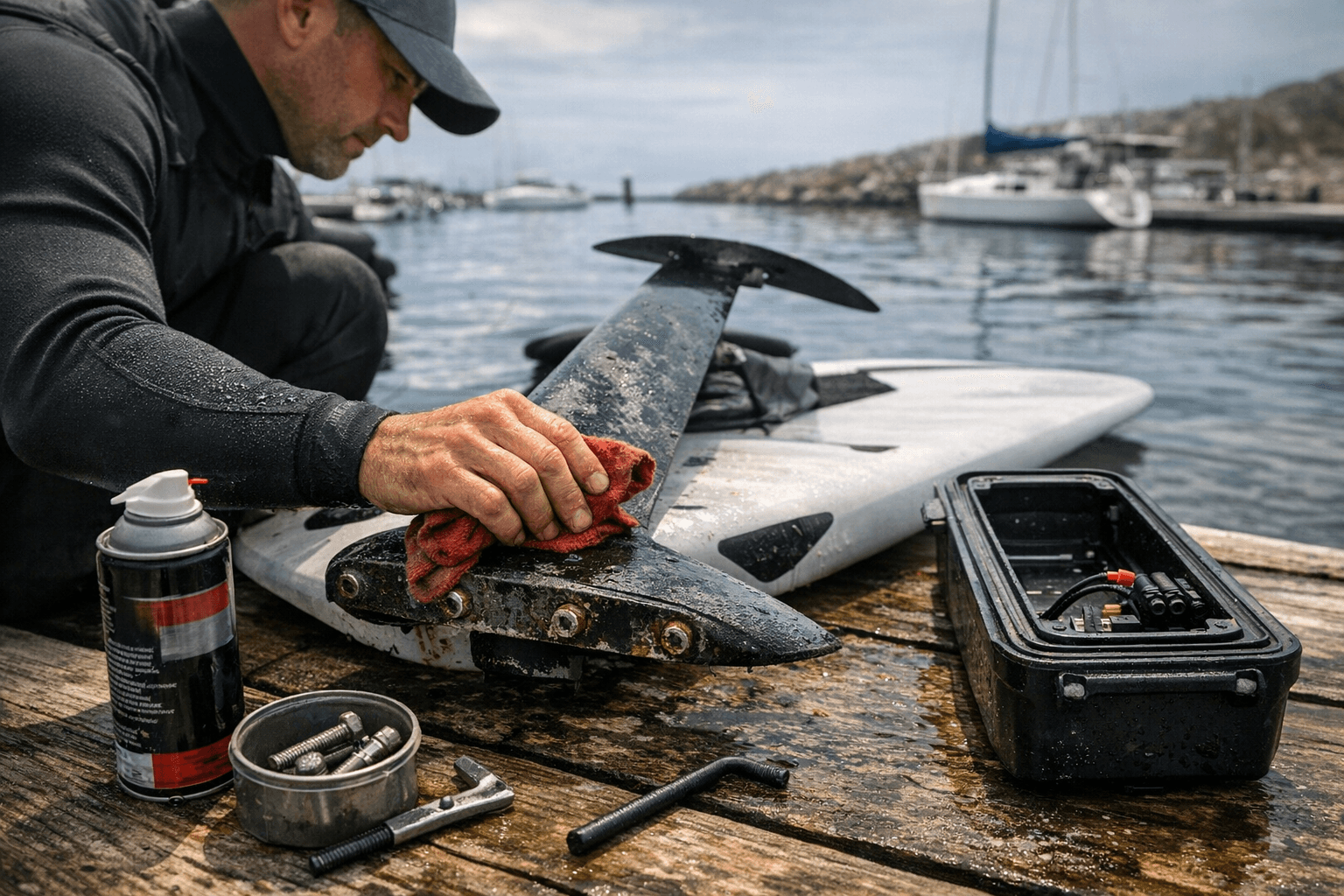
Thread care is one of the biggest preventives against seized bolts. Use marine grease or anti-seize compounds on threads to prevent galvanic seizure and make future removal straightforward. Keep a torque driver with the appropriate torque settings handy so bolts are tightened to manufacturers’ specs, overtightening damages core and laminate, undertightening invites movement and fatigue.
E-foil owners need a second checklist focused on battery health. Keep battery connectors clean and dry, charge only within recommended temperature ranges, and store packs at partial charge for long-term storage. Silicone grease for electrical contacts and spare O-rings for seals can avert failure at launch. Treat battery connectors like you treat your foil bolts: clean, protected, and routinely checked.
Storage matters as much as on-water care. Whenever possible, store foils disassembled or positioned to avoid prolonged stress on fittings. A climate-controlled space reduces heat and cold cycling that can degrade foam cores and adhesives. Avoid long exposure to hot sun and freezing temperatures, which accelerate laminate breakdown and weaken structural bonds.
Assemble a compact tool kit to make routine care achievable: Allen keys, a torque driver, marine grease, silicone grease for electrical contacts, spare O-rings, and a soft drying cloth. This kit keeps roadside fixes possible and small problems from turning into session-ending failures.
For readers, the takeaway is immediate and actionable: rinse every session, schedule a disassembly inspection every few months, grease threads, and handle batteries and storage with care. Apply these steps and you’ll reduce corrosion, prevent seized bolts, protect wings and props, and extend the life and resale value of your gear. Keep this checklist in your trunk or bag and your next session will start with a working foil, not a roadside repair.
Know something we missed? Have a correction or additional information?
Submit a Tip