Essential La Paz County Landmarks, Civic Resources and Visitor Information
La Paz County is geographically large and sparsely populated; this guide lists key towns — Parker, Quartzsite, Bouse, Ehrenberg — and practical civic and visitor essentials for navigating the county.
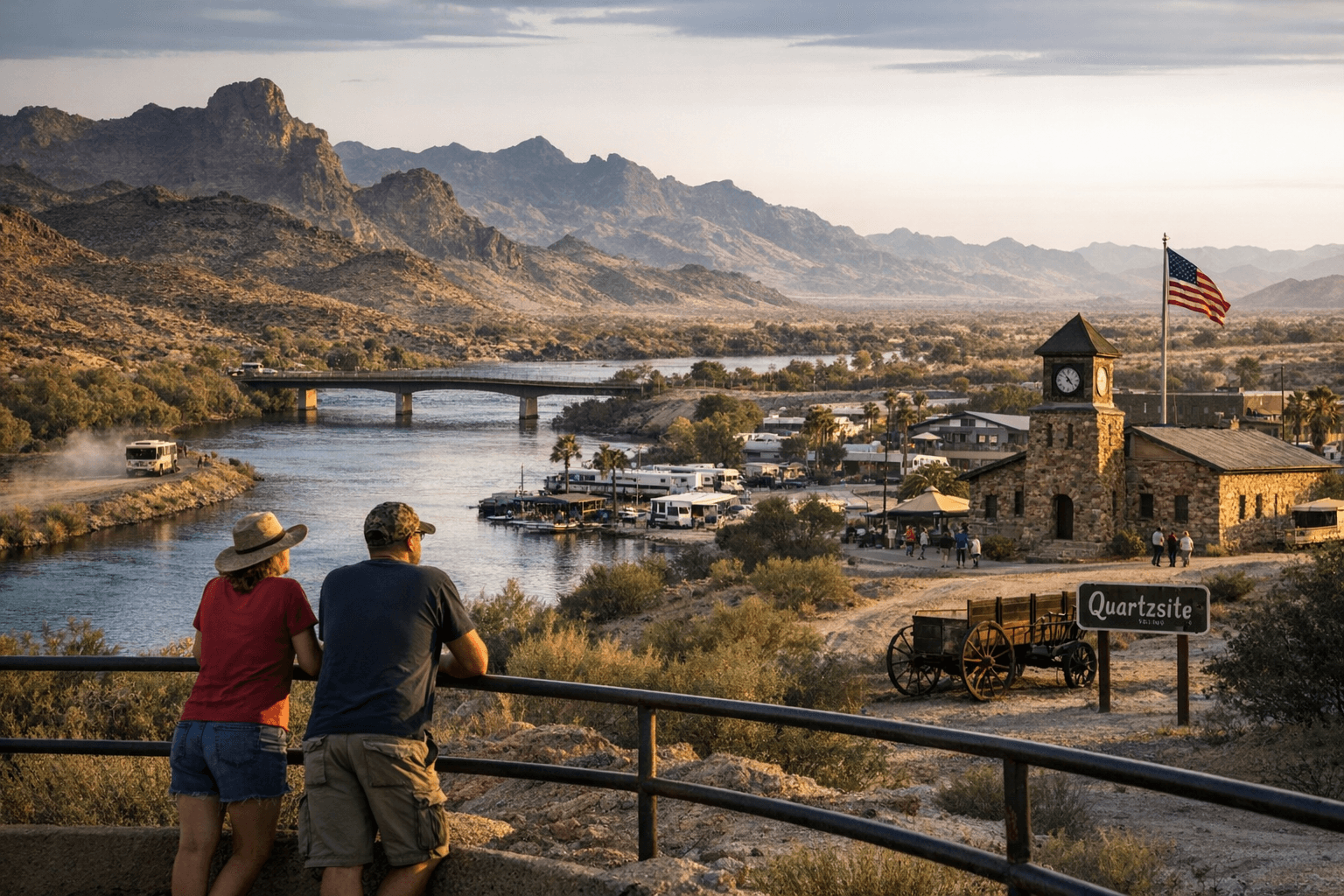
La Paz County spans a large, sparsely populated area centered on Colorado River communities such as Parker and desert towns including Quartzsite, Bouse and Ehrenberg. Residents, seasonal visitors and public officials all face the same consequence: long distances between services and concentrated population centers that shape daily life, emergency response and local policy priorities.
1. County overview and what the geography means
La Paz County’s footprint is geographically large and sparsely populated, with population and services clustered around Colorado River communities (notably Parker) and desert towns (Quartzsite, Bouse, Ehrenberg). That pattern drives long travel times for routine services, concentrates political and economic activity in riverfront and desert towns, and elevates water and land-management issues tied to the Colorado River. Expect county-level decisions on infrastructure and emergency response to reflect those spatial constraints.
2. Parker — the Colorado River community at the county’s center
Parker is the county’s Colorado River community identified as a central hub for La Paz County. Because Parker sits on the river and functions as a focal point for residents and visitors, expect it to be where county-scale civic activity, services and river access concentrate; planning and service delivery decisions for the rest of the county are often framed around Parker’s role. For anyone coordinating county business or long-distance travel across La Paz County, Parker is the logical reference point.
3. Quartzsite — a desert town with outsized seasonal impact
Quartzsite is one of the desert towns that anchor La Paz County’s inland population and visitor flows. Its desert setting contributes to the county’s overall sparse settlement pattern and produces seasonal spikes in visitors and temporary residents that affect local services, road conditions and waste-management needs. County officials must balance year-round service provision against the town’s episodic influxes.
4. Bouse — rural desert community and service considerations
Bouse represents another desert town within La Paz County’s dispersed settlement pattern. The town’s desert location underscores issues common across La Paz County: limited nearby services, reliance on regional hubs, and the need for targeted infrastructure maintenance. Public agencies and civic leaders in Bouse must plan services with the county’s geography in mind.
5. Ehrenberg — desert town tied into the county’s river-desert dynamics
Ehrenberg is listed among La Paz County’s desert towns and is part of the county’s mix of river-oriented and inland settlements. As with Quartzsite and Bouse, Ehrenberg illustrates how La Paz County’s policy and civic-resource decisions have to account for both river access and remote desert communities. Local planning efforts and emergency protocols are shaped by the town’s place in the county’s pattern.
6. Colorado River access and river-oriented public policy
The county’s orientation around Colorado River communities makes river access, water management and recreation policy central to local governance. Residents who live in or rely on river communities such as Parker experience public-service choices — permit systems, river access points, and infrastructure priorities — that differ from purely inland desert towns. County-level budgeting and intergovernmental coordination must reflect the river’s role in local economics and emergency planning.
7. How sparsity affects civic services, institutional capacity and planning
A geographically large, sparsely populated county concentrates residents in a handful of towns, which changes institutional capacity: sheriff’s patrol patterns, road maintenance scheduling, public-health outreach, and voting logistics adapt to clusters in Parker, Quartzsite, Bouse and Ehrenberg. Policymakers face trade-offs between centralizing services in population hubs and deploying limited resources across long distances; that trade-off should be front and center in county budget and planning discussions.
8. Voting patterns and civic engagement implications
Concentration of population in specific towns means voter outreach, polling locations and civic engagement campaigns in La Paz County will be most effective when targeted at Parker, Quartzsite, Bouse and Ehrenberg. Sparse settlement elsewhere raises logistical barriers for turnout and representation; county election administrators and civic groups need to factor travel times and service deserts into ballot access planning and civic-education efforts.
9. Emergency response and public-safety priorities
Because La Paz County is large and sparsely populated, emergency response times can vary widely depending on whether incidents occur near Parker or in outlying desert stretches around Quartzsite, Bouse and Ehrenberg. County emergency planners must prioritize mutual-aid agreements, strategically located response assets and community-level preparedness in towns that serve as local anchors. Residents should be aware that public-safety strategies will reflect the county’s geographic realities.
- Bring ample water and extra fuel for long desert stretches.
- Plan stops in Parker and the named desert towns, which are the most reliable places for services.
- Allow extra travel time because the county’s scale and dispersed communities extend transit times.
10. Practical visitor essentials and a simple pre-trip checklist
Visitors should plan with the county’s size and sparse settlement pattern in mind. Before travel, confirm fuel and water supplies, map a route that connects Parker, Quartzsite, Bouse and Ehrenberg, and prepare for limited services between those hubs.
11. Civic resources to look for and where to start locally
Given the county’s center-of-gravity around Parker and the named desert towns, begin searches for county services and official information by focusing on the civic institutions clustered in those communities. Whether you need county-level records, public-health information or emergency notices, base planning on the reality that Parker and the desert towns are primary touchpoints for La Paz County governance and services.
12. Policy watch points for residents and local leaders
Key policy areas shaped by La Paz County’s geography include water and Colorado River management, infrastructure investment in long-distance road maintenance, seasonal-service planning for towns with visitor spikes, and emergency-service placement. Because the county is large and sparsely populated, policy decisions will have outsized effects on access and equity for residents in Quartzsite, Bouse and Ehrenberg compared with those living in riverfront centers.
Conclusion La Paz County’s defining fact — a geographically large, sparsely populated county focused on Colorado River communities like Parker and desert towns such as Quartzsite, Bouse and Ehrenberg — drives how civic services, elections, emergency response and visitor planning must be organized. For effective public policy and everyday planning, anchor decisions and travel plans on those named communities; the county’s spatial realities will continue to shape access, representation and resource priorities going forward.
Know something we missed? Have a correction or additional information?
Submit a Tip