Essential safety rules every foil surfer and paddler needs to know
Foil riders should follow practical safety steps to reduce injury risk and equipment damage. Learn gear, leash, location, maintenance, and etiquette essentials.

Foiling brings an exhilarating new dimension to watercraft, but it also adds risks that regular surfing and paddling don’t demand. Mastering three-dimensional control, pitch, roll, and yaw, takes time, and the combination of long masts and sharp foil edges makes mistakes more punishing. Pay attention now and you’ll spend more time flying and less time fixing hardware or patching up bruises.
Start with instruction and conservative gear choices. Get hands-on coaching before attempting free rides; the learning curve for surf foil, SUP foil, and wind/kite/wing foils is steeper than a typical board. Begin on a board size you already trust, think a 7' funboard equivalent, and choose a smaller, more forgiving foil while you’re learning to trim and balance. Smaller, conservative setups limit top-end speed and reduce the severity of falls while you dial in pump, trim and lift.
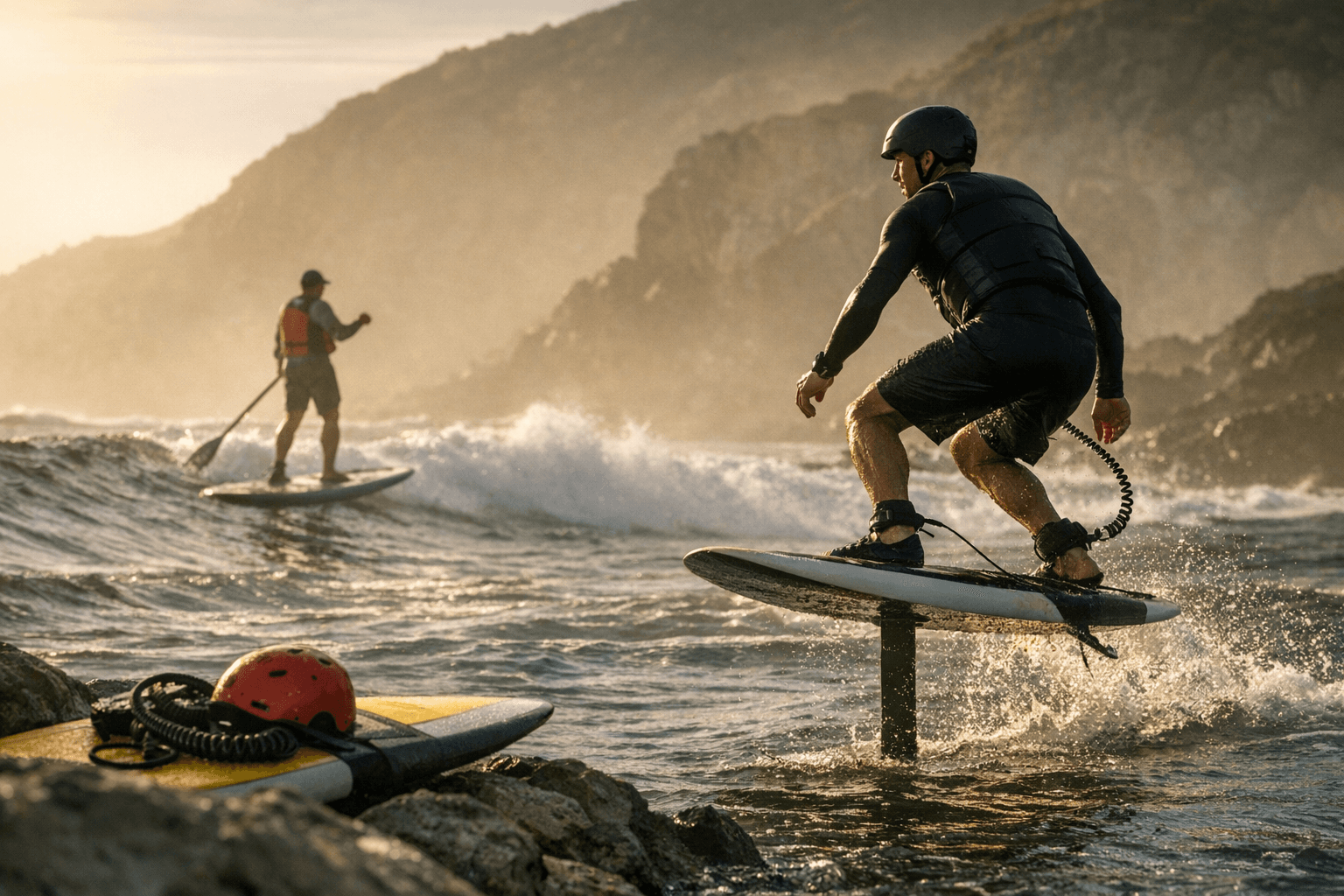
Protective gear matters. Wear a helmet, a full wetsuit and booties whenever you’re foiling. Those pieces protect against stings, rocks and the foil itself. Use a secure leash, preferably a long coiled or rolled leash with velcro, to keep the board nearby while minimizing trailing hazards to other water users. Treat the leash as a last line of defense, not a license to ride recklessly.
Location and etiquette keep you and your line-up safer. Avoid crowded lineups and give swimmers and other surfers wide berth; foils have sharp edges and long masts capable of causing severe injury. Respect beach flags and lifeguard instructions and stay clear of shallow reefs, sandbars and rocks. Because a stuck foil can act like an anchor, always check depth and stay in water deep enough that the foil cannot strike the bottom if you lose control.
After the session, treat maintenance as routine. Rinse foil components thoroughly in fresh water and inspect all joints, bolts and fittings; saltwater and temperature shifts can loosen hardware or accelerate corrosion. Tighten fasteners and address surface damage before the next outing to avoid mid-session failures.
Finally, be cautious about lending equipment. Foils are powerful and unforgiving in inexperienced hands, avoid giving your setup to unfamiliar riders without supervision. The community benefits when riders protect their own gear and respect others’ safety.
The takeaway? Invest in instruction, protect your head and feet, choose conservative setups, respect depth and crowds, and keep your kit shipshape. Our two cents? Treat foiling like an advanced tool: use the right training, the right kit, and plenty of common sense, and you’ll get to enjoy the glide without turning the mast into a hazard.
Know something we missed? Have a correction or additional information?
Submit a Tip