Essential Sanitation Guide for Homebrewers: Cleaning, Sanitizers, Troubleshooting
Practical sanitation steps and sanitizer comparisons for homebrewers to prevent contamination, off-flavors, and haze.
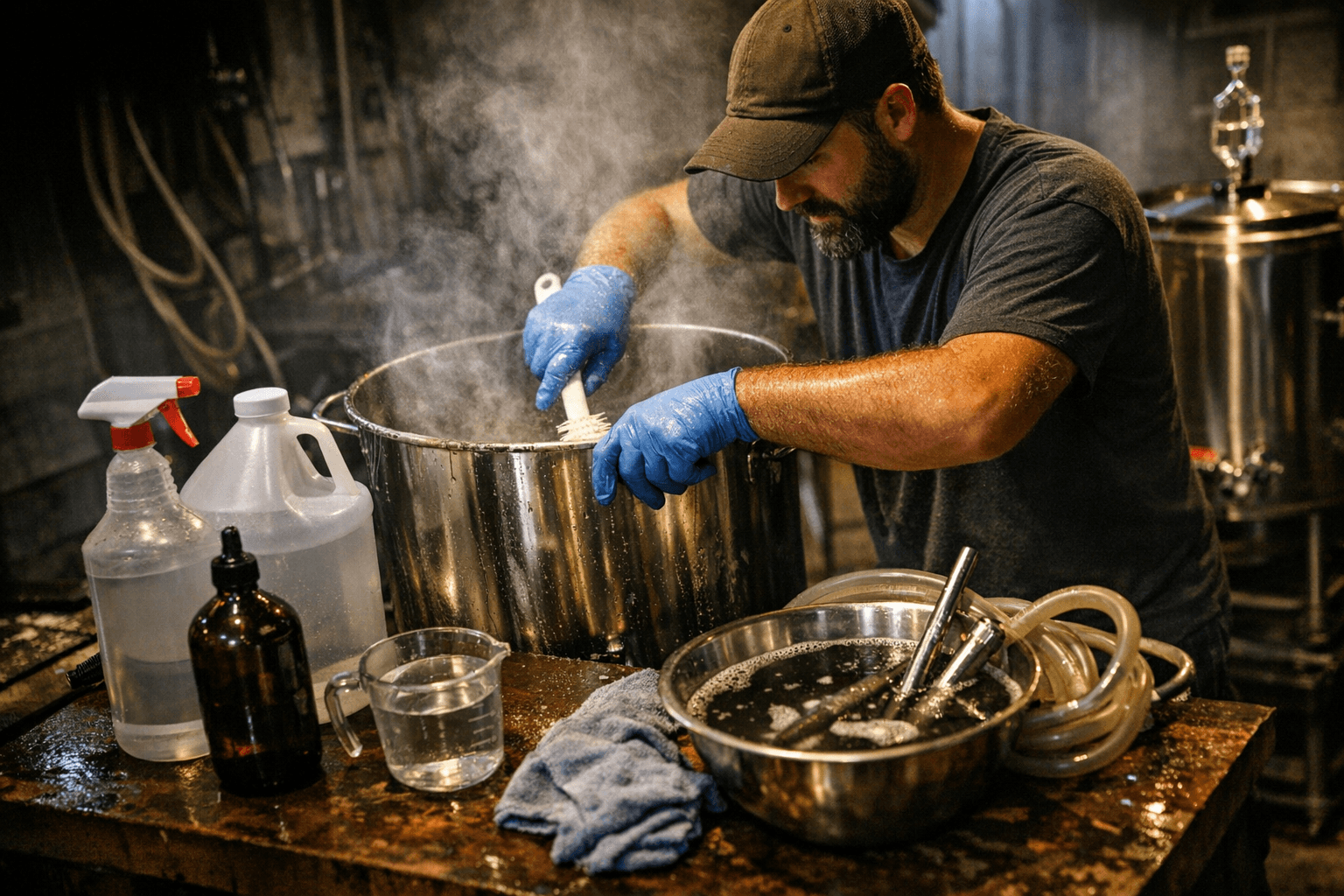
Contamination is the single biggest risk to a good batch of homebrew. Wild yeasts, bacteria, and leftover organic soils cause off-flavors, haze, and failed fermentations, so remove soils with an alkaline cleaner and reduce microbial load with a proper sanitizer before packaging or kegging.
Start with cleaning: immediately after use dump solids and rinse kettles, fermenters, and hoses with hot water to remove wort and trub. Use an alkaline cleaner such as PBW or OxiClean Free at the label temperature and contact time. Mechanical action matters; scrub gaskets, racking stems, valves, and corners with a soft brush to dislodge hop oils and sugars. Hot water improves cleaner performance. Rinse where the cleaner requires it, and note that many brewery cleaners are no-rinse when used as directed.
Sanitizing only works on clean surfaces. No-rinse acid iodophor is fast acting and widely used for bottles, carboys, and kettles; mix to manufacturer strength, often 25-50 ppm iodine, apply to clean surfaces, and allow to drain or dry as directed. Peroxide based sanitizers and peracetic acid blends are excellent general purpose options, safe on most materials and effective against bacteria and yeast; follow dilution and contact time and use low concentrations for keg and line maintenance. Sodium metabisulfite retains niche uses but has odor and contact time limits. Bleach is effective but requires careful dilution, thorough rinsing with clean water to avoid off-flavors, and neutralization with sodium thiosulfate when needed; for hobbyists bleach is not the first choice because of rinse and material compatibility concerns.
Equipment specifics change procedure. For bottles use a bottle brush and cleaner, then soak in no-rinse sanitizer and place on an upside-down drain rack without rinsing after sanitizer. For kegs disassemble poppets and posts, clean and sanitize each part, use a keg cleaner, and after sanitizing perform a pressure or CO2 purge. For fermenters sanitize airlock and stopper and avoid contaminating the headspace when filling; for long ferments consider flushing headspace with CO2. For siphons and tubing circulate liquid sanitizer through lines and replace silicone tubing when it becomes cloudy or stiff.
Match sensory clues to likely causes. A sour, vinegar aroma usually points to acetobacter from oxygen exposure during transfer. A medicinal or band-aid phenolic note can come from wild yeast or from residual chlorine if bleach was not neutralized and rinsed. Pellicle formation or a fuzzy layer usually indicates bacterial activity such as lactobacillus.
As preventive practice minimize open exposure of cooled wort, purge vessels with CO2 for higher gravity beers when practical, and keep a cleaning schedule for taps, lines, and keg seals. Replace soft parts like gaskets and tubing periodically.
As a starter kit carry iodophor or a peracetic acid sanitizer, an alkaline brewery cleaner, sodium thiosulfate for neutralizing bleach, a selection of brushes, and spare tubing. For brew day follow the sequence: dump and rinse, clean with alkaline cleaner and scrub, rinse if required, apply no-rinse sanitizer at proper concentration and contact time, assemble sanitized equipment without bare hand contact. Consistent execution of these steps keeps bottles clear, taps clean, and the only wild thing in your cellar should be a well-aged saison.
Know something we missed? Have a correction or additional information?
Submit a Tip