Essential Tuna Fishing Techniques for Sport and Charter Anglers
This compendium delivers field-ready, practical techniques for hooking, fighting and safely handling yellowfin, bluefin, blackfin and bigeye tuna. Follow clear pre-trip planning, tackle selection, baiting, fish-finding and safety steps to increase hookups, reduce fish mortality and stay in compliance with local regulations.
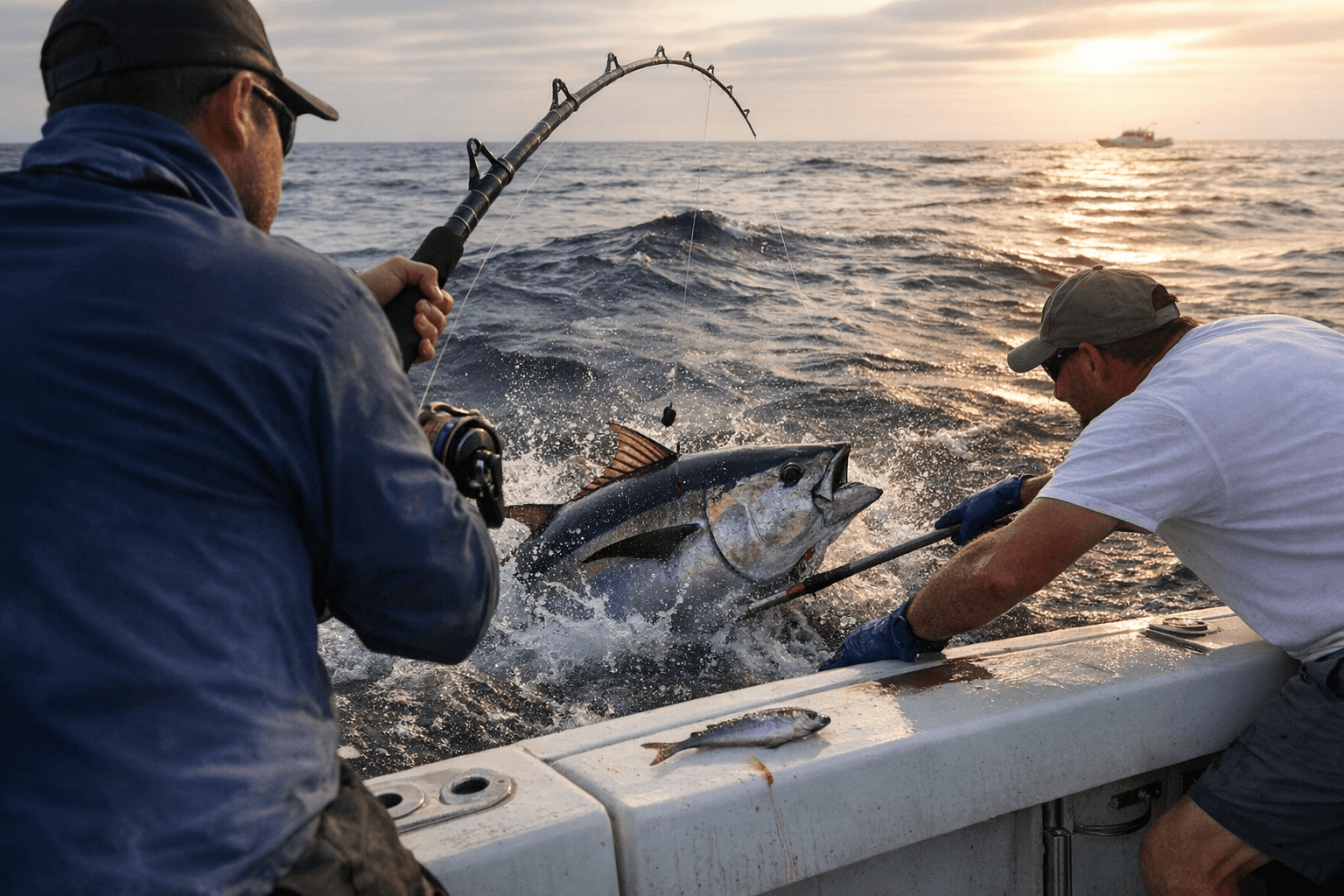
Tuna fishing rewards preparation and disciplined boatwork. Check local water temperatures, frontal lines, bait availability and recent community reports before you leave the dock. Choose a day with a manageable sea state for your skill level and plan crew roles and rotation for bite-watch duties so fatigue does not cost a hookup.
Match tackle to the tuna you expect to encounter. For 25–80 lb class yellowfin, use 30–80 lb braid with 60–130 lb fluorocarbon leaders depending on fish size. For large bluefin, move to heavy braid in the 80–200 lb range and 200–600 lb mono or nylon leaders when gaffing is expected. Match rods and reels to your methods: conventional lever-drag gear for long-range yellowfin and big bluefin efforts, stickbait rods and high-capacity spinning setups for light-tackle yellowfin techniques.
Bait and presentation remain the central tactics. Chunk fresh cut bait around birds and weedlines to concentrate fish, and use live baiting when available to increase hookups. Pick off surface busts with long casts and fast retrieves on stickbaits. Slow-troll large lures or bonita strips for spread-out fish that are not actively schooling at the surface.
Use electronics and depth tools to find fish rather than guess. Sonar, CHIRP and downriggers help locate bait schools and temperature breaks; thermoclines and current edges often concentrate tuna. Mark fish with the fishfinder and drift through schools rather than circling aimlessly; a targeted drift keeps baits in the strike zone longer.
Terminal tackle matters. Use corrosion-resistant circle or J-hooks sized to your bait and target species. Test leader-to-hook knots before leaving the slip and carry leaders with welded eyes for heavy tuna. Have heavy gaffs ready and a clear plan for gaff placement; rehearse gaffing and crowd control with the crew to reduce deck accidents.
If you plan to release fish, minimize handling and time out of water. Use large-diameter soft nets or a mat, avoid gutting or excessive bleeding when releasing, keep the fish in the water while removing hooks, use proper de-hooking tools and revive fish before letting them swim away. Record tag numbers and sizes when tagging for fisheries science.
Safety and boatwork are non-negotiable. Use rod belts or shoulder harnesses for long fights, clear the deck of trip hazards, and coordinate multiple crew members during gaffing. Know local bag limits, size rules and reporting or permit requirements for bluefin and other regulated species, and comply with seasonal restrictions and quick reporting rules where required.
Common failure points include underestimating leader abrasion, improper drag settings and poor gaff timing. Practice drag settings before fights and rehearse onboard roles so the team reacts smoothly when a tuna hits. Verify local rules and sea conditions before each trip and apply these tactics to move from beginner outings to confident offshore tuna days.
Know something we missed? Have a correction or additional information?
Submit a Tip