Essential wing-foil primer: gear, stance, safety, and progression
A practical wing-foil guide lays out gear rules, stance tips, safety gear, and drills to speed progression for new and intermediate foilers.
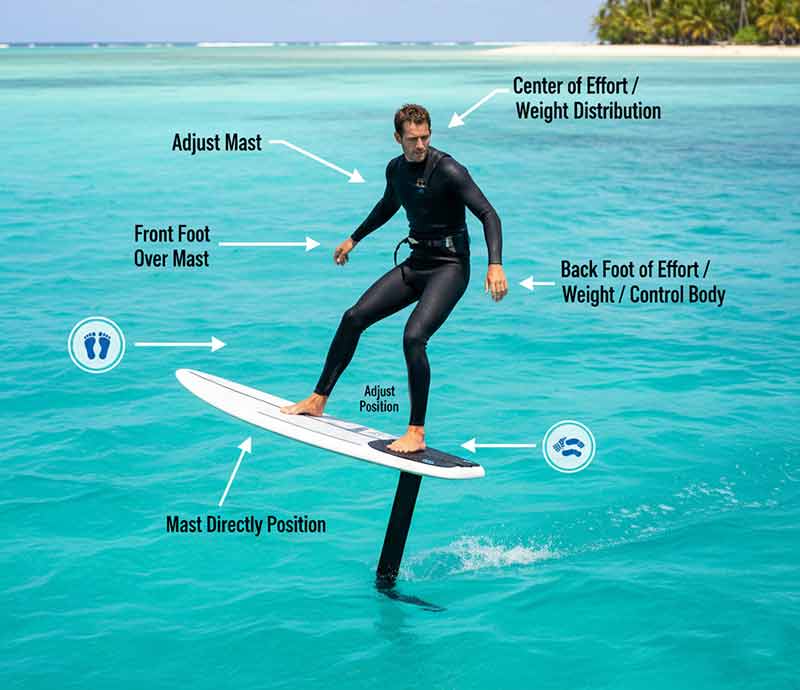
Transitioning to wing-foiling is a mix of gear math, trim tuning, and small, repeatable practice steps. This primer collects the rules of thumb and drills that matter most on the water so you can spend less time guessing and more time flying.
Start with flotation. For early lessons pick a higher-volume board to reduce catch and make paddling and water starts forgiving. A useful rule of thumb is board volume roughly equal to your weight in kilograms plus about 50 percent for beginners, with staged down-sizing as balance and confidence improve. Mark your preferred setup positions on the board so you can reassemble a proven configuration after travel or maintenance.
Choose wings by matching rider weight, wind range, and experience. Beginning foilers benefit from a larger wing for easier, steadier power; move to smaller sizes as wind strength and skill increase for better speed and maneuverability. Foot placement and stance matter as much as raw power. A slightly forward beginner stance helps avoid excessive climb while subtle fore-aft shifts control pitch and lift. Practice small adjustments rather than large corrections to keep takeoffs consistent and landings safe.
Foil selection and tuning are the core of trim control. Bigger front wings give more lift and easier foiling; smaller front wings reward you with higher top speed and sharper turning. Rear stabilizer choice and mast length affect stability and handling, and moving the mast fore or aft on the board shifts trim and response. Shorter masts make takeoffs and recovery easier in shallower or bumpier water; longer masts give more clearance and smoother rides in chop once you are comfortable flying.
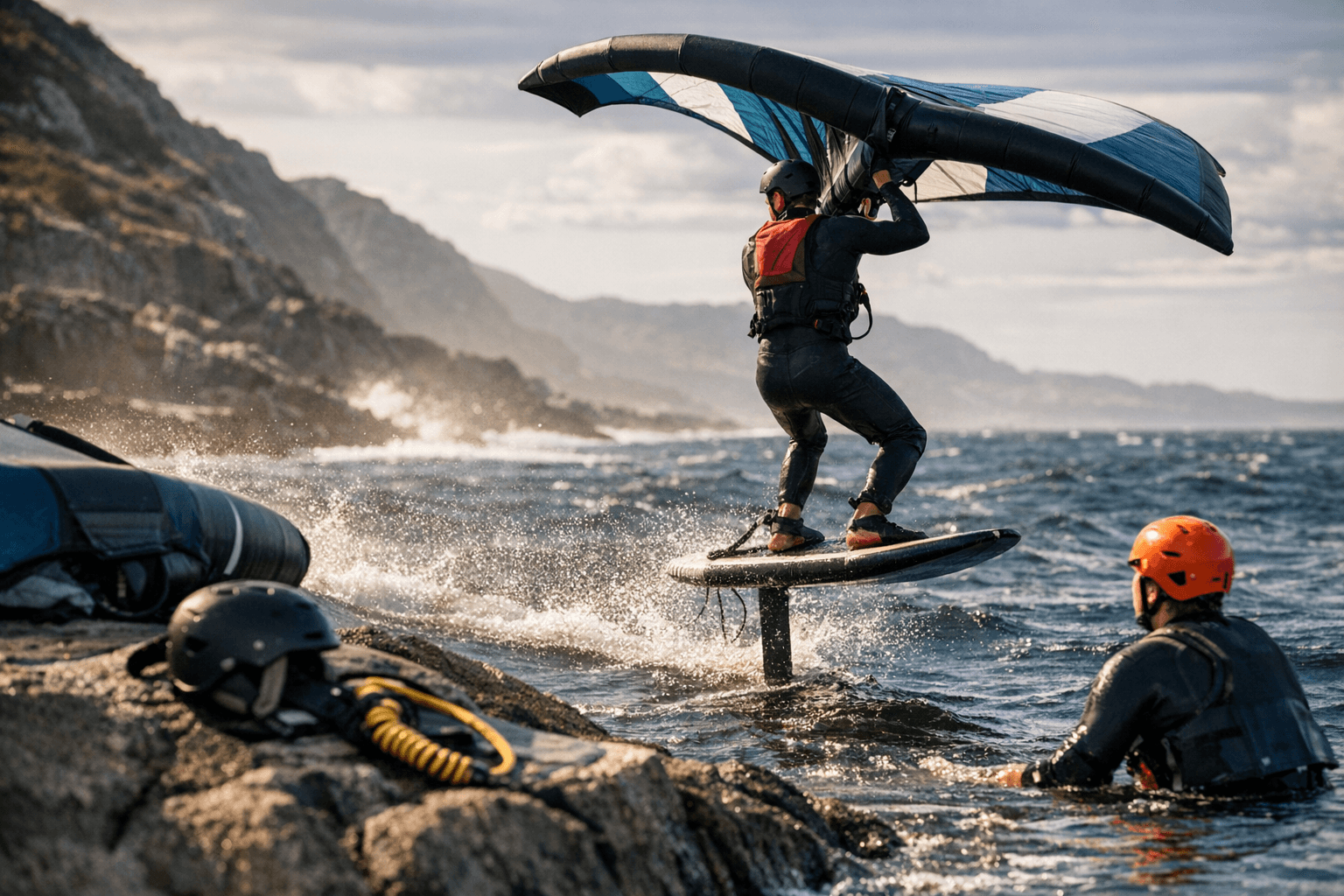
Safety and kit care are non-negotiable. Wear a helmet and impact vest, use a quick-release leash, and practice nearshore with a coach or safety boat for the first sessions. Rinse gear after saltwater use, check bolts and hardware for corrosion or looseness, and keep a basic spares kit so you can fix common problems without ending a session early.
Follow a progression that builds confidence. Begin with land drills to rehearse holds and foot placement, move to water handling and wing control, then practice knee starts and knee-to-stand transitions before committing to full standing flights. Focus on short, repeatable rides rather than long, inconsistent flights; incremental wins are how skills stick.
This compact primer gives you practical setup rules and a clear path for steady progression. Apply the volume and wing-sizing rules, dial in stance and mast position, use the safety checklist, and practice the staged drills. Do that and your next sessions will feel more controlled, more productive, and more fun as you move from struggling to cruising in the foil sweet spot.
Know something we missed? Have a correction or additional information?
Submit a Tip