EU weighs bloc-wide age verification rules to protect children online
France, Spain and Greece are pressing Brussels for EU-wide age checks as the Commission prepares a proposal after its child-safety panel’s July report.
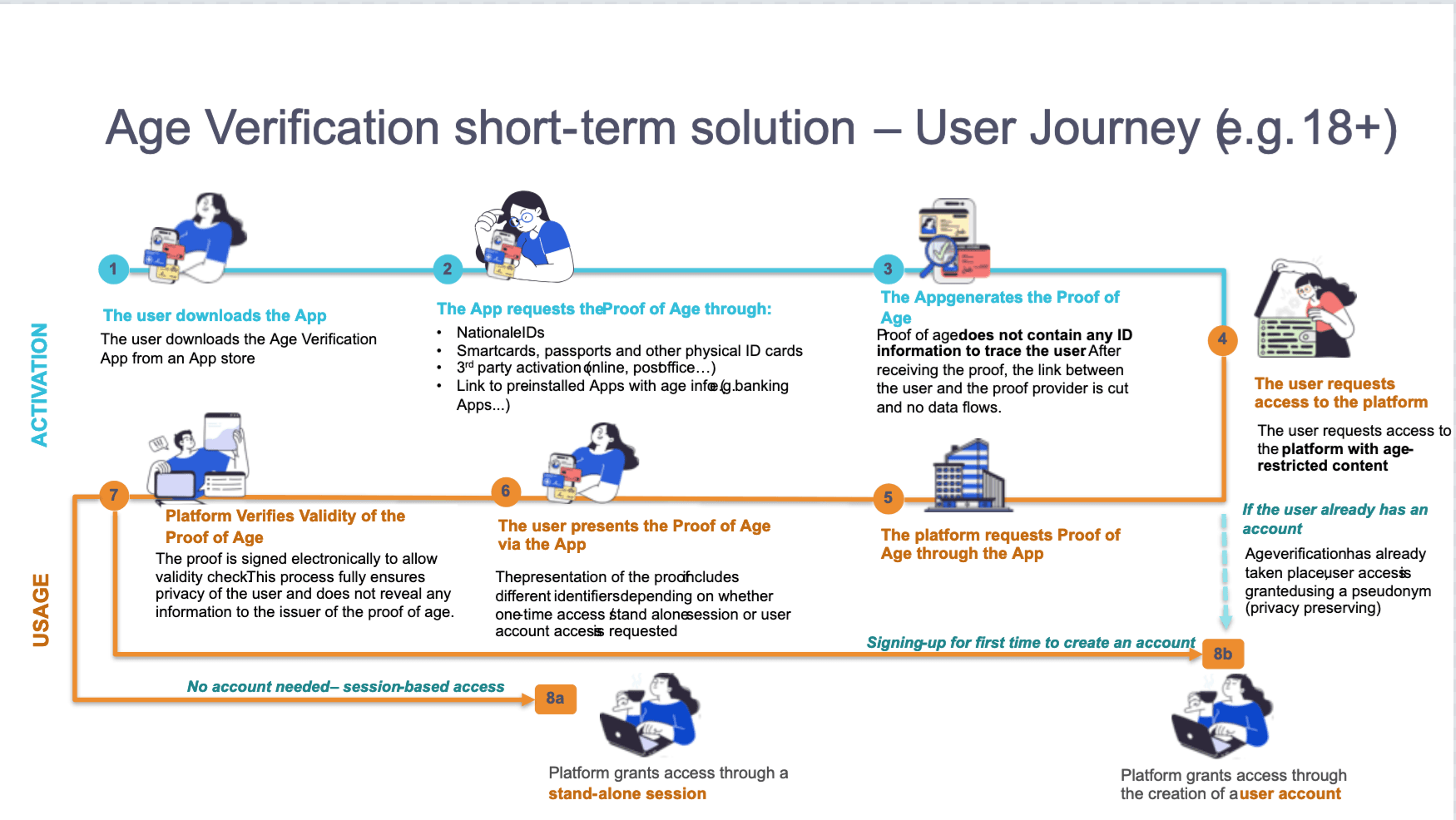
The European Commission is preparing a proposal to limit children’s access to social media platforms. Its special panel on child safety online delivered its final report in July 2026.
France, Spain and Greece are pushing for a common EU age-verification system and a minimum age for social media access, to replace the patchwork of national rules that is easy to evade.

The Commission set up the panel after Ursula von der Leyen announced it in her 2025 State of the Union address. The group first met on March 5, 2026, and held three meetings between March and June, bringing together young people and experts. Its remit was broad: to examine both the risks and the benefits of social media and other digital services for children, while testing whether a harmonised age restriction could work across Europe.
On July 14, 2025, the Commission published guidelines under the Digital Services Act on the protection of minors, alongside a prototype age-verification app. The guidelines call on platforms to reduce minors’ exposure to addictive design features such as streaks and read receipts, make children’s accounts private by default and give users more control over recommender systems. The age-verification prototype is designed to let people prove they are over 18 without revealing their exact age or identity.

Existing age rules have proved easy to bypass. France and Greece support a ban for users under 15, while Spain wants the issue handled at EU level. In March 2026, the European Parliament’s research service counted nearly 40 countries worldwide already discussing, proposing, adopting or implementing age-based restrictions. A Parliament committee has also backed an EU-wide digital minimum age of 16 for social media, video-sharing platforms and AI companions, with parental consent for users aged 13 to 16.

Age-assurance methods remain imperfect, can raise privacy concerns and can be bypassed with borrowed or bought accounts. Early implementation elsewhere, including in Australia, still lets children find ways onto platforms after account removals. The Commission opened investigative actions into Snapchat, YouTube, Apple App Store and Google Play on October 10, 2025.
This article was produced by Prism’s automated news system from verified source data, official records, and press releases, then run through automated quality and moderation checks before publishing. The system is built and supervised by the people who set the standards it runs under. Read our full AI policy.
Did this article answer your question?