Eugene firefighters rescue man pinned in crevice near Willamette River
Eugene firefighters freed a man pinned in a crevice beside the Willamette River; quick action and bystander calls were credited with saving his life.

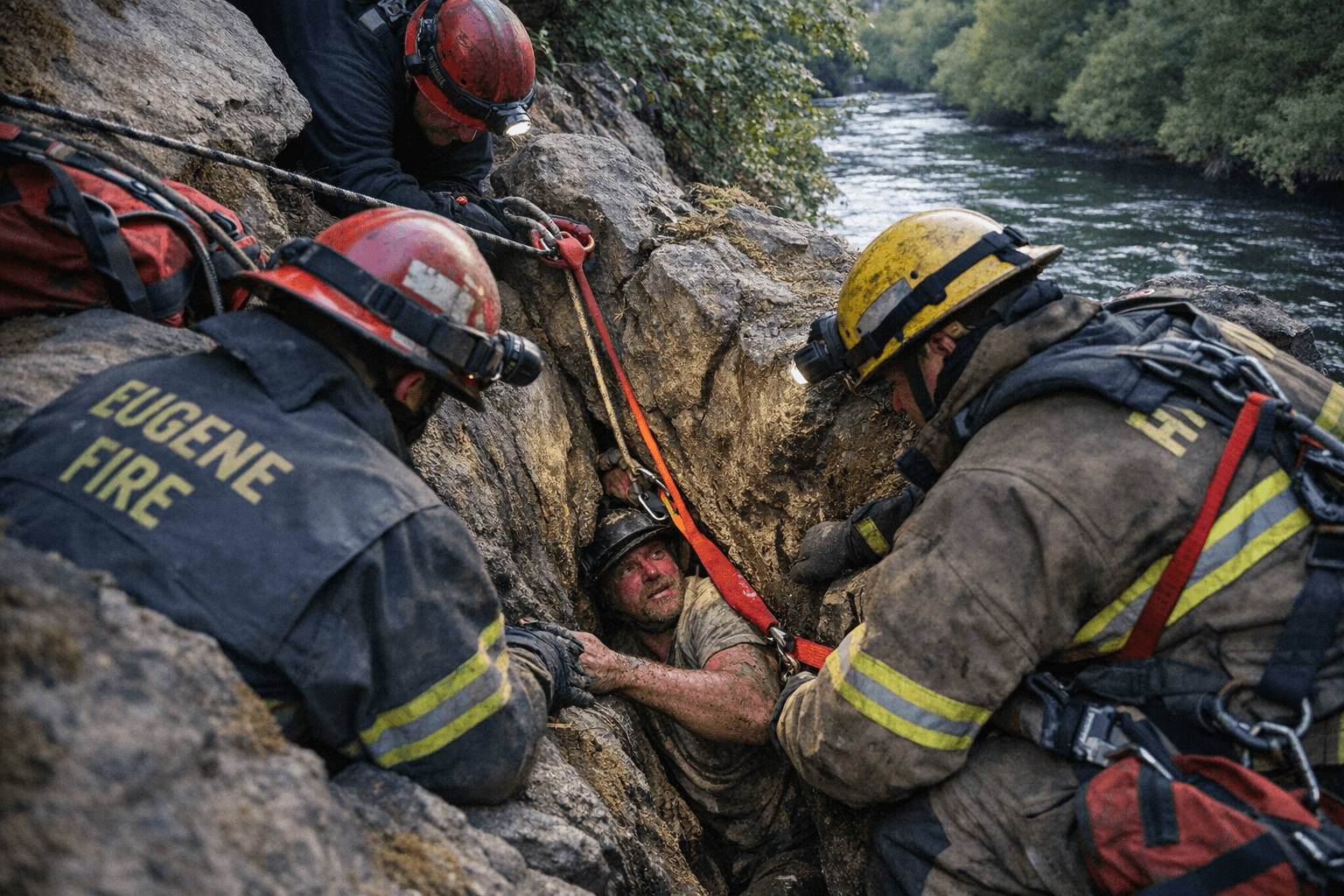
A coordinated rescue by Eugene Springfield Fire Department crews pulled a man from a narrow crevice beside the Willamette River diversion after walkers spotted him and called 911. The department described the incident as “an unusual rescue operation near the University of Oregon Sunday afternoon,” and credited bystanders with alerting emergency services.
Responders arrived to find a male in his mid-30s unresponsive and pinned between a concrete diversion wall and a large quarry stone about 10–15 feet down a crevice. The call initially reported a “possible cardiac arrest.” “Several crews with a total of 20 personnel responded for staffing and specialty equipment to aid in the rescue,” the department said. Crews extricated the man and he was transported to a hospital in critical condition with a body temperature of 76 degrees, consistent with severe hypothermia.
The department thanked the public for their role in the rescue, saying, “If not for these attentive bystanders, the victim would not have survived much longer.” Officials did not identify the man. The rescue drew attention in part because it occurred close to campus riverfront paths frequented by University of Oregon students and local walkers.
The Lane County Medical Examiner was investigating a separate death the same day after another body was pulled from the Willamette River. At this time it was unclear whether the two incidents were related. The coincidence underscores ongoing winter risks around the river’s diversion structures and rocky banks.
For Lane County residents the episode highlights several practical safety and public-safety planning issues. Immediate community impact includes renewed concern among riverfront users about slippery banks, hidden crevices and cold-water exposure. The rapid multi-unit response also illustrates the resource intensity of technical rescues; ESF deployed 20 personnel and specialty equipment, drawing emergency responders from staffing rosters that serve other calls across Eugene and Springfield.
Longer term, the rescue may prompt local officials and campus authorities to reassess signage, barriers or patrols along high-risk stretches of the river, especially during cold months when hypothermia and cardiac complications are more likely. For neighbors and students, the takeaways are straightforward: stay back from steep diversion walls, travel with companions where possible, and call 911 immediately if you see someone in distress.
The investigation by the medical examiner will determine whether the river death is connected to the crevice rescue. In the meantime, the episode serves as a reminder that timely bystander action and coordinated emergency response can make the difference between life and death on Lane County waterways.
Sources:
Know something we missed? Have a correction or additional information?
Submit a Tip