European leaders weigh EU expansion to 33 members at Montenegro summit
European leaders met in Montenegro as enlargement tests whether the EU can grow to 33 members without slowing to a standstill.
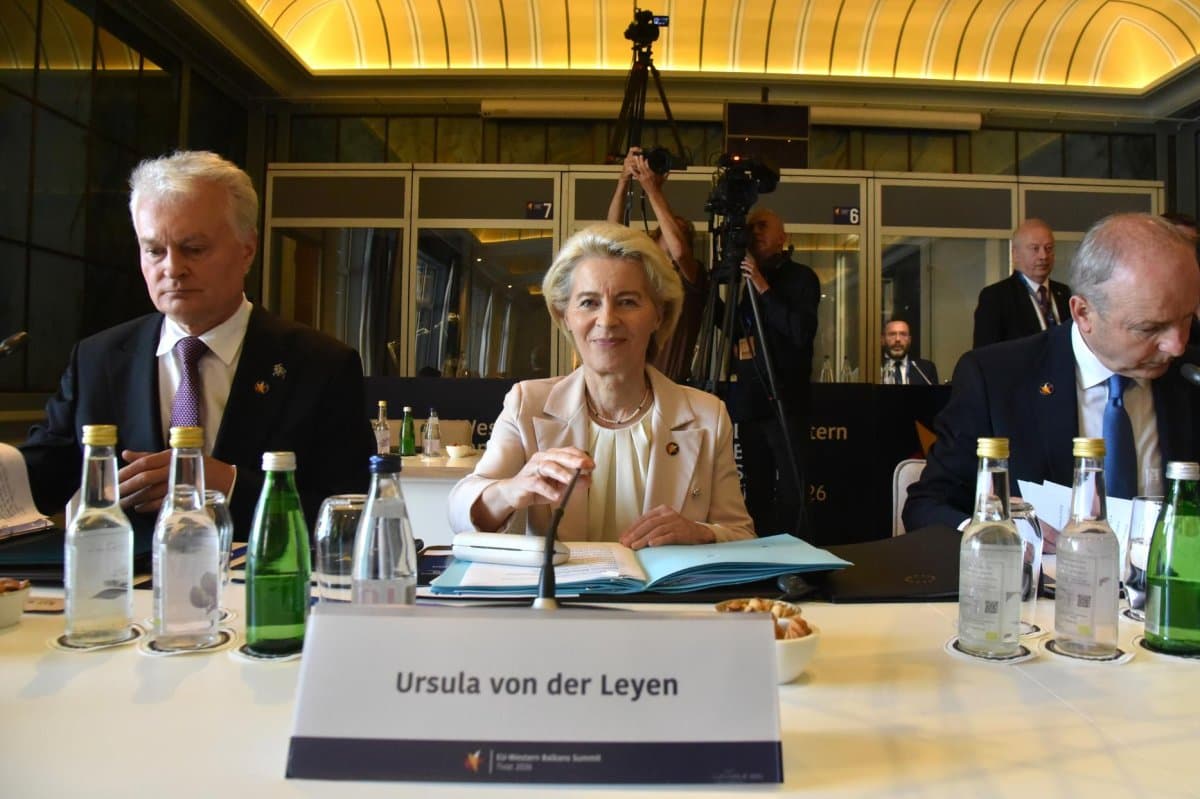
More than 30 European leaders gathered in Tivat on Friday for a summit that put a single question at the center of the enlargement debate: can the European Union admit new members without freezing its own decision-making? French President Emmanuel Macron, German Chancellor Friedrich Merz and European Commission President Ursula von der Leyen were among the senior figures at the meeting, which framed enlargement not as a ceremonial promise but as a test of the bloc’s capacity to govern itself.
The political appeal of expansion was clear. Montenegro and several Balkan states are pressing for a path into the EU, and the gathering was meant to keep that path open. But the conditions remain demanding. Every candidate still has to show progress on reforms, governance and the rule of law, with some countries also facing environmental and anti-corruption benchmarks before they can move forward.

Albania emerged as the likely next entrant in line, but its case remained under scrutiny. The country has come under pressure to do more against organized crime and to meet environmental standards, especially after prosecutors opened an inquiry into a luxury resort backed by Jared Kushner in a protected area. That episode underscored how accession talks now reach beyond broad promises of reform and into the details of land use, enforcement and political accountability.

Bosnia-Herzegovina, Kosovo and North Macedonia were also discussed, though their prospects looked less certain. Domestic politics and regional disputes continue to slow each of those candidates, leaving them in a more fragile position than Montenegro or Albania. That uneven field illustrated the central tension in the enlargement process: the EU wants to signal that the western Balkans have a future inside the bloc, but it is not lowering the bar to do it.

Von der Leyen’s message was that enlargement remains merit-based and that reforms can pay off, a formulation designed to reassure both current members and aspirant states. The summit in Montenegro therefore served as both a political signal and a practical checkpoint, with Europe weighing whether it wants to deepen internally, widen outward or try to do both at once in a more volatile geopolitical environment. If the bloc does grow to 33 members, the larger question will be whether its institutions can absorb new states without paralyzing the union’s core agenda.
This article was produced by Prism’s automated news system from verified source data, official records, and press releases, then run through automated quality and moderation checks before publishing. The system is built and supervised by the people who set the standards it runs under. Read our full AI policy.
Did this article answer your question?