Europe’s heat wave exposes fragile infrastructure as record temperatures soar
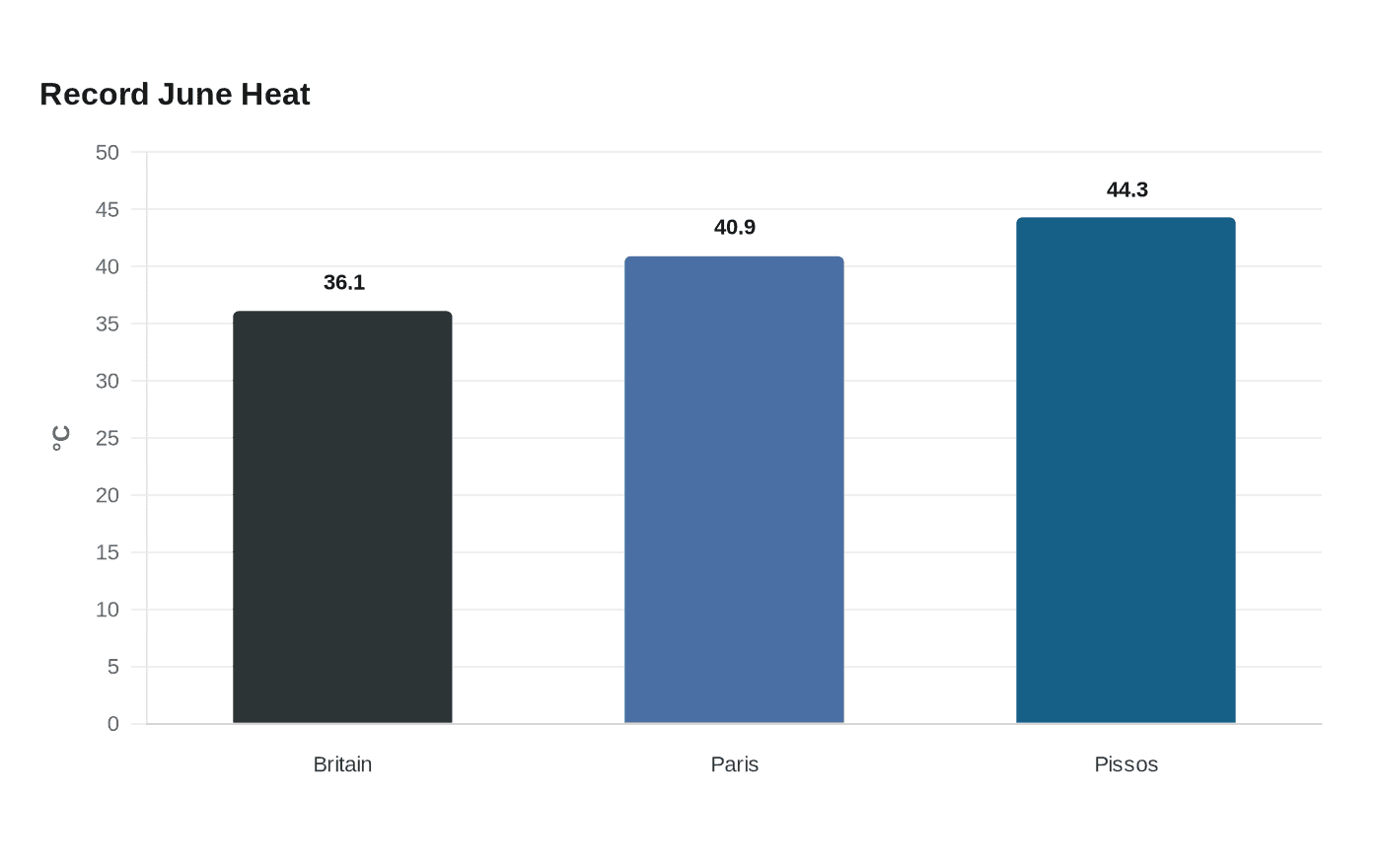
Rail lines, schools and power grids buckled as Britain hit 36.1 C and Paris 40.9 C, exposing how unprepared Europe is for record heat.

France and Belgium cut rail services as a heat wave strained schools, power lines and nuclear reactors across Western Europe.
The European Environment Agency puts extreme weather losses from 1980 to 2024 at about 822 billion euros across EEA member and cooperating countries. Over the same period, weather and climate extremes caused about 441,000 deaths, with heatwaves accounting for about 95% of them. Europe is the fastest-warming continent in the world, and the agency warns it is still not prepared for rapidly growing climate risks as storms, droughts, floods and heat damage roads, infrastructure and the wider economy.
France scaled back commuter lines around Paris, while Belgium’s SNCB canceled some rush-hour trains to reduce the risk of breakdowns blocking the tracks. 845 schools were closed in France, and 1,800 were told to let students out early; more than 1,000 schools closed across England and Wales under rare red weather warnings. Italy’s health ministry placed 16 cities, including Florence, Milan, Rome, Turin and Verona, on its highest heat alert.
Around 68,000 homes in western France lost electricity in a heat-related outage at a transformer in Ergué-Gabéric in Finistère, with priority given to healthcare facilities and other critical sites. France’s nuclear output fell by 4.1 gigawatts, about 7% of total demand, because high temperatures limited access to cooling water.
Britain recorded its highest June temperature ever at 36.1 C, Paris reached a June record of 40.9 C, and Pissos in southwestern France hit 44.3 C, the hottest day recorded there since measurements began nearly 80 years ago. An Omega block weather pattern trapped extreme heat over Western Europe, pushing temperatures as much as 18 C above normal.
This article was produced by Prism’s automated news system from verified source data, official records, and press releases, then run through automated quality and moderation checks before publishing. The system is built and supervised by the people who set the standards it runs under. Read our full AI policy.
Know something we missed? Have a correction or additional information?
Submit a Tip