Everest record-holder urges stricter vetting after deadly overcrowding
Kenton Cool warned that Everest’s deadliest problem is not only altitude, but who is allowed onto the mountain when traffic, inexperience and rescue risks collide.

A veteran Everest climber is pressing expedition operators to stop treating ambition as enough. Kenton Cool, the British guide who reached the summit for the 20th time last week at age 52, said companies need to screen climbers far more strictly if they want to cut deaths and high-altitude rescues on the upper mountain.
Cool’s argument goes to the heart of Everest’s commercial transformation. He said the mountain is not inherently too dangerous when it is climbed properly, with the right guides, techniques and planning. The real failure, he suggested, is allowing climbers onto the route without enough experience or knowledge to handle the demands of the climb and the descent.
The warning carried added weight after five people died on Everest this year, and after some climbers got into trouble in the death zone and had to be rescued while coming down. Those incidents underscored a familiar pattern on the world’s highest peak: getting to the summit is only half the challenge, and for underprepared clients, the descent can become the deadliest part of the climb.
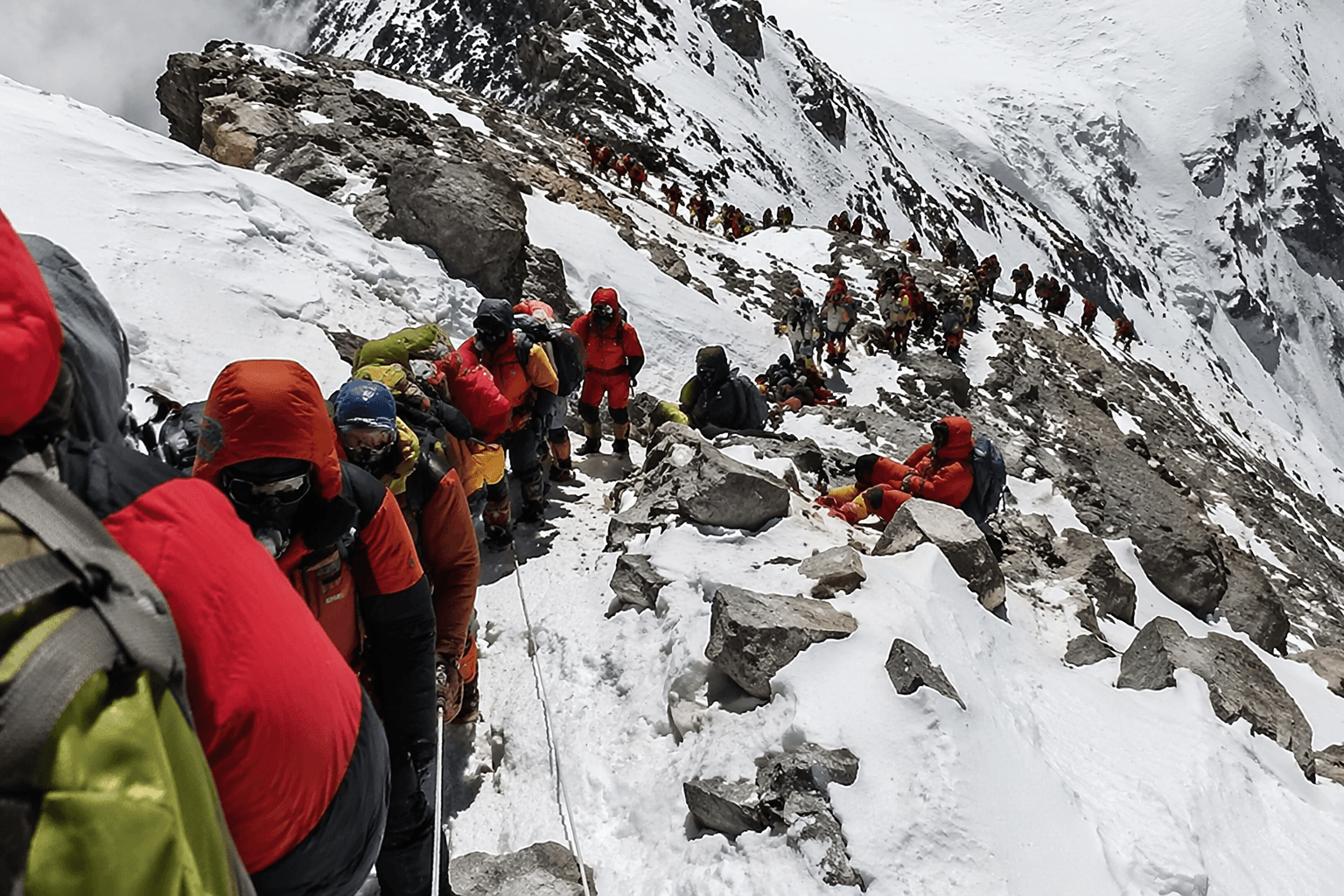
Overcrowding remains central to the risk. Last week, 274 climbers reached the summit in a single day from the Nepali side, a record that highlighted how Everest’s popularity can produce bottlenecks and traffic jams near the summit. The narrow passage near the Hillary Step can become extremely difficult to move through when too many climbers are on the route at once, especially in thin air where the body cannot survive long without supplemental oxygen.
Nepal has tried to answer those concerns by tightening controls and raising fees, an acknowledgment that congestion and inexperience are now part of the mountain’s governance problem as much as its climbing challenge. Cool said conditions have improved in important ways. He pointed to better technology, rope-fixing, weather forecasting and Sherpa coordination, and argued that climbing in 2026 is more professional than in the past.
But his message was a warning as much as a celebration of progress. If operators continue to take on climbers who are not ready for the mountain, Everest’s commercial success will keep colliding with the limits of safety. The mountain can still kill not because it is unmanageable, Cool suggested, but because the business built around it has not learned how to say no.
Know something we missed? Have a correction or additional information?
Submit a Tip