Guide to Choosing Your First Warhammer 40,000 Army: Aesthetics, Playstyle, Budget
Find the right Warhammer 40,000 army by balancing aesthetics, playstyle, and budget so you enjoy painting, playing, and growing your collection.
1. Look and lore
Pick a faction that excites you visually and narratively—this is what will keep you building and painting between games. Models you love painting make practice fun and motivate you to finish units, while the faction’s backstory gives you hooks for conversions, color schemes, and themed armies. Whether you want stoic loyalist Space Marines, lithe Aeldari, swarming Tyranids, or chaotic Daemons, choosing on aesthetics and lore builds long-term hobby momentum and community identity at events and club nights.
2. Playstyle
Decide how you like to win: close combat brawls, shooty lists, hordes, elites, or monsters—different factions skew toward different tactics. Astra Militarum leans heavy on combined arms of tanks and infantry; T’au are long-range firepower; Orks reward you for mobs and mayhem; Necrons favor durability and heavy units; Space Marines can be tailored to nearly any role. Knowing the mechanical flavor you enjoy saves money and time: if you hate micro-managing huge swarms, you’ll be happier with an elite or mechanized force than a Tyranid/IG horde.
3. Starter boxes and budgets
Start with value packs like Combat Patrols, Start Collecting! boxes, or boxed starters to get a playable core without breaking the bank. These sets give you a leader, a few troops, and a strong unit or two—enough to learn rules and painting while stretching your budget. Think about long-term model counts: some armies scale to hundreds of models, others remain compact but expensive per-sculpt; factor in extra units, transport, paints, basing, and tools when planning your first year spend.
4. Rules and community
Check current faction support—codexes, FAQs, and the digital app—because strong or patchy rules affect how your army performs and how fun it feels. Visit your local gaming group or online forums to see which factions are popular nearby; playing the same faction pool speeds learning and gives you regular opponents. Community relevance matters: friendly tables, local missions, and meta trends shape what you practice and which tweaks or conversions players accept at events.
5. Painting and hobby tools
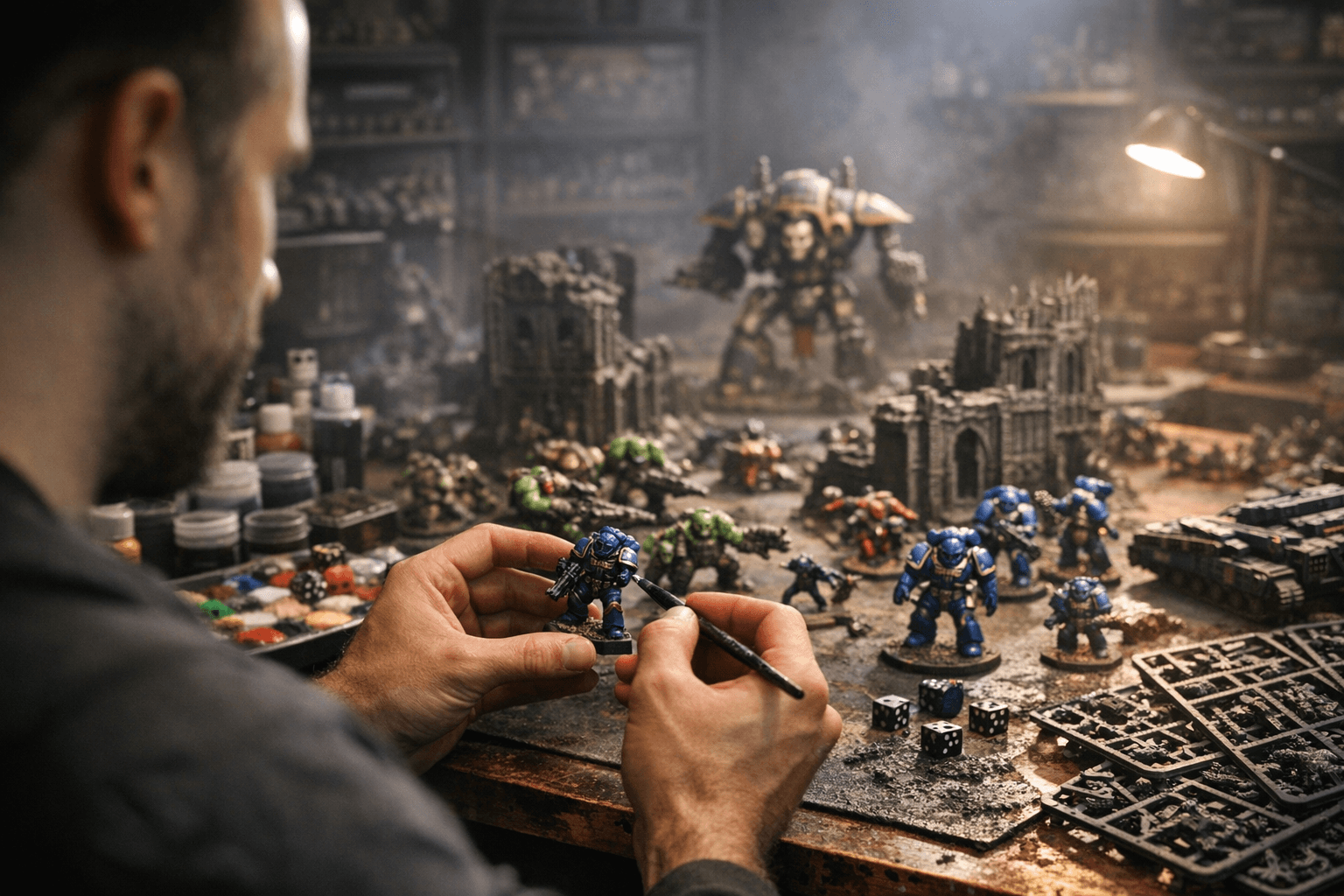
Start small—build an HQ and two troops so you learn assembly, priming, and basic painting techniques without overwhelm. Essential tools: clippers, hobby knife, plastic glue for plastics, superglue for resin/metal, files or sanding sticks, primer, basecoat paints, a small brush set (base, shade, layer, detail), and varnish to protect paintwork. Brands like Citadel, Vallejo, and Army Painter are common; pick one and stick with basic colors, then expand as your style and techniques evolve. Learning to batch-paint and to varnish properly saves time and keeps your force table-ready.
6. Learning the game
Begin by learning missions, objective control, and target priority—these fundamentals win games more often than tech tricks. Play casual matches to test lists and to understand unit roles before stepping into narrative or matched play; use practice games to refine army composition and timing. Keep one simple list you can build and paint quickly; consistency in play and practice will improve dice management, sequencing, and board awareness far faster than reading every FAQ.
- Heavy shooty armies (T’au, some Guard builds) reward cover denial and mobility—bring mobility or screening.
- Hordes (Orks, Tyranids) rely on board control—anti-horde templates and area-of-effect help.
- Durable elites (Necrons, some Chaos builds) need focused removal and smart target priority.
7. Appendix: quick matchups, suggested first-box buys, and resources
Quick faction matchups help you anticipate common local encounters and pick counters or enjoy matchups:
- Shooty/long-range: T’au Starter/Strike Force or Astra Militarum Combat Patrol for tanks and infantry synergy.
- Elite/skirmish: Dark Angels/Blood Angels Iron Hands (Space Marines Start Collecting! boxes) for versatility and smaller model counts.
- Horde/mass: Start Collecting! Orks or Tyranid Combat Patrol to establish brood/warboss foundations.
- Monsters/mechanicals: Necron Start Collecting! or Chaos Daemons box sets provide resilient big pieces.
Suggested first-box buys by playstyle:
- Warhammer Community for official rules notes and release info
- Manufacturer apps for codexes and FAQs
- Community hubs like r/Warhammer40k and local store Facebook groups for tournament and pick-up info
- Painting channels and tutorials on YouTube (search channels with step-by-step tabletop painting guides) for practical techniques
Reputable resources to learn and watch:
Practical closing wisdom Pick what makes you want to paint at 10 p.m. and play at your local store on Saturday—enthusiasm beats spreadsheet perfection. Start with a small, paintable core, use a starter set for value, and play casual games while you learn missions and tactics. Most importantly, join local nights, ask for demo games, and trade tips: the hobby grows faster when you’re part of a table where people share glue, paint, and hard-won advice.
Know something we missed? Have a correction or additional information?
Submit a Tip