Everyday Care for Handmade Sterling Silver: Cleaning Steps and 925 Authentication
Learn to authenticate handmade sterling silver and keep it bright with gentle daily care, a safe baking-soda soak, smart storage, and the right cleaning cadence.

1. Authenticate: look for 925 hallmarks and artisan finishing.
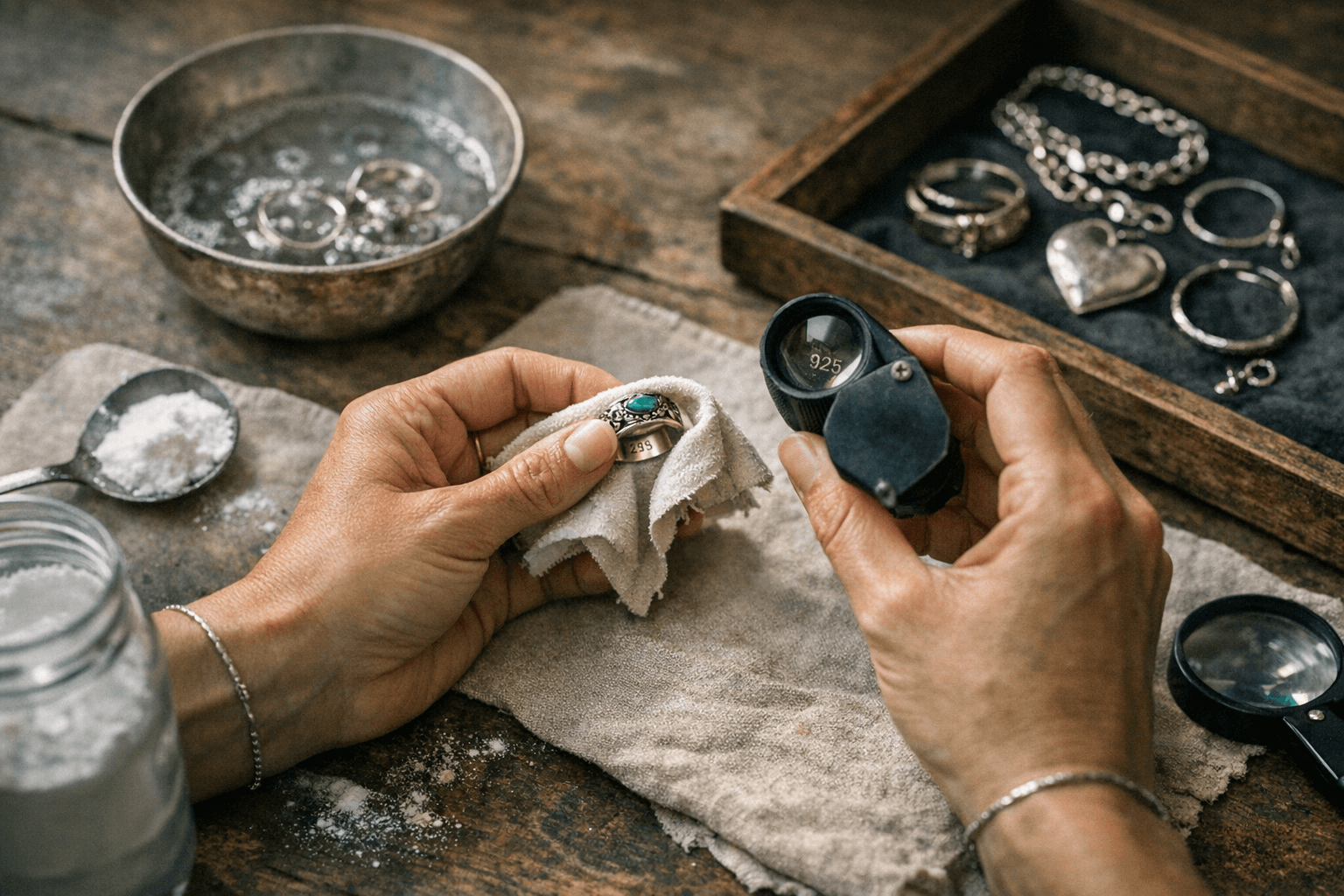
Sterling silver is legally 92.5% pure silver, so the quickest authentication is a clear "925" stamp paired with signs of hand finishing — tool marks, slightly varied link joins, and hand-soldered joins that reflect artisan work. ITALIA Chains' guidance is blunt: "look for 925 hallmarks and artisan finishing." Remember that hallmark alone doesn’t guarantee provenance, but a missing hallmark or crude casting is a red flag for plated or low-quality pieces.
2. Know what causes tarnish so you can prevent it.
Silver tarnishes when it reacts with sulfur compounds, oxygen and moisture in the air; skin oils, sweat, sunlight, and household chemicals accelerate that process. Vogue’s Nunns puts it plainly: "Excessive exposure to air, moisture, and sunlight is what causes silver jewelry to tarnish, so always store silver pieces inside a lined jewelry box." Chlorine, bleach and cosmetic buildup are especially corrosive and should be avoided.
3. Everyday wipe-down: the simplest, safest maintenance.
After every wear, gently wipe handmade sterling with a soft, dry cloth to remove oils and residue — Forai and other sources recommend a soft cloth specifically designed for silver. This single habit reduces the frequency of deeper cleans and prevents the thin patina from darkening unevenly. For light tarnish, Dianamjewels prescribes a soft cloth with warm water and a mild dish soap as the first-line treatment.
4. Mild soap and water for light tarnish: step-by-step.
Use warm (not boiling) water, a drop of mild dish soap, and a soft cloth or brush to loosen everyday grime; rinse and dry immediately and thoroughly. This method is ideal for delicate settings, thin chains, and pieces with tourmalines, pearls, or other soft stones where abrasives would be harmful. Forai recommends a silver-specific cloth or a mild soap-and-water solution when deeper cleaning is needed but stones or patina must be preserved.
5. The baking soda + aluminum-foil soak: a proven home deep-clean.
For heavier oxidation on plain sterling (no porous stones), line a bowl with aluminum foil, add baking soda and hot water, and soak your jewelry for 5–10 minutes; then rinse, dry thoroughly, and store. Dianamjewels notes that "This method safely removes oxidation without harsh chemicals," and cites the American Gem Society for this electrochemical cleaning approach. Limit this to plain or solid pieces — avoid submerging pieces with glued settings or porous stones.
6. Advanced or unspoken deep-clean methods — use caution.
Dianamjewels references "Vinegar, Baking Soda & Hydrogen Peroxide (Deep Cleaning)" as an option but does not publish full steps in the excerpt, so do not attempt concoctions unless you follow verified instructions from a jeweler or a reputable authority. When in doubt, use a dedicated silver polish cloth (Forai recommends the Sunshine Cloth) rather than experimenting with strong household chemicals that can strip finishes or damage stones.
7. Drying, polishing and immediate post-clean storage.
Always dry silver thoroughly after any wet cleaning — moisture left in crevices accelerates re-tarnish. After drying, use a soft polishing cloth for final luster; then place the piece into an airtight or anti-tarnish storage solution immediately. Dianamjewels emphasizes that you must "dry thoroughly and store properly to prevent future tarnish."
8. Smart storage options that actually work.
Store in a room-temperature, dark, airtight place whenever possible; a lined jewelry box, anti-tarnish pouch, or zip-top bag will reduce exposure to air and sulfur. Vrai advises storing in a "room temperature, dark, air-tight place" and recommends anti-tarnishing bags or anti-tarnish strips; John Hardy adds silica gel packs as an effective desiccant. Keep pieces separated — either in individual pouches, compartments or wrapped in soft cloth — to prevent abrasion and tangling.
9. Wear it often — but remove for risky activities.
Wearing sterling regularly actually helps: Vrai counsels, "Wear it often: Wearing your silver regularly will help prevent tarnish. Your skin's natural oils will help preserve silver." Still, remove silver before swimming, showering, exercising, using household cleaners, or applying cosmetics and sunscreen; John Hardy warns that soaps, hair products and steam can accelerate tarnish and that putting jewelry on last reduces contact with damaging products.
10. Find the cadence that fits your life (and your collection).
Cleaning-frequency guidance varies: Vrai recommends cleaning "at least twice a year" as a baseline; John Hardy suggests "a simple clean and polish once every month or two" for frequently worn artisan pieces. Dianamjewels and Forai recommend "regular" maintenance and "occasional professional polishing." Reconcile this by letting wear patterns and environment dictate cadence: heavy wear and humid climates justify monthly care; a seldom-worn heirloom can be safely inspected and cleaned every six months.
11. Common mistakes that strip shine and value.
Do not use toothpaste — it’s abrasive and causes scratches — and avoid bleach, chlorine, or other harsh chemicals that can corrode silver, as Dianamjewels warns in its common-mistakes list. Avoid over-cleaning, which can remove intentional finishes, and never mix metals in the same storage pouch; mixing increases abrasion and electrochemical reactions. Finally, avoid abrasive brushes or rough cloths on finished, antiqued, or plated surfaces.
12. When to send pieces to a professional.
Reserve professional cleaning for necessary repairs, severe corrosion, or when a piece contains delicate inlays or porous stones; Vrai notes that "barring any necessary repairs or severe corrosion, you likely won’t need the help of a professional jeweler." Dianamjewels also recommends occasional professional polishing to restore worn finishes. A jeweler can also check solder joints and settings on handmade pieces that see daily wear.
13. Brand-specific notes and practical product recommendations.
For storage solutions, Ballinger pairs jewelry with "pretty velvet blue gift boxes" for safe, chic storage, as cited by Vogue; Forai singles out the Sunshine Cloth as a favorite silver-polish cloth; John Hardy recommends anti-tarnish strips and silica gel packs and urges keeping pieces out of the bathroom. Treat these as practical examples you can emulate: a lined box, an anti-tarnish pouch, and a quality polish cloth form a reliable at-home kit.
14. Final takeaway: prevention first, clean carefully, authenticate confidently.
Handmade sterling silver endures when you combine authentication, gentle daily habits, and thoughtful storage: check for a "925" hallmark and artisan finishing, wipe after wear, use mild soap or the baking soda + foil soak (5–10 minutes) for heavier tarnish, and store pieces in airtight, separated containers with anti-tarnish aids. As Dianamjewels summarizes, "Prevention is as important as cleaning. Regular gentle cleaning, proper storage, and occasional professional polishing will ensure your pieces — from rings to necklaces — remain timeless." Follow that formula and your everyday silver will keep its story — and its shine — for years to come.
Know something we missed? Have a correction or additional information?
Submit a Tip