Experts Say Well-Timed Trades Before Trump Policy Moves Warrant Scrutiny
A Reuters review found trades worth hundreds of millions of dollars consistently front-ran Trump policy announcements, with legal scholars calling the patterns "deeply suspicious."

Roughly $580 million poured into oil futures contracts in the minutes before President Donald Trump signaled productive diplomatic talks with Iran. Hours later, those positions were profitable. That episode is one of at least four that legal experts say demand a serious regulatory accounting.
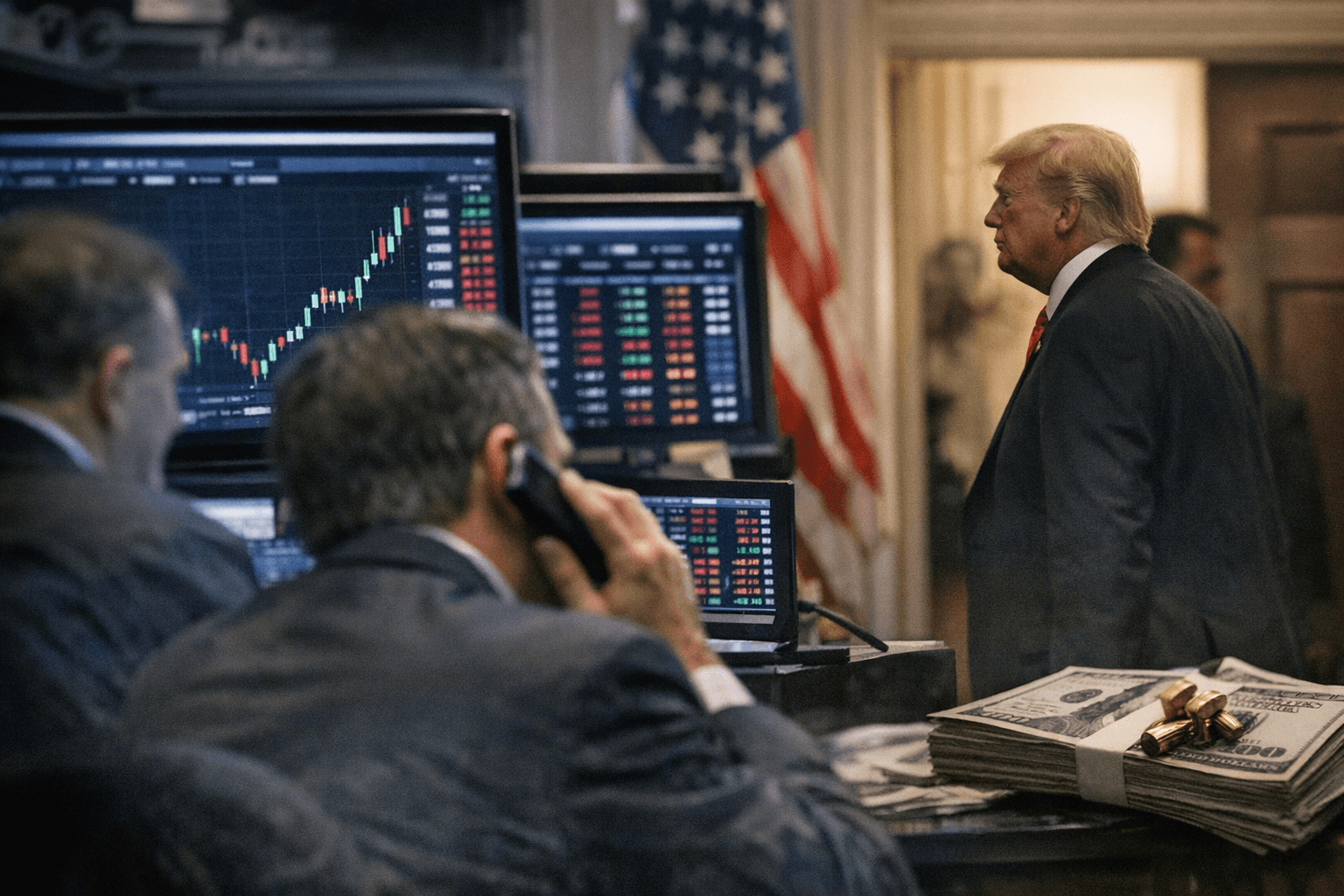
A Reuters review published Saturday identified a recurring pattern of unusually well-timed market bets preceding several of Trump's most consequential second-term policy moves. The trades spanned options, commodity futures and prediction-market wagers, and their timing and scale, experts said, bore little resemblance to ordinary speculative activity.
Andrew Verstein, an insider trading scholar at UCLA School of Law, told Reuters the patterns "look deeply suspicious" and reflected the kind of clustering and timing "you would expect to see if there were informed trading by government officials and their friends."
The review flagged at least four distinct episodes. In January, an anonymous trader on prediction platform Polymarket converted roughly $32,000 into more than $400,000 by betting on the capture of Venezuelan President Nicolás Maduro, placing the wager hours before the operation became public. Separately, a surge of more than 150 Polymarket accounts placed hundreds of bets predicting a U.S. strike on Iran before it happened. And last April, bullish stock options spiked in a narrow window immediately before Trump announced a 90-day pause on "Liberation Day" tariffs that had been convulsing markets, a pause that sent the S&P 500 up 9.5 percent in a single day, its largest gain since 2008.
What distinguishes the episodes, according to the review, is not just timing but breadth. The trades occurred across different markets, asset classes and exchanges simultaneously, a profile that experts say strains coincidence as an explanation. Because many of the transactions were executed in illiquid early-morning or premarket windows, even a single well-positioned counterparty could have moved prices while accumulating a large stake before a public announcement.
Aitan Goelman, a former enforcement director at the Commodity Futures Trading Commission and a former federal prosecutor, said such trades would ordinarily attract regulatory attention, though he noted that enforcement in commodities markets carries its own distinct legal complexities.
The CFTC said it maintains ongoing exchanges with exchanges about trades that raise red flags and conducts its own market surveillance. The SEC declined to comment. The Justice Department did not respond to requests for comment.
White House spokesman Kush Desai rejected the premise. Government ethics rules bar employees from profiting on nonpublic information, he said, adding that "any implication that Administration officials are engaged in such activity without evidence is baseless and irresponsible."
Enforcement veterans note that regulators typically treat trading signals like these as starting points for deeper investigation, not immediate proof of wrongdoing. The standard toolkit includes exchange records, surveillance data and subpoena power to identify counterparties and match account ownership to potential sources of nonpublic information.
The stakes, if investigators do find evidence of improper leaks, extend well beyond individual trades. Markets operate on the premise that no small group systematically profits from privileged government access. A confirmed breach of that premise would likely trigger criminal or civil actions, congressional calls for tighter controls on internal White House communications, and renewed pressure for reforms to how surveillance agencies coordinate on premarket and early-morning trading activity.
This article was produced by Prism’s automated news system from verified source data, official records, and press releases, then run through automated quality and moderation checks before publishing. The system is built and supervised by the people who set the standards it runs under. Read our full AI policy.
Did this article answer your question?

