Explainable AI Predicts LPBF Metal Defects and Links Morphology to Performance
An explainable AI from KIMS and Max Planck links pore size, non-circularity, and 3D spatial distribution in LPBF parts to tensile strength, fatigue resistance, and ductility.
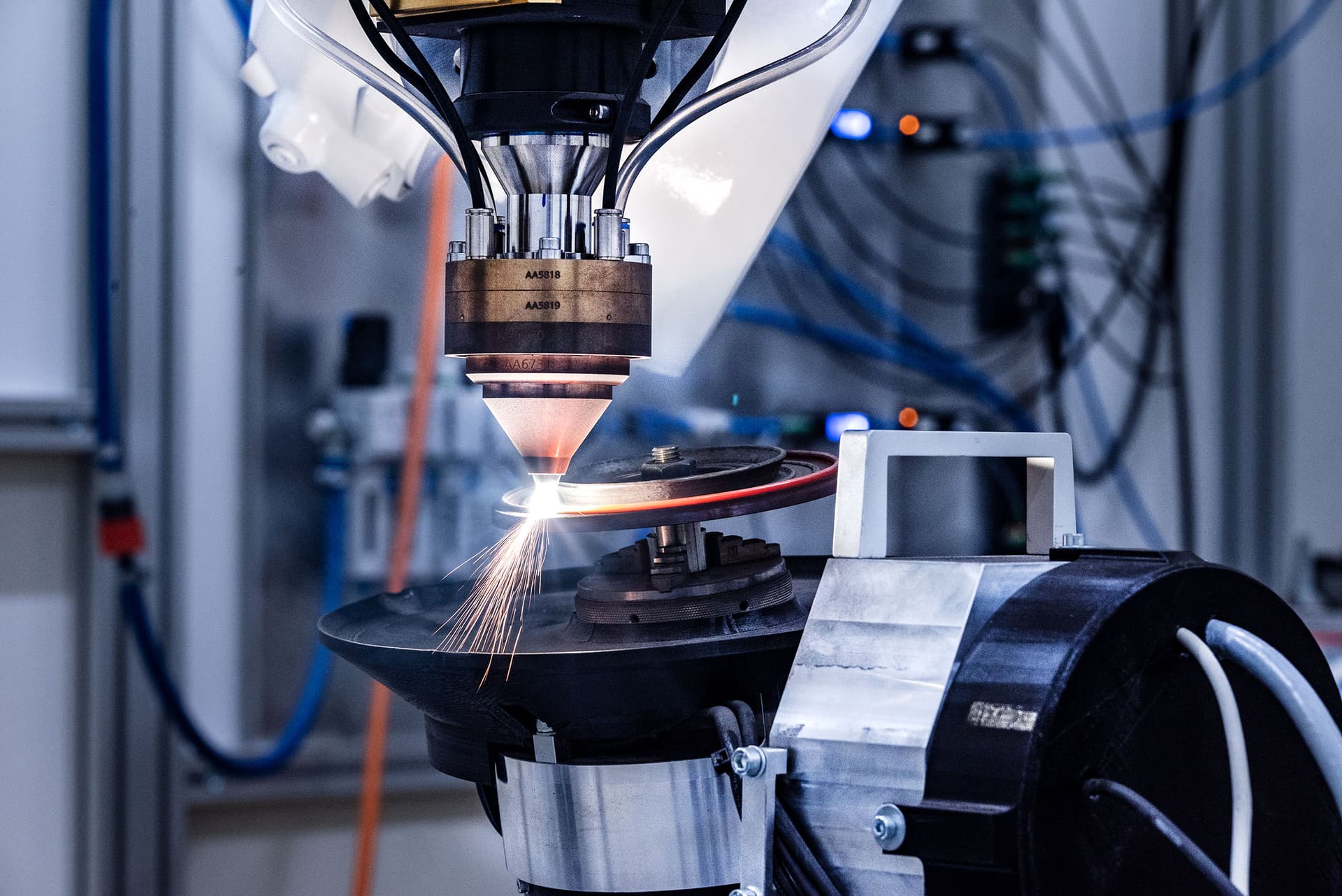
An international team led by Dr. Jeong Min Park at the Korea Institute of Materials Science, with Dr. Jaemin Wang and Prof. Dierk Raabe of the Max Planck Institute for Iron Research, published an explainable AI framework in Acta Materialia that ties LPBF defect morphology directly to mechanical performance. The model uses microstructural imagery to quantify pore size, non-circularity, and spatial distribution and then maps those morphometric measures to mechanical endpoints such as tensile strength, fatigue resistance, and ductility.
"To address these challenges, the research team developed an explainable artificial intelligence (Explainable AI) model capable of systematically analyzing and predicting the relationships among metal additive manufacturing process conditions, defect morphology, and mechanical performance," the team states. By operating on image-derived descriptors rather than gross porosity metrics, the model presents a way to predict defects and their performance impact early in process design. "This approach enables the prediction of potential internal defects and their impact on performance from the process design stage, presenting a new framework for defect-aware process design and quality management."
Technically, the framework emphasizes morphology over simple defect counts. The AI automatically analyzes pore size, non-circularity, and spatial distribution from microstructural images and then correlates those parameters with measured mechanical properties. Bioengineer’s reporting frames this as a morphometric pipeline that quantifies pore size distribution, non-circularity, and three-dimensional spatial arrangements and connects those features to tensile strength, fatigue resistance, and ductility. The team positions the work as a departure from opaque "black-box" systems; "In particular, the model is designed to explain why defects increase and performance deteriorates under certain process conditions, distinguishing it from conventional 'black-box' AI models," the research description notes.
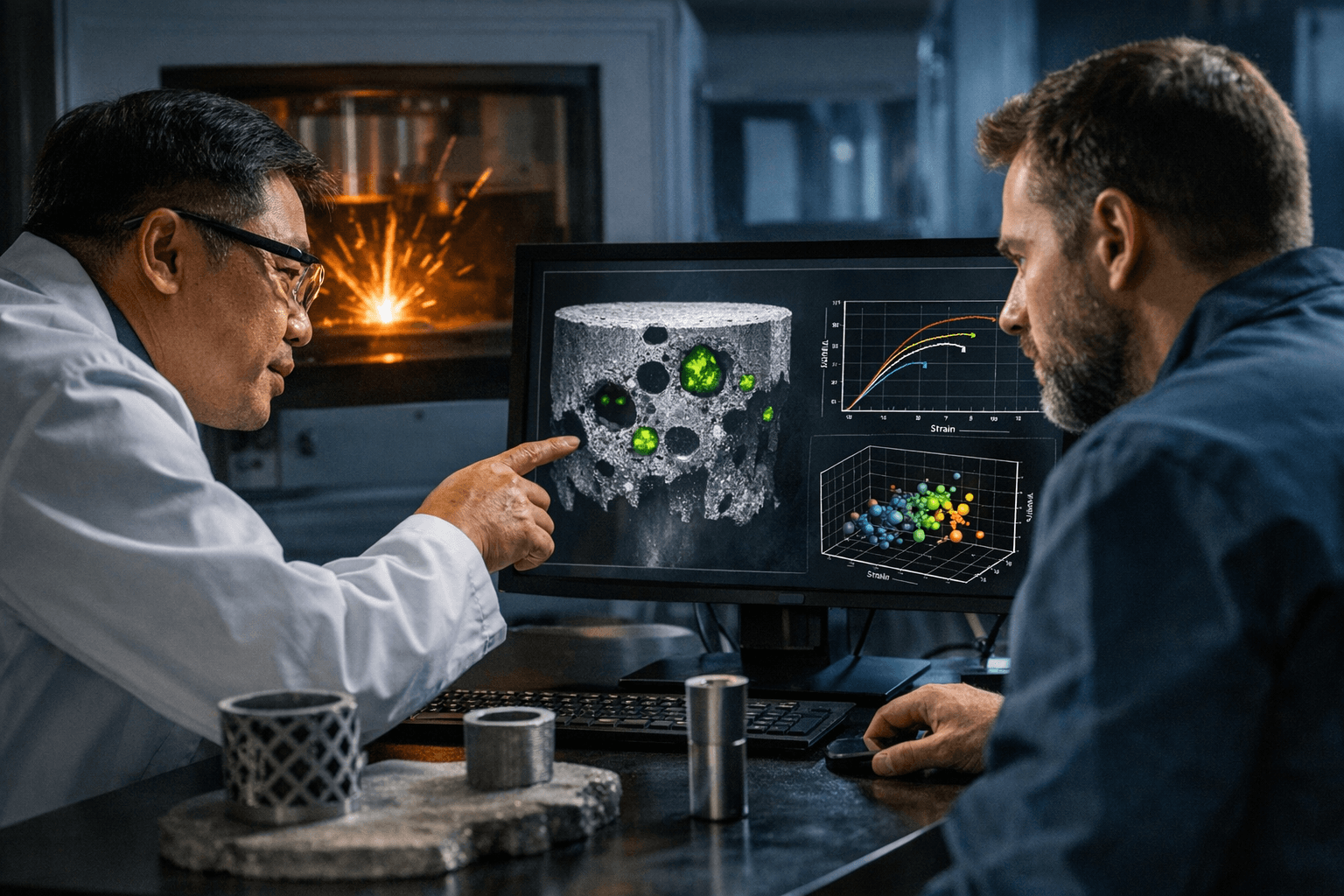
The authors propose the framework has applicability across alloys and sectors. Keywords attached to the reporting and the study point to titanium alloys, steel, aluminum alloys, aerospace applications, and industrial manufacturing, and the model is presented as potentially useful for digital twin integration and AI-driven quality control in LPBF workflows. A conceptual diagram associated with the release illustrates how powder characteristics and LPBF process conditions feed into defect morphology and downstream component performance; the diagram’s caption credits the National Research Council of Science & Technology.
Public descriptions of the work leave methodological gaps that must be addressed in the Acta Materialia paper for industrial uptake: the reports do not include algorithmic architecture, training dataset size, imaging modality details (2D micrographs versus 3D CT), exact LPBF parameter ranges, or quantitative validation metrics such as prediction accuracy or effect sizes. If those details in the published article confirm robust, generalizable mappings from morphology to mechanical response, the explainable AI framework could supply the defect-aware inputs needed for certification pathways and process optimization in safety-critical LPBF parts.
Know something we missed? Have a correction or additional information?
Submit a Tip