Explore Goochland County historic sites and museums with planning tips
Plan visits to Goochland’s 27 registered historic sites—start at the Courthouse Green museums, call ahead for appointments, and respect private-property rules when viewing roadside landmarks.
1. Goochland County Historical Society — your local hub
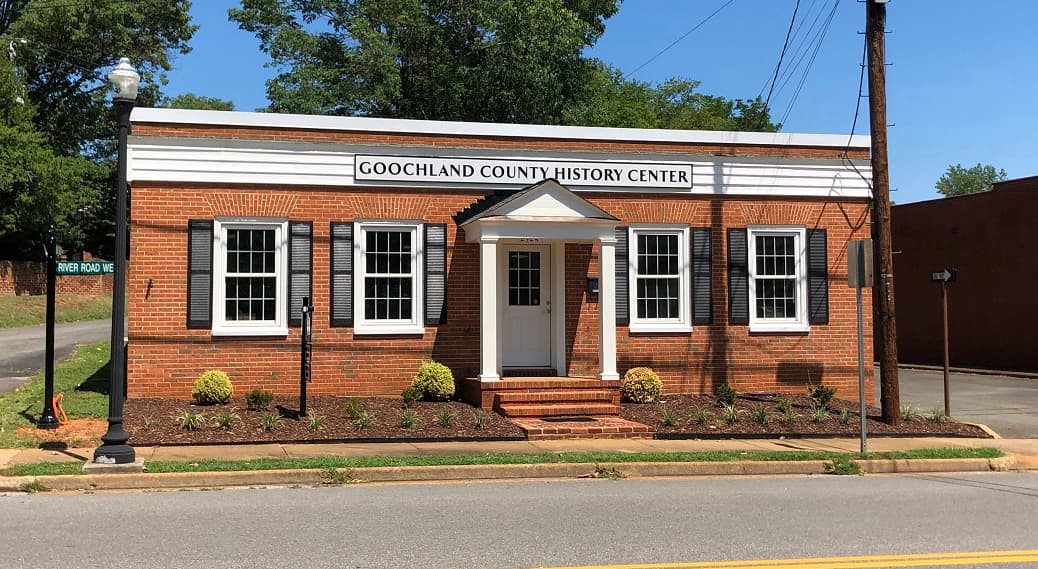
The Goochland County Historical Society (founded 1968) operates the county’s primary museum resources and posts regular programs such as “A PAPER BRIDGE BOOK TALK,” “2ND ANNUAL RUN TO THE REVOLUTION,” and “ST. MARY’S EPISCOPAL CHURCH AND CEMETERY HISTORY WALK.” The Society had no home until the Goochland Board of Supervisors in 1980 gave permission to adapt the Old Stone Jail into a museum and library; that building served as the Society’s headquarters from 1980–1997. Their website includes visitor tools like “Join the Mailing List” and “GET DIRECTIONS to the Society,” and the site footer reads “© 2026 Goochland County Historical Society; Website design by Charlottesville Media.”
2. Old Stone Jail / Goochland Historic Jailhouse — what to see
The Old Stone Jail (sometimes listed as the Goochland Historic Jailhouse) sits on the Courthouse Green and anchors the Society’s museum presence. Sources differ on construction date—Goochland County Historical Society dates it c. 1825 while state/DHR material lists c. 1833—yet both agree the building was constructed using river stones moved uphill during James River & Kanawha Canal construction. After the jail ceased operation, earlier restoration removed “all of the original cells, iron bars and fittings,” and a later restoration “has attempted to return the Old Stone Jail to an earlier appearance.” The state description notes: “Recently refurbished, the Jail Museum now houses the Society's new exhibit tracing the history of Goochland from the 1700s to the 20th Century,” including early Indian relics and the first land patent dated 1703. Hours are by appointment; call ahead for details.
3. Old Clerk’s Office (Courthouse Green) — architecture and use
The Old Clerk’s Office (c. 1847) “was the first official building on the Courthouse Green to house the records of the county.” William Miller, who served as Clerk from 1791–1846, previously stored records in a building near his home before the clerk’s office was built. The exterior remains largely unaltered, while the interior “was modified and is currently being used as a meeting space,” so visitors will mainly view the building’s historic façade unless an event is scheduled that opens the interior.
4. The Green — the Courthouse Green museum cluster
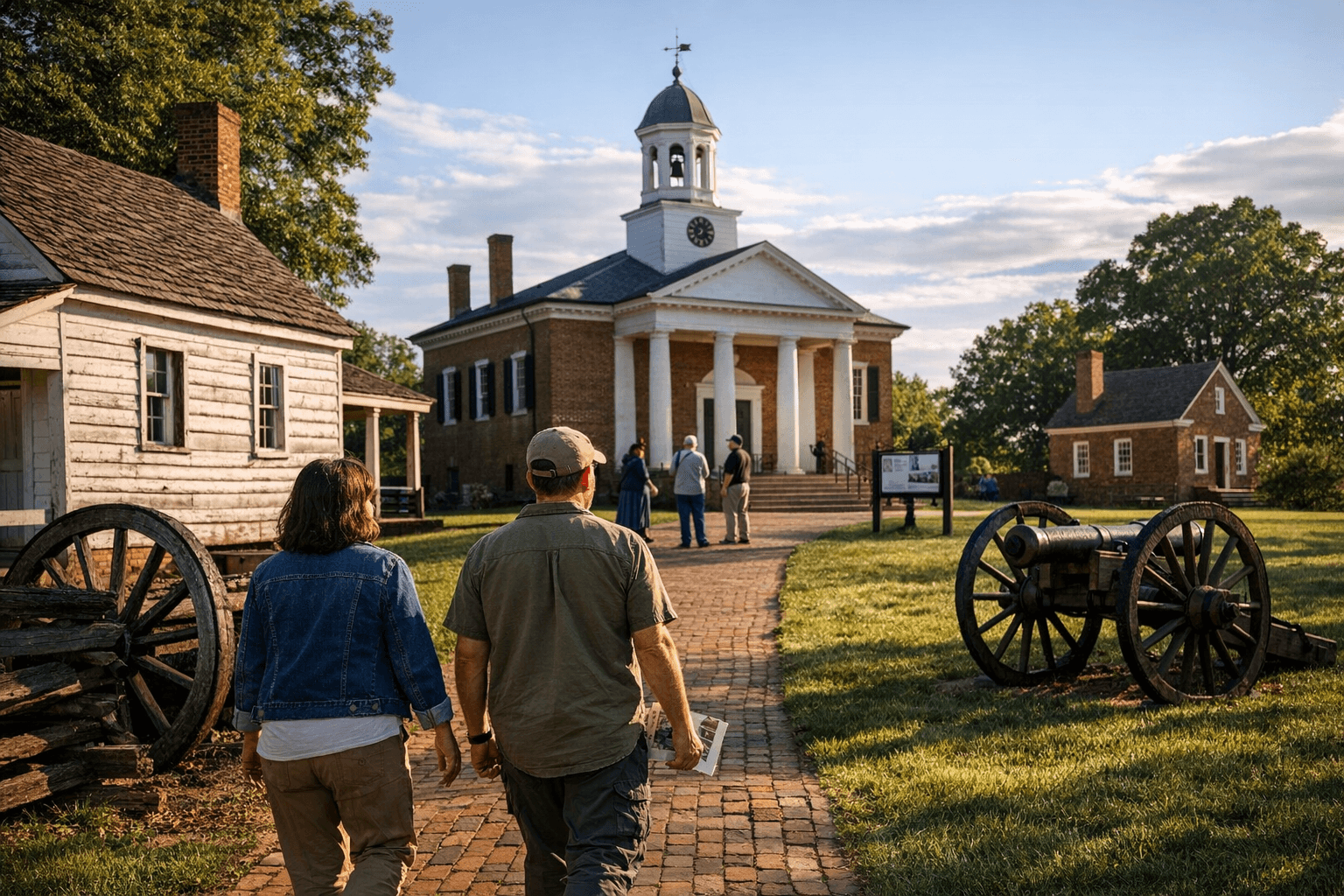
Listed on the Society’s site under “Museums” as “The Green,” the Courthouse Green is the campus where the Old Stone Jail and Old Clerk’s Office sit and where community events and exhibits occur. While the research notes offer limited additional specifics about “The Green,” it functions as the public-facing historic center for courthouse-area programming and Courthouse Green events often bring the Jail Museum into public hours. Plan visits around announced events to maximize access.
5. Goochland Historical Museum — location and contact
The independent listing for the Goochland Historical Museum gives a concrete address and phone for planning: 2875 River Road West, Goochland, VA 23063, phone 8045563966. The listing tags the museum “Family Friendly” and includes a “Visit Website” prompt (URL not shown in the available snippet), so callers seeking hours, admission or accessibility details should use that phone number as the first check.
6. Historic Tuckahoe — Jefferson’s boyhood home
Historic Tuckahoe is highlighted by county tourism as “the boyhood home of Thomas Jefferson” and is one of the must-see anchors among Goochland’s registered sites. As a high-profile attraction connected to Jefferson, Tuckahoe draws visitors interested in early Virginia plantation history and architectural landscapes; check Tuckahoe’s own visitor rules and hours before traveling, since the county list notes some sites on the registers are private or have restricted access.
7. Dover Slave Quarter Complex — rare surviving grouping
The Dover Slave Quarter Complex is singled out as “one of Virginia's surviving groupings of slave quarters,” making it a nationally significant resource for understanding antebellum life in Goochland. Because the county’s tourism notes emphasize that “many properties listed are private dwellings and are not open to the public,” visitors should verify public access or plan to view the complex only from public rights-of-way with respect for property privacy.
8. Goochland Historic Mansion and 19th-century mansions — what to expect
ExploreGoochland enumerates examples including “Goochland Historic Mansion” and multiple 19th-century mansions. These properties illustrate the county’s antebellum and postbellum architectural fabric; many remain private residences and are visible from public roads. If you want interior access or tours, contact owners or hosting organizations in advance and confirm any open-house schedules or public events.
9. Goochland County Courthouse Square — public history center
The Courthouse Square remains central to civic and historical life, encompassing the Courthouse Green museums and public markers. Use courthouse-area programming to time visits: the Jail Museum is “open for Courthouse Green events,” and the square’s concentration of plaques and structures makes it practical to plan a short walking visit that prioritizes public displays over private properties.
10. Early Transportation of James River — canal history context
The county listing includes “Early Transportation of James River,” a theme that ties to material facts: river stones used in the jail’s construction were hauled uphill while the James River & Kanawha Canal expanded westward. That transport history is an interpretive thread at Courthouse Green exhibits and helps explain local stone masonry, road alignments and settlement patterns—look for interpretive panels or ask curators about canal-era artifacts or maps.
11. County’s 27 registered historic sites — scope and caveats
Goochland County maintains a count of 27 sites listed on the National or State Registers; these “provide residents and tourists with great entertainment and educational opportunities.” The county cautions: “Please note many properties listed are private dwellings and are not open to the public, however many are visible from the public right-of-way. Please be respectful of owner privacy.” Treat the register as a planning inventory: it identifies places to view, research or seek guided access rather than guaranteeing public entry.
12. Historic markers and mapping tools — how to locate sites
The county provides a link to a listing and map of Goochland’s historical highway markers from the Virginia Department of Historic Resources; DHR research also relies on historic maps such as James Wood’s 1820 map, the 1863 A. H. Campbell map, and John W. George’s 1879 map. Use the county’s marker map plus those historic-map references to build a driving route—markers and public right-of-way views are the most reliable way to see many properties without trespassing. • Tip: combine marker stops with a Courthouse Green event to access museum exhibits.
13. Research and archival context — behind the stories
DHR-level research for Goochland inventories used deeds, tax and will books, mid-19th-century maps, photographs, oral history interviews and repositories including the clerk of the circuit court, the Goochland County Public Library, the Virginia Historical Society, DHR archives and the Library of Virginia. That archival backbone supports museum exhibits (for example, the Jail Museum’s 1700s–20th century exhibit) and is the resource path for journalists or family historians seeking deeper documentation.
14. Preservation, restorations and what’s changed
Preservation work has altered some buildings: the Old Stone Jail underwent restorations that once removed original cells and ironwork and later restorations that sought to return it to an earlier appearance. The Old Clerk’s Office has an exterior that “is largely untouched by alterations but the interior was modified and is currently being used as a meeting space.” These preservation choices affect what visitors will actually see—historic fabric may be reconstructed or adapted for contemporary use.
15. Discrepancies to resolve and verification checklist
Notable conflicts to verify before print or a guided itinerary include the Old Stone Jail construction date (GCHS cites c.1825; state/DHR lists c.1833). Recommended verification steps: contact the Goochland County Historical Society and Virginia Department of Historic Resources for documentation; consult deed, tax or court records at the clerk’s office; and confirm current hours, appointment procedures and whether the Jail Museum’s exhibit on early Indian relics and the 1703 land patent remains on view. Final planning essentials: confirm Courthouse Green event calendars, call 8045563966 for the Goochland Historical Museum if you need rapid contact, and remember the county’s advisory to view private properties only from public rights-of-way.
Final point Goochland’s historic sites pack centuries of stories into a compact county—use the Courthouse Green museums as your starting point, call ahead to secure appointments, and plan routes that combine public markers, Tuckahoe and the Dover Slave Quarter Complex for a historically rich, respectful visit.
Know something we missed? Have a correction or additional information?
Submit a Tip