Facility dogs help children cope with hospital treatment, experts say
Facility dogs are emerging as a quiet but measurable part of pediatric care, easing pain, stress and fear while hospitals track how well they work.

A patio moment that says a lot about pediatric care
A 5-year-old standing outside for the first time in more than a month, tethered to wires and tubes, still finds the energy to toss a ball for a dog and smile when she races back. That scene at Cincinnati Children’s Hospital captures why facility dogs are becoming more visible in pediatric care: they can turn a frightening hospital day into something a child can endure, and sometimes even enjoy for a few minutes.
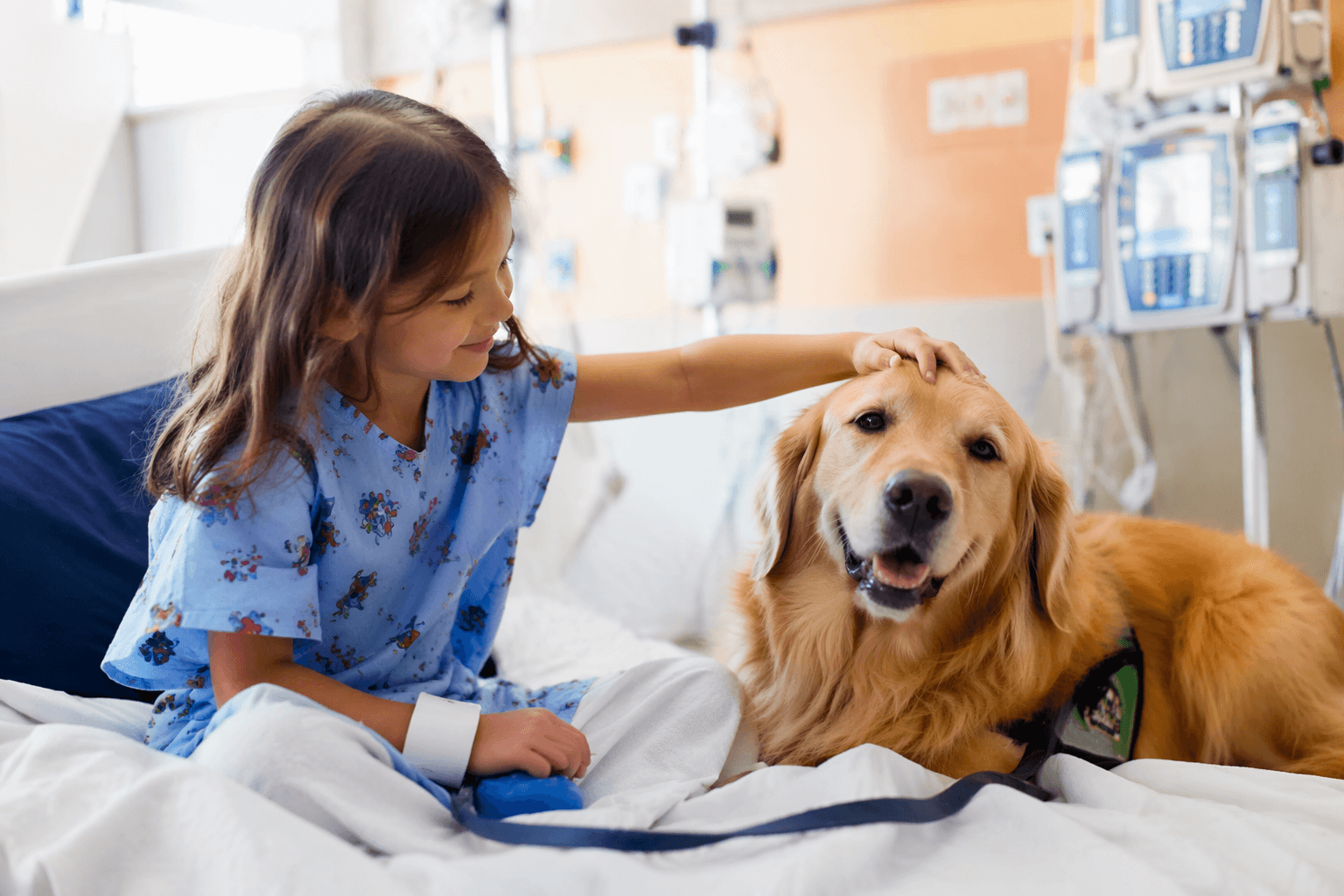
For Calvin Owens, the dog was Hadley. The payoff was not just a grin. Caregivers cheered, “Look how good you’re doing!” and the moment showed what hospitals hope these dogs can do in practice: motivate movement, reward effort and give children a brief return to ordinary life inside an environment built around illness.
What makes a facility dog different
Facility dogs are not the same as the volunteer therapy dogs that may stop by a hospital occasionally. They are full-time working canine employees paired with a trained professional, often a Certified Child Life Specialist, and they are assigned to support care on a regular basis rather than make one-time visits. A 2024 article in Hospital Pediatrics describes them that way and notes that the field is still emerging, which helps explain why hospitals are still refining how to use them and how to measure their value.
That distinction matters because it shapes how the dogs are used. They can enter sensitive areas, participate in procedures when appropriate, encourage movement, and help soften the fear that surrounds long stays, painful treatments and repeated testing. In Cincinnati, that has meant dogs such as Hadley and Grover showing up not just for comfort, but also for participation, activity and normal hospital routines.
What the research says so far
The evidence is encouraging, though still building. In a 2022 survey across 17 children’s hospitals, facility dogs helped healthcare workers build rapport, comfort families and normalize the hospital environment. A 2023 randomized controlled trial in pediatric oncology found that dog visits, compared with usual care, were associated with improved psychological functioning. Another study, from 2018, found that a service-trained facility dog was associated with lower systolic and diastolic blood pressure in children during forensic interviews related to alleged sexual abuse.
Taken together, those findings suggest the dogs can affect more than mood. Hospitals are paying attention to pain, anxiety, stress markers and cooperation because those are the outcomes that matter in day-to-day care. Research has linked short interactions with reduced pain and lower stress indicators such as cortisol and blood pressure, which gives caregivers a way to see these animals as part of the care environment, not merely as a feel-good extra.
Kerri Rodriguez, who directs the Human-Animal Bond Lab at the University of Arizona, said the dogs can provide “a little bit of normalcy” in a stressful, sterile environment. That phrase gets to the heart of the appeal: children do not stop being children because they are in a hospital, and a dog can help preserve a small piece of childhood inside a setting dominated by monitors, masks and needles.
Why hospitals are expanding these programs
The model is spreading beyond one institution. Alongside Cincinnati Children’s, hospitals such as Mount Sinai Kravis Children’s Hospital in New York, Norton Children’s in Louisville and St. Louis Children’s Hospital have adopted or expanded facility dog programs. The growth is also visible in professional gatherings: attendance at the annual Facility Dog Summit nearly doubled from 2024 to 2025, a sign that the field is moving quickly even as standards remain in development.
Canine Assistants, a Georgia-based nonprofit, has played a major role in that expansion. It says it places community service dogs primarily in children’s hospitals and trains them at its Milton, Georgia, facility. Through its children’s hospital initiative, it has placed more than 80 dogs nationally, extending the reach of a model that depends on long-term partnerships between hospitals and trained handlers.
The scale of pediatric care helps explain why the interest is so strong. Hospital Pediatrics notes that more than 5 million children are admitted to inpatient hospital units each year in the United States, there are about 30 million pediatric emergency department visits annually, and about 94% of children have at least one ambulatory care or clinic visit each year. Even a small improvement in how a child experiences those encounters can matter.
What families should realistically expect
Facility dogs are not a cure, and they do not replace medication, child life support, or skilled nursing and medical care. What they can do is make hard moments more manageable. For a child who fears a procedure, the dog may lower tension enough to allow treatment to move forward. For a child stuck in bed, the dog may be motivation to sit up, stand, or take a few steps. For families, the benefit may be seeing their child relax, laugh or cooperate in a way that had seemed out of reach.
The most realistic expectation is not that every child will instantly become calm, but that the dog can offer a different emotional register inside the hospital. Some children respond with play, some with curiosity, some with enough comfort to tolerate something difficult. That range is exactly why hospitals track more than smiles. They look at pain, anxiety, compliance and recovery, because the aim is to see whether the dogs change care in measurable ways, not just memorable ones.
At Cincinnati Children’s, the images of Hadley on the patio with Calvin Owens and Grover at the hospital’s Seacrest Studios show how facility dogs are being woven into daily life. They are part comfort, part motivation and part bridge back to normal routines. As the research base grows, hospitals are betting that emotional support is not separate from treatment, but one of the conditions that helps children heal.
This article was produced by Prism’s automated news system from verified source data, official records, and press releases, then run through automated quality and moderation checks before publishing. The system is built and supervised by the people who set the standards it runs under. Read our full AI policy.
Did this article answer your question?