Families of voting rights martyrs warn protections are fading
Relatives of Viola Liuzzo, Vernon Dahmer Sr. and Carol Denise McNair say the rights their deaths helped secure are being rolled back in court and in state maps.

The Supreme Court’s April 29 ruling in Louisiana v. Callais cut into one of the last major tools left to protect Black political power, and the decision was given immediate effect so Louisiana could redraw its congressional map in time for the 2026 elections. For the families of civil rights martyrs whose deaths helped drive the Voting Rights Act of 1965, the ruling felt less like a legal technicality than another chapter in a struggle that has stretched across generations.
Viola Liuzzo’s family still carries the cost of that struggle in plain sight. Liuzzo was 39, a mother of five from Detroit, when white supremacists murdered her on March 25, 1965, after she joined the Selma-to-Montgomery voting-rights protest. Vernon Dahmer Sr. died in 1966 after the Ku Klux Klan firebombed his home near Hattiesburg, Mississippi. Carol Denise McNair was one of four Black schoolgirls killed in the Birmingham church bombing on September 15, 1963. Their deaths became part of the long arc that pushed the Voting Rights Act to Congress on March 17, 1965, and into law on August 6, 1965.
The law was once the central federal brake on racial discrimination in elections. The National Archives describes it as the most significant statutory change in voting rights since Reconstruction, expanding the protection of the 14th and 15th Amendments by banning racial discrimination in voting practices. That framework changed sharply on June 25, 2013, when the Supreme Court in Shelby County v. Holder invalidated the Section 4(b) coverage formula and made Section 5 preclearance inoperable for the jurisdictions that had been covered. The Justice Department’s Civil Rights Division says that decision effectively disabled the preclearance system that had blocked discriminatory changes before they could take effect.
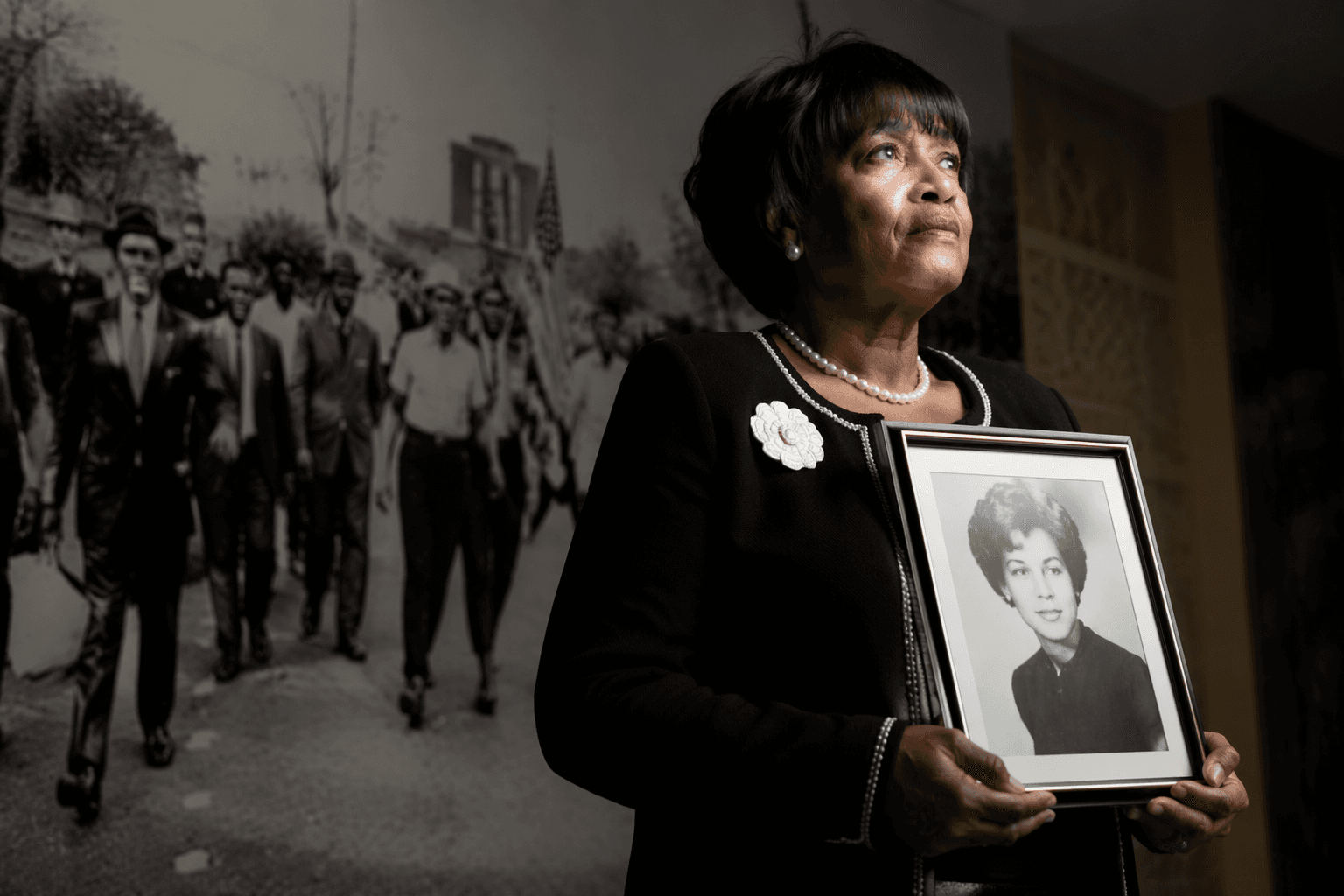
The consequences are visible in maps and election calendars. Alabama postponed primaries in districts affected by the Callais ruling because the state intends to return to an earlier congressional map that eliminates one of its two majority-Black districts. Utah held its 2026 primaries under court-ordered redistricting. Those shifts have intensified anger among civil rights families and advocates who say the blood shed in the movement is being treated as history instead of obligation.
The NAACP responded to Callais with an emergency town hall on April 30 and, in May, a broader mobilization effort with more than 90 civil rights, voting rights, faith, labor and community organizations. As the nation nears its 250th anniversary, the families who still visit cemeteries, stand by memorial stones and keep the names of the dead alive say the promise their relatives died for is being narrowed again, one ruling and one map at a time.
This article was produced by Prism’s automated news system from verified source data, official records, and press releases, then run through automated quality and moderation checks before publishing. The system is built and supervised by the people who set the standards it runs under. Read our full AI policy.
Did this article answer your question?