FDA approves Orca Bio cell therapy for certain blood cancers
The FDA cleared Orca Bio’s Tregzi for certain blood cancers, the first regulatory T-cell-based immunotherapy for transplant patients. The therapy carries a $428,000 wholesale cost.
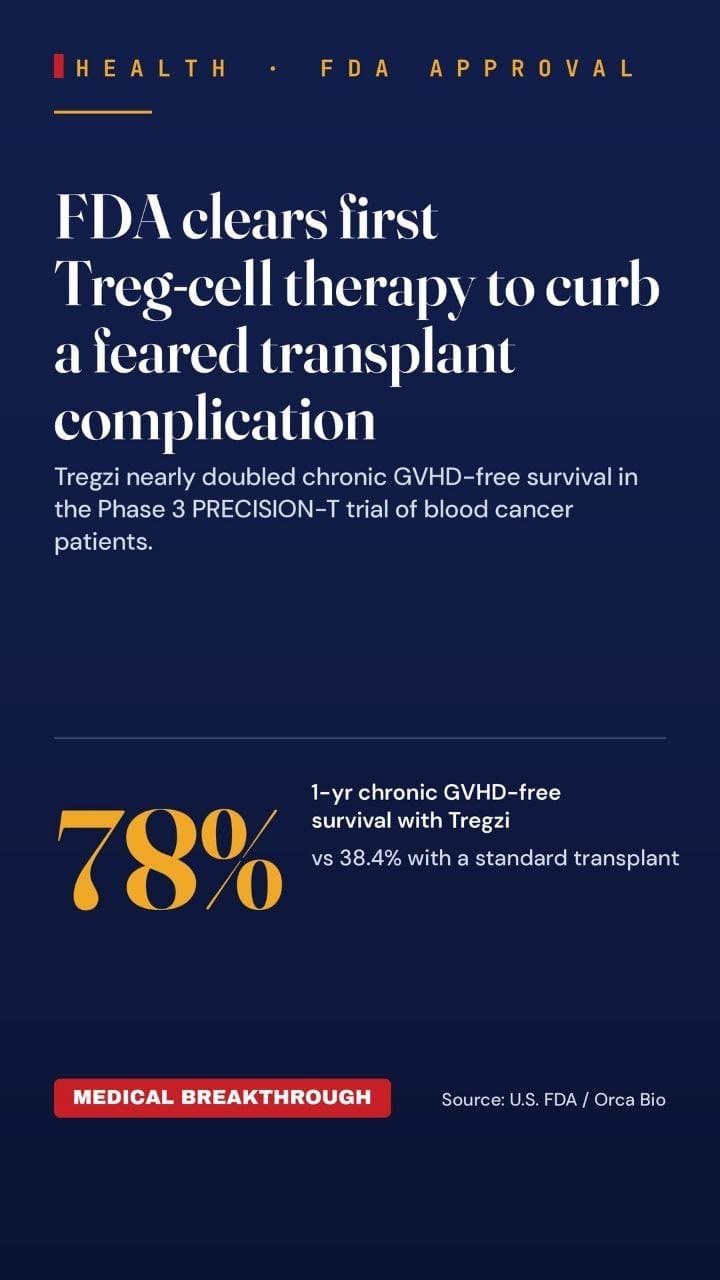
The FDA approved Orca Bio’s Tregzi on June 30, clearing a new treatment for adults with certain blood cancers and making it the first regulatory T-cell-based immunotherapy to improve chronic graft-versus-host-disease-free survival after allogeneic stem-cell transplant. The decision gives patients with acute myeloid leukemia, acute lymphoblastic leukemia and myelodysplastic syndromes a new option.
Tregzi, also known clinically as Orca-T, is built from three cell components taken from an 8/8 HLA-matched related or unrelated donor: purified hematopoietic stem and progenitor cells, regulatory T cells and conventional T cells. The therapy is given after chemotherapy that prepares the body for a bone marrow or stem-cell transplant, with the aim of rebuilding a patient’s blood and immune system while reducing the graft-versus-host disease that can follow conventional donor transplants. That complication can damage organs, force long-term immune-suppressing treatment, raise infection risk and become fatal.

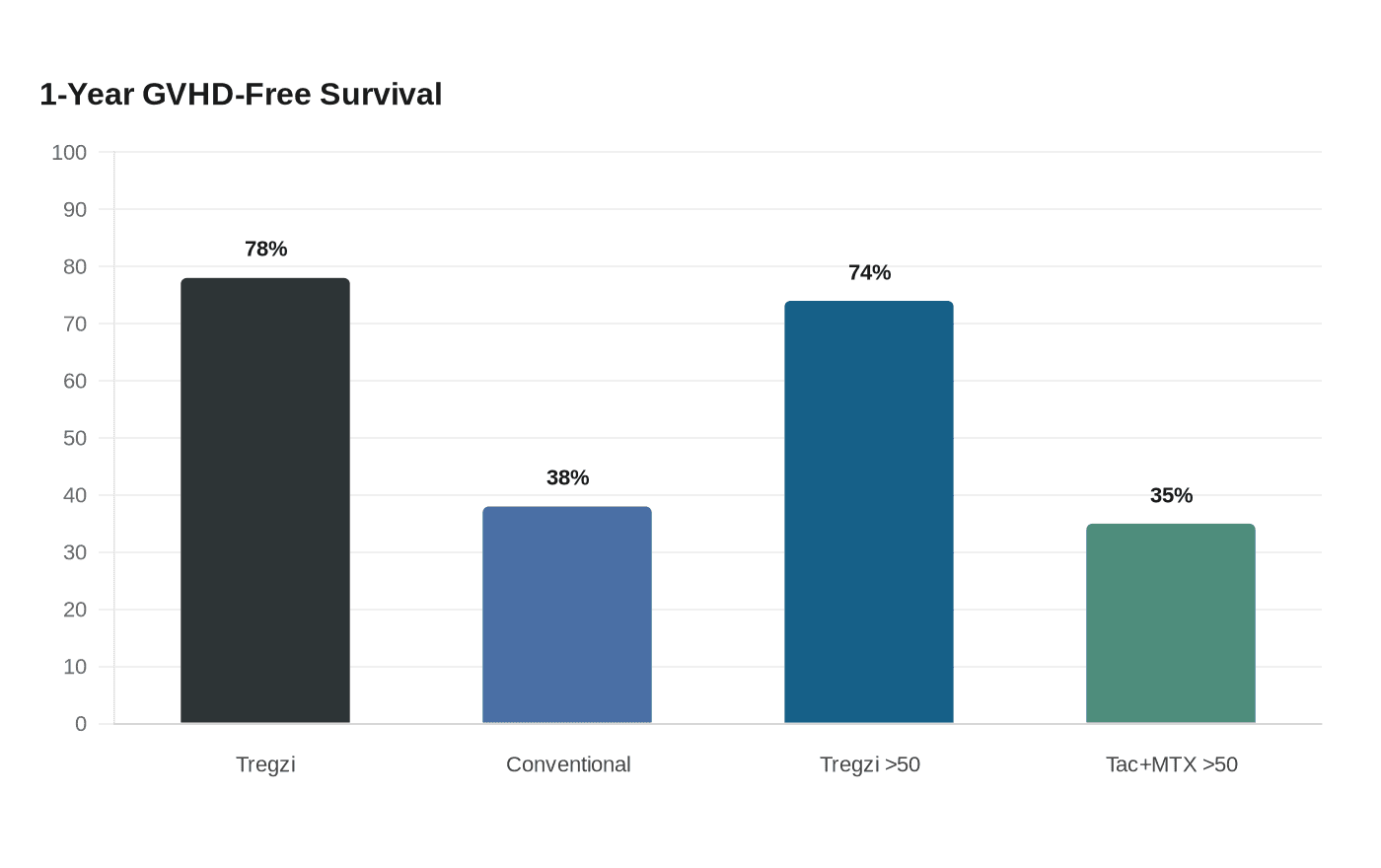
Orca Bio’s phase 3 Precision-T trial randomized 187 adults with blood cancers. The primary endpoint was chronic GVHD-free survival within two years after transplant. At one year, 78% of patients who received Tregzi were alive and free from moderate-to-severe chronic graft-versus-host disease, compared with 38% among those who received a conventional transplant. In patients over 50, that measure was 74% versus 35% with tacrolimus and methotrexate. Tregzi was also associated with lower rates of acute GVHD, non-relapse mortality, serious infections and rehospitalizations, along with better quality-of-life outcomes.
Tregzi will carry an acquisition cost of $428,000 for wholesalers, and Orca Bio expects orders by the end of July. The treatment is reserved for matched-donor transplant patients and requires a myeloablative preparative regimen.
Nate Fernhoff, Orca Bio’s chief executive: “This is going to be a really important option for leukemia patients.”
This article was produced by Prism’s automated news system from verified source data, official records, and press releases, then run through automated quality and moderation checks before publishing. The system is built and supervised by the people who set the standards it runs under. Read our full AI policy.
Did this article answer your question?