FDA eases vape and nicotine pouch rules, opening market to tobacco firms
The FDA’s new enforcement policy could put 100 to 200 vape and pouch products back in play fast, giving big tobacco a head start over smaller rivals.

The Food and Drug Administration has opened the door wider for vapes and nicotine pouches, a shift that could quickly move market power toward the biggest tobacco companies while putting more flavored products back within reach of consumers.
The agency issued a final guidance on May 8 called Enforcement Priorities for Certain New Tobacco Products Marketed Without Premarket Authorization. It covers certain electronic nicotine delivery systems, or ENDS, and oral nicotine pouch products, and says when the FDA does not intend to prioritize enforcement for products sold without premarket authorization. In practice, that marks a sharp turn from a system built around strict premarket gating toward one that allows more products to stay on shelves while reviews continue.

Current and former Trump administration officials told Reuters that about 100 to 200 products could benefit right away, with many more potentially following as applications move through the pipeline. That matters because the market has long been split between a small number of legal products that struggled through the approval process and a large gray market of flavored and disposable devices, many imported from China. The new framework is designed to be simpler to enforce, but critics say it risks rewarding volume and speed over the evidence base that once justified tighter oversight.
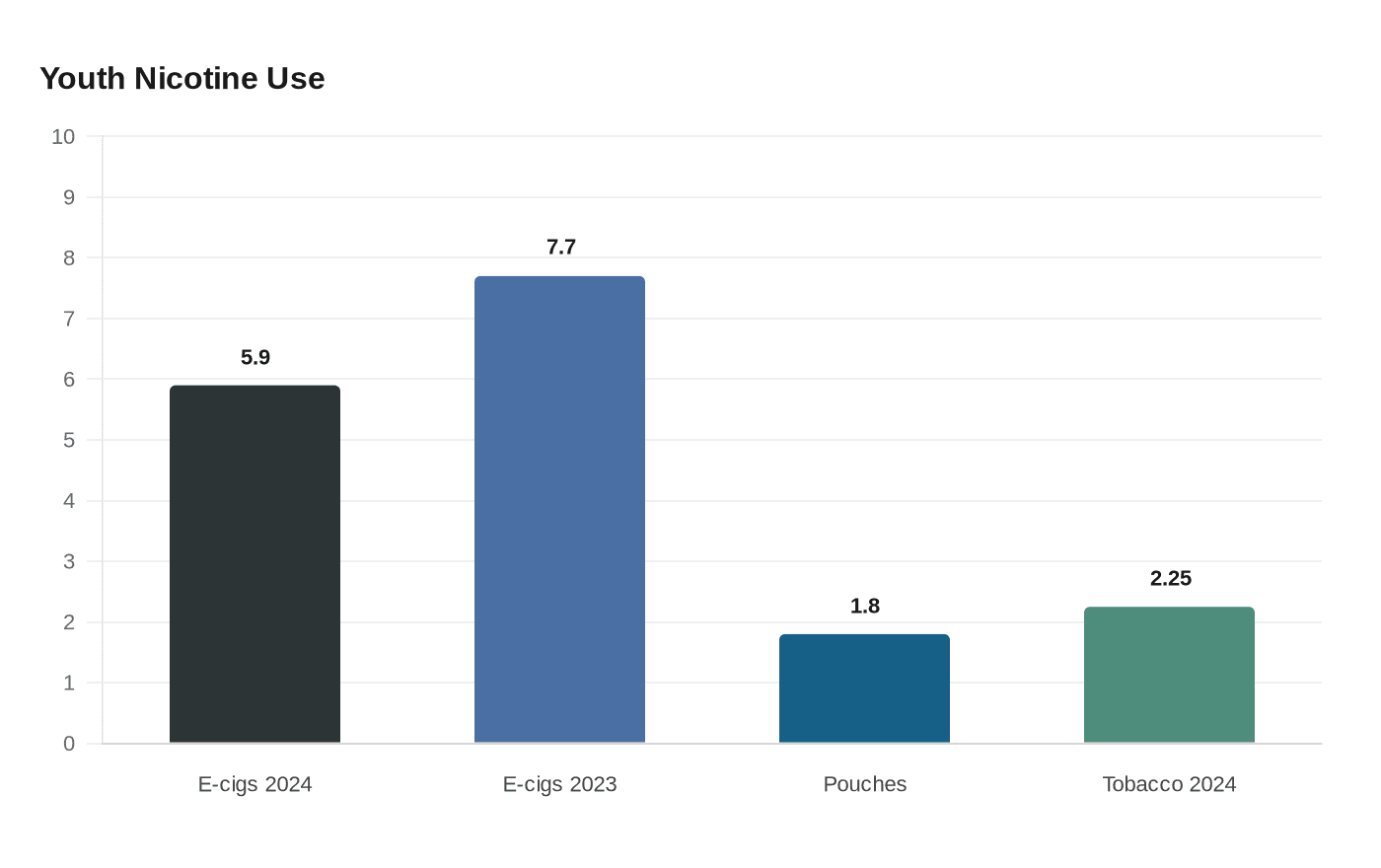
The stakes are clearest in Washington, where the FDA has tried to thread a narrow line between youth prevention and adult access. In September 2024, the FDA and Centers for Disease Control and Prevention said 5.9% of middle and high school students had used e-cigarettes in the past 30 days, down from 7.7% in 2023. Youth nicotine pouch use was 1.8% and did not change significantly, while 2.25 million middle and high school students used any tobacco product, down from 2.80 million a year earlier. Public-health advocates fear a broader enforcement backstop could expand flavored nicotine products just as youth use has eased.
At the same time, the new policy appears to favor companies with the resources to survive regulation rather than the smaller sellers that built the market around disposable and imported products. The FDA authorized 20 ZYN nicotine pouch products in January 2025, its first-ever authorization of nicotine pouches, and later said those products were the only nicotine pouch products that may be lawfully sold in the United States if authorized. On May 5, 2026, the agency also authorized four Glas ENDS products, showing the PMTA pathway still works for some products even as the enforcement guidance broadens what can remain available during review.
The policy shift also sits alongside a faster track for major brands. Reuters previously reported that the FDA planned to fast-track nicotine pouch reviews for Philip Morris International, Altria, Reynolds American, part of British American Tobacco, and Turning Point Brands, with a target of December. Taken together, the moves suggest an administration willing to trade some of the old approval bottleneck for a more orderly market, even as former FDA tobacco officials and public-health groups warn that the simplicity of enforcement may come at the cost of trust, caution and a tougher line on youth exposure.
This article was produced by Prism’s automated news system from verified source data, official records, and press releases, then run through automated quality and moderation checks before publishing. The system is built and supervised by the people who set the standards it runs under. Read our full AI policy.
Did this article answer your question?