Fear and misinformation spread near Ebola epicenter in Congo's Kasai province
Rumors and grief are driving violence near Congo's Ebola epicenter, where a body dispute in Bunia ended with a treatment center torched.

Fear has become an accelerant in Congo’s Ebola response, shaping how families handle the dead, how quickly patients are reported and how much trust health workers can draw from communities already rattled by disease. In Bunia, in neighboring Ituri Province, residents set fire to an Ebola treatment center after being stopped from retrieving a local man’s body, a vivid sign that rumor, anger and burial customs can collide with containment efforts just as the virus spreads.
The outbreak itself began in Kasai Province, where the World Health Organization said on Sept. 4, 2025, there were 28 suspected cases and 15 deaths, including four health workers. The first known index case was a pregnant woman who went to Bulape General Reference Hospital on Aug. 20, 2025, and died five days later on Aug. 25. WHO said it was the Democratic Republic of the Congo’s 16th Ebola outbreak and the first in Kasai since 2008.
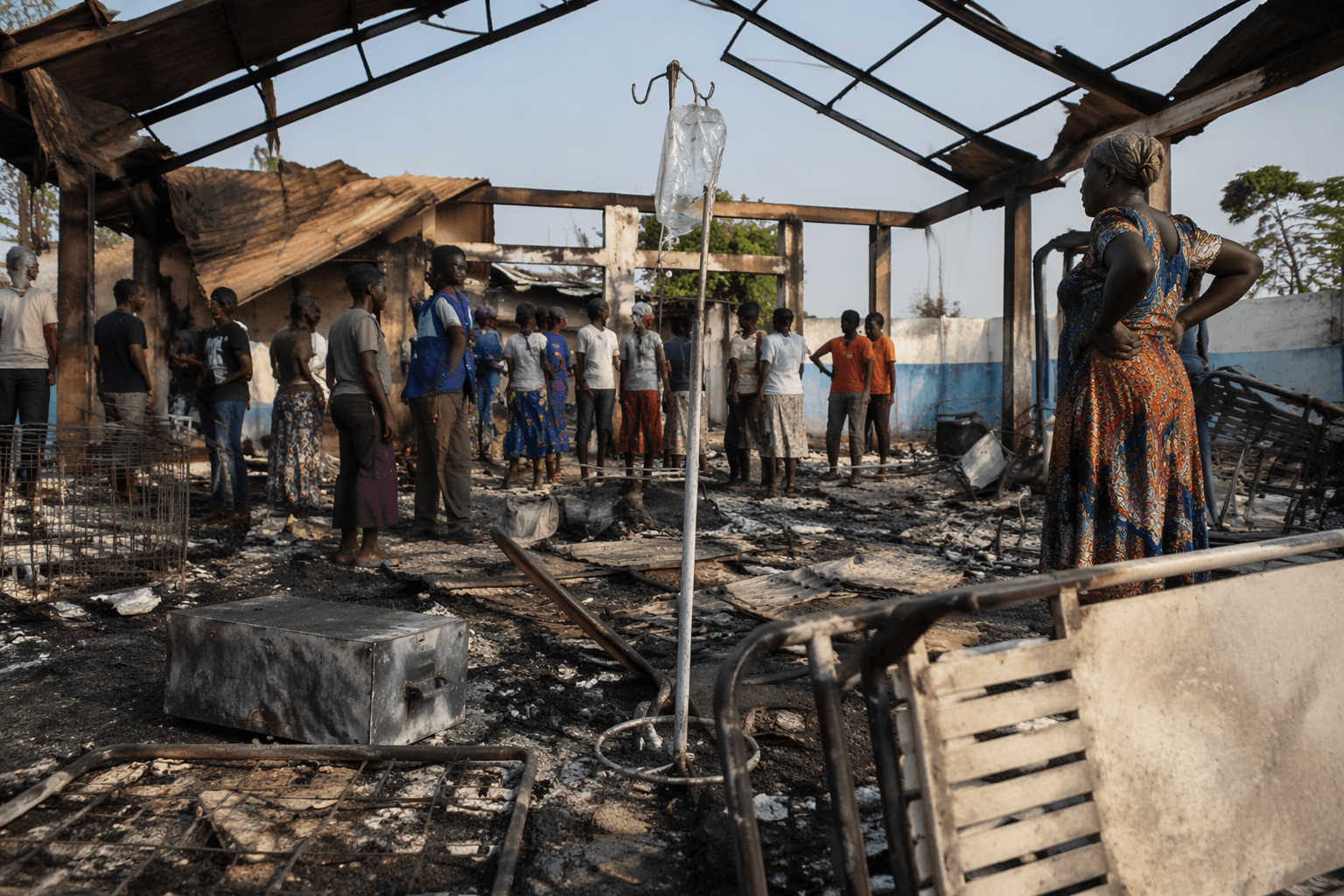
Kasai’s geography has made the crisis harder to contain. The epicenter sits in a remote area more than 1,000 kilometers from Kinshasa, with poor road access that slows surveillance, sample transport and the movement of medical teams. WHO warned the outbreak was likely to keep growing because the virus had been circulating before it was detected. Genomic analysis later linked the strain to the lineage responsible for the first Ebola outbreak in Yambuku in 1976, a reminder that the virus remains tied to the country’s long and deadly history with the disease.
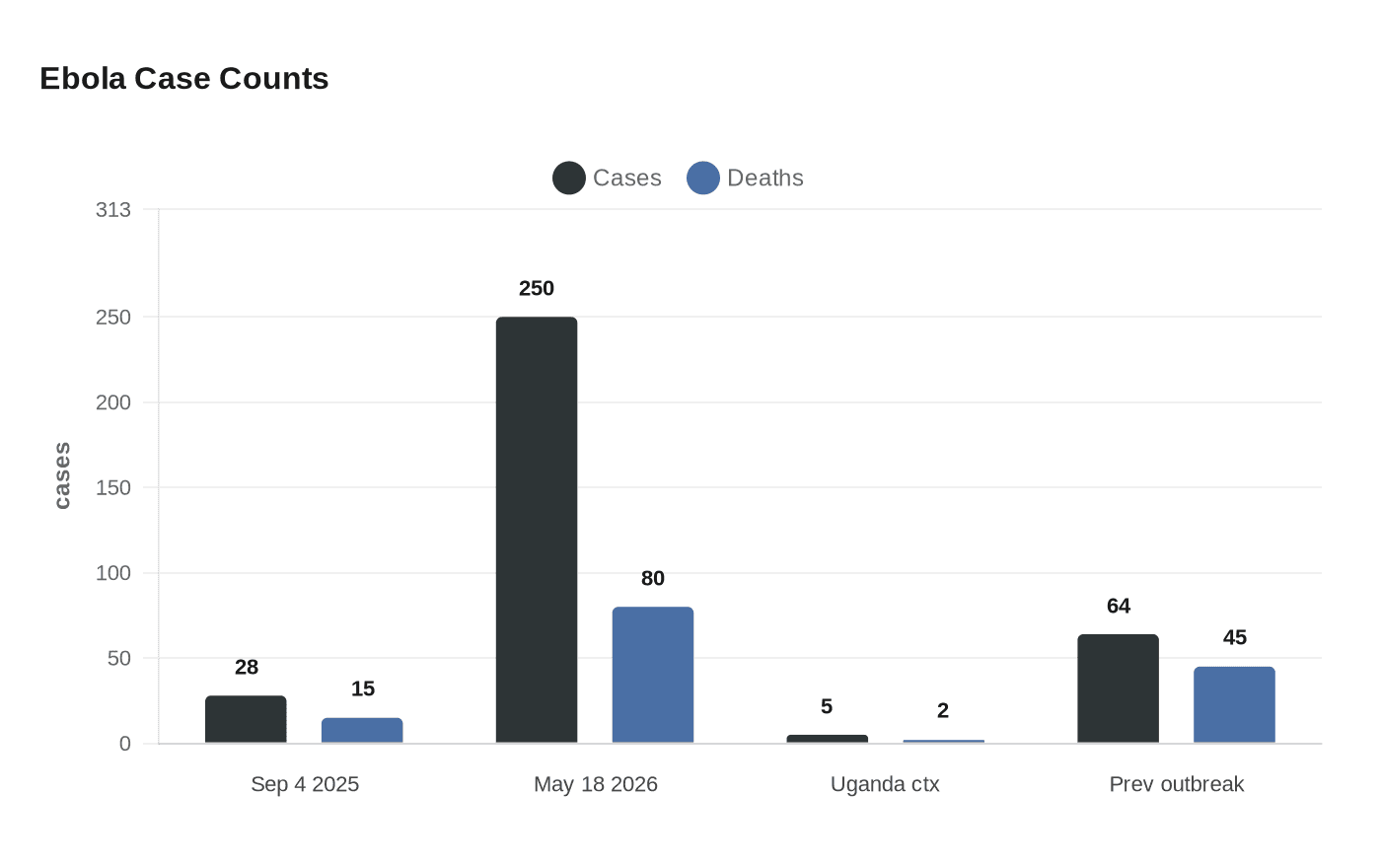
By May 18, 2026, WHO had raised the risk level to very high in the DRC and high regionally, while keeping the global risk low. Authorities and aid agencies had identified more than 250 suspected cases and at least 80 suspected deaths across the DRC and Uganda context, where five confirmed cases and two deaths had been reported. The Centers for Disease Control and Prevention said initial samples in the DRC were negative, but by May 15, 8 of 13 samples tested positive and the virus was identified as Bundibugyo virus, one of the orthoebolaviruses that causes Ebola disease.
The stakes go beyond treatment beds and laboratory results. Containment depends on getting families to accept isolation, contact tracing, safe burials and, where available, vaccination campaigns, all of which can fail if fear outruns public health messaging. Congo’s previous outbreak ended on Dec. 1, 2025, after 42 days without a new confirmed case, with 64 total cases and 45 deaths. That success showed Ebola can be stopped, but only when communities trust the response enough to let it work.
This article was produced by Prism’s automated news system from verified source data, official records, and press releases, then run through automated quality and moderation checks before publishing. The system is built and supervised by the people who set the standards it runs under. Read our full AI policy.
Did this article answer your question?