Fed expected to hold rates amid political firestorm and probe risks
The Federal Reserve is poised to keep its policy rate steady today after three cuts, as a DOJ probe and an effort to remove a governor intensify scrutiny of central bank independence.
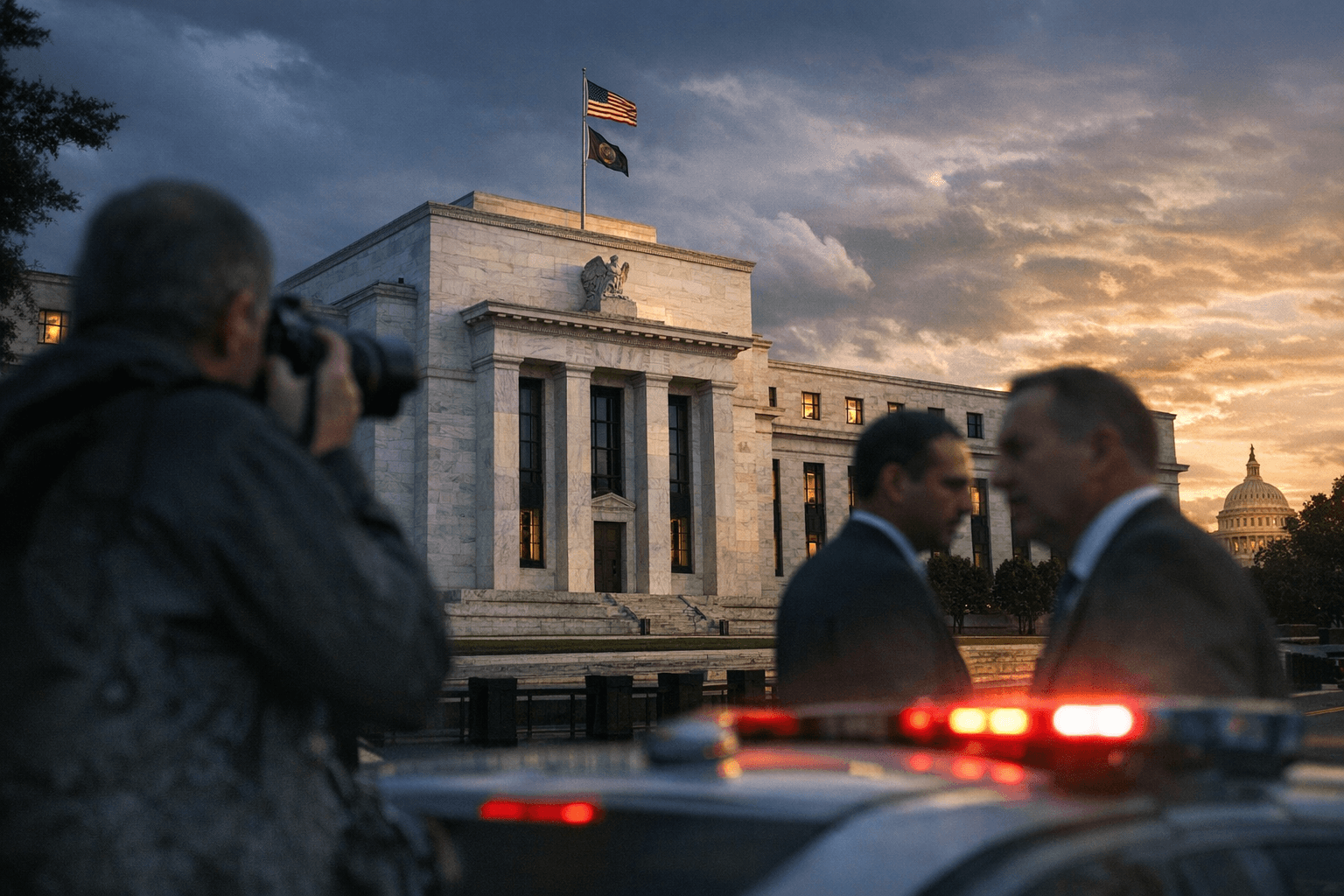
The Federal Reserve is widely expected to leave its benchmark policy rate unchanged at its January meeting today after three prior cuts, but the decision is unfolding against an unusually intense political backdrop that could shape markets and policy credibility.
Officials face a calculus focused on economic signals and institutional resilience. After easing policy in recent meetings, Fed leaders have signaled a data-dependent stance; holding rates steady signals caution about inflation reaccelerating or labor-market tightness persisting while preserving optionality for future action. At the same time, the central bank must manage the optics of independence as a Justice Department probe and a concurrent bid to remove a sitting governor create headline risk and potential distractions for policymakers.
Markets are sensitive to both economic guidance and governance questions. Investors typically interpret a hold as a pause to assess incoming data, but political interventions into central bank affairs can amplify term-premium volatility and push market participants to reassess risk pricing. Treasury yields, the dollar, and equity valuations all respond to shifts in expectations about future rate paths and the perceived insulation of the Fed from political pressure. Even if the policy decision itself is conventional, the commentary from Fed officials at the post-meeting press conference will be scrutinized for signs the institution is defending its independence and signaling that monetary policy remains focused on inflation and employment, not political considerations.
Policy implications extend beyond near-term market moves. The Fed’s credibility rests on a widely accepted narrative that it sets policy based on economic conditions and forecasts. A DOJ probe into matters involving the Fed, coupled with a campaign to remove a governor, risks undermining that narrative by introducing legal and political contingencies into decision-making. For monetary policy, the immediate cost is heightened uncertainty; in the medium term, sustained political interference could raise borrowing costs for the government and businesses if investors demand a premium for policy risk.
Economic context remains central. After several years of elevated inflation and aggressive tightening, the Fed entered a phase of gradual easing to balance growth and price stability. The three prior cuts reflect that transition, but the path forward depends on labor market resilience, consumer demand, and global inflation pressures. If incoming data continue to show resilience in employment and services inflation, the Fed may need to recalibrate quickly; if growth softens, further easing remains on the table.
The institutional stakes are long term. Beyond the immediate policy choice, today’s meeting will test the Fed’s ability to communicate independence and maintain market confidence while its leadership navigates legal scrutiny and political maneuvering. The short-run outcome may be a hold; the longer run will depend on whether the central bank can keep economic judgments insulated from the courtroom and the political arena.
This article was produced by Prism’s automated news system from verified source data, official records, and press releases, then run through automated quality and moderation checks before publishing. The system is built and supervised by the people who set the standards it runs under. Read our full AI policy.
Did this article answer your question?

