Fed Holds Rates Again, Mortgage Rates Rise After Brief Spring Lull
Mortgage rates climbed again after the Fed’s latest pause, pushing a typical $400,000 30-year loan to about $2,494 a month. Refinancers faced even higher costs.

Homebuyers and refinancers got no fresh help from the Federal Reserve’s latest hold, and mortgage pricing moved the wrong way instead. As of April 30, the average 30-year mortgage rate was 6.37% and the average 15-year rate was 5.75%, according to Zillow. On a $400,000 loan, that means roughly $2,494 a month in principal and interest for a 30-year mortgage, while a 30-year refinance loan averaged 6.79%, or about $2,605 a month.
The Fed kept its benchmark rate unchanged at its April 28-29 meeting, its third pause of 2026, and there is no meeting on the calendar in May. That means borrowers will not get another direct policy signal for weeks, but the Fed’s decision did not stop mortgage rates from drifting higher. The Mortgage Bankers Association said the average 30-year fixed mortgage rate rose 2 basis points to 6.37% for the week ended April 24, breaking a month-long run of declines. The association also said mortgage applications fell 1.6% from the prior week, led by a 4% drop in refinancing.

There was still one bright spot for purchase borrowers. MBA said purchase applications rose 2% week over week, and chief economist Mike Fratantoni said prospective buyers were still moving ahead this spring and taking advantage of more favorable inventory conditions in many parts of the country. Even so, Bank of America consumer lending head Matt Vernon said the seasonal pickup in mortgage demand looked more modest than usual.
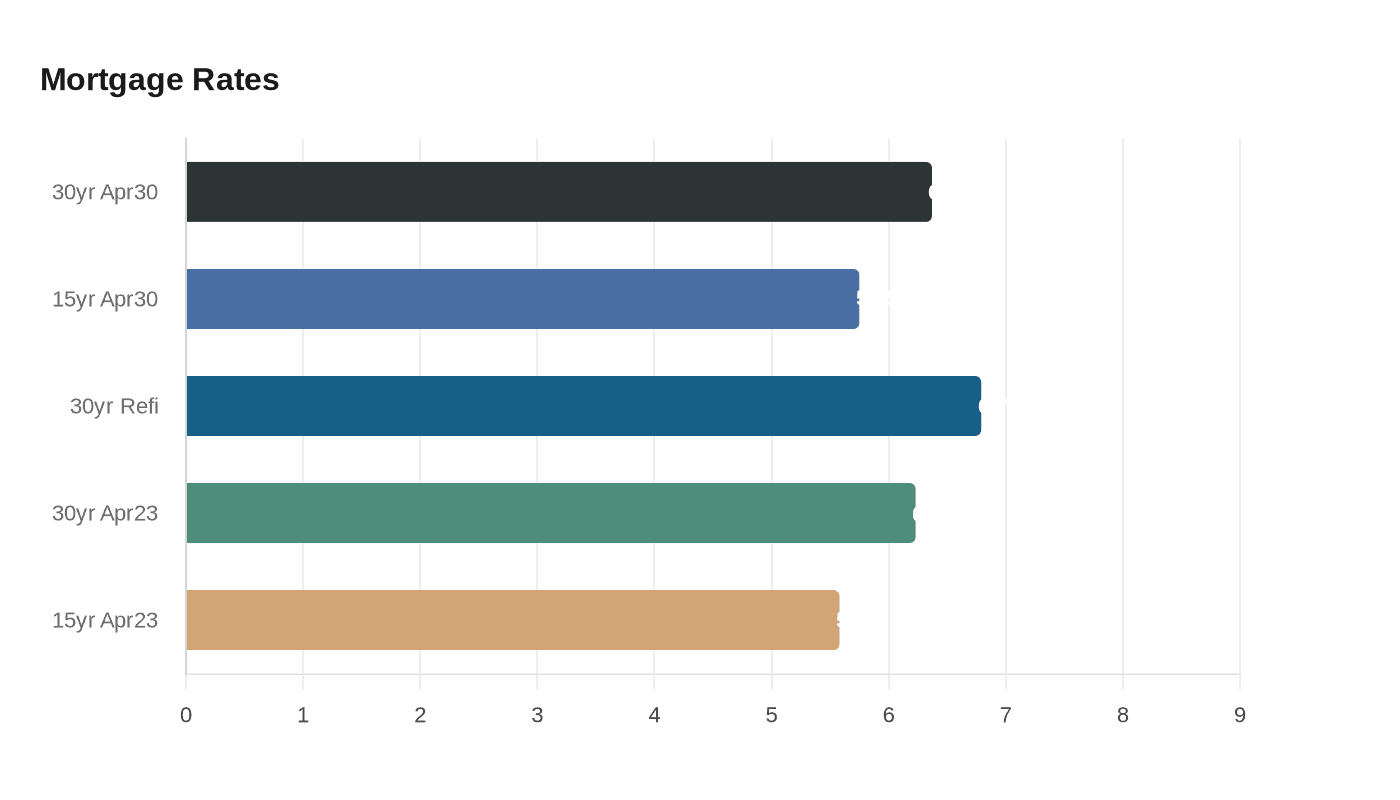
Freddie Mac’s April 23 survey showed some of the best spring numbers in years, with the 30-year fixed rate at 6.23% and the 15-year fixed rate at 5.58%. Freddie Mac said the 30-year rate was at its lowest level in the last three spring homebuying seasons. Its weekly survey draws on thousands of loan applications submitted through Loan Product Advisor and is usually released on Thursdays at 12 p.m. Eastern time, using data from the prior Thursday through Wednesday. But rates remain more than a quarter point above where they stood before tensions involving the United States, Israel and Iran pushed up oil prices and Treasury yields, and that gap is still enough to keep monthly payments elevated.
This article was produced by Prism’s automated news system from verified source data, official records, and press releases, then run through automated quality and moderation checks before publishing. The system is built and supervised by the people who set the standards it runs under. Read our full AI policy.
Did this article answer your question?