Fed meets Wednesday for first 2026 rate decision as markets expect hold
The Federal Open Market Committee meets Jan. 27-28 with markets pricing a hold at 3.50–3.75%, making Powell’s press conference a key guide for policy direction.
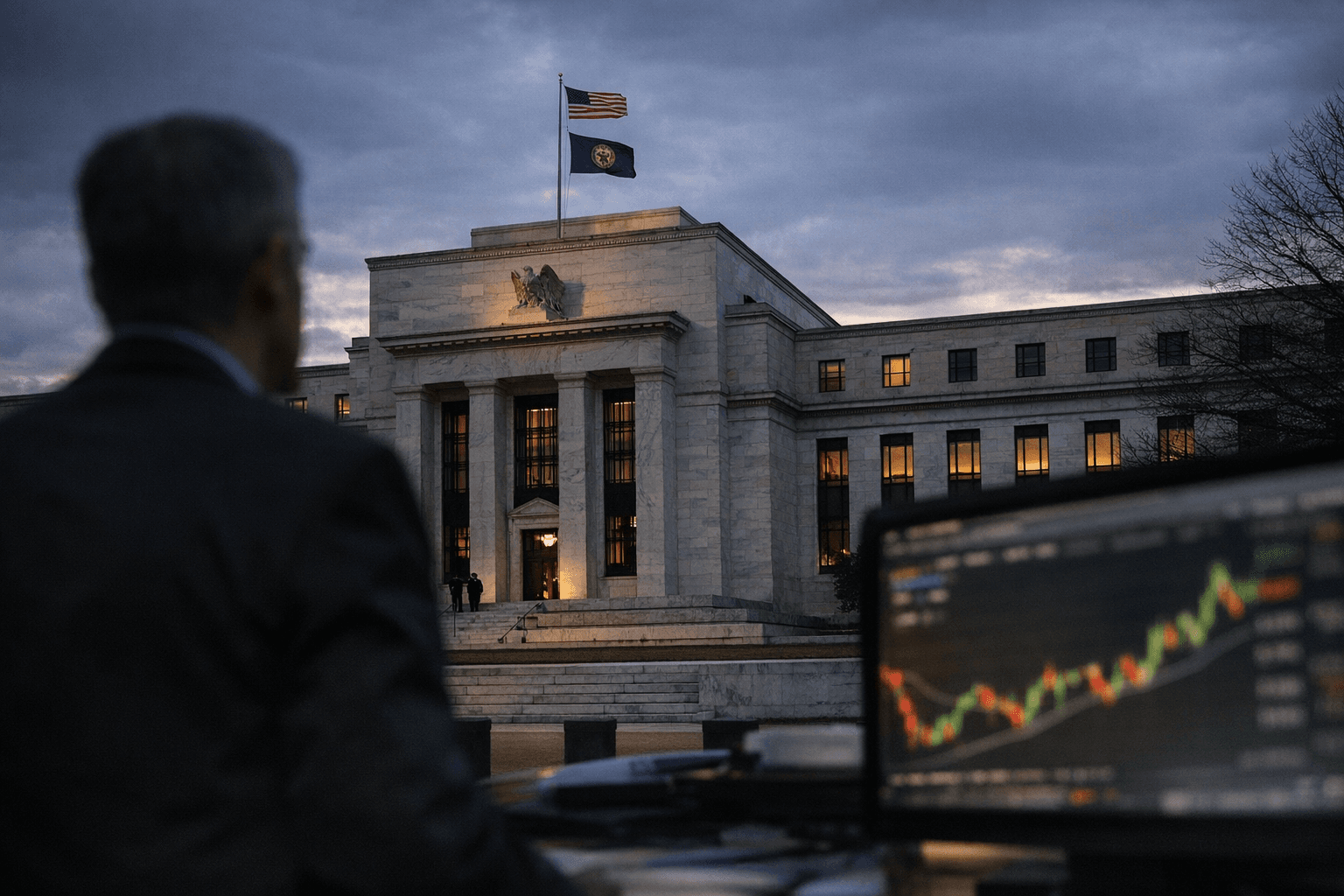
The Federal Reserve meets Wednesday for its first policy decision of 2026, with market participants broadly expecting the Federal Open Market Committee to hold the target federal funds rate at 3.50–3.75 percent. The decision is scheduled for 2 p.m. ET, followed by Chair Jerome Powell’s press conference at 2:30 p.m. ET, which traders and economists view as the primary source of forward guidance.
Markets have largely priced a pause after the Fed’s previous tightening cycle pushed the policy rate into the current range. Investors have interpreted recent inflation readings as evidence of moderation from pandemic-era peaks, even as core inflation remains above the central bank’s 2 percent goal. At the same time, the labor market has stayed historically tight, supporting consumer spending and complicating the Fed’s calculus.
A hold would signal that policy makers are opting to assess the lagged effects of past rate increases rather than press further on hikes. That stance would preserve the “higher-for-longer” posture many market participants have adopted while leaving the Fed the flexibility to resume tightening if incoming data, especially on inflation and wages, reaccelerates. The committee is expected to release its policy statement and may provide updated economic projections that market strategists will parse for changes in the trajectory of rates this year.
Powell’s press conference is likely to determine whether markets tighten or loosen pricing in the short term. Traders will look for language on the Fed’s tolerance for inflation above target, the expected path of balance-sheet runoff, and whether officials see a meaningful slowdown in labor-market indicators. Because the FOMC sets policy with a lag, officials often emphasize data dependence; this meeting tests whether that rhetoric will be reinforced or supplemented with clearer guidance.
Financial markets are trading cautiously into the decision, reflecting the thin margin between a reassuring hold and language that could be interpreted as hawkish. A confirmed hold without a materially dovish tilt would probably sustain current Treasury yields and keep mortgage rates elevated compared with pre-tightening levels. Conversely, any hint that officials see a rapid decline in inflation could spur a drop in yields and boost interest-sensitive sectors of the economy.
Internationally, a continued U.S. policy pause at relatively high rates reinforces dollar strength and could pressure emerging-market borrowers that rely on dollar funding. For corporate borrowers and households, the persistence of elevated rates keeps borrowing costs higher than historic norms, with implications for investment, housing demand, and fiscal financing costs.
Looking beyond the immediate decision, the meeting frames the longer-term debate over whether the United States is returning to a pre-pandemic equilibrium of low inflation and steady growth or entering an era of structurally higher inflation driven by labor supply constraints and fiscal dynamics. Investors and policy makers alike will be watching the next rounds of inflation and payroll reports for clues about which path is likelier, and Powell’s remarks this afternoon will shape expectations for that process.
This article was produced by Prism’s automated news system from verified source data, official records, and press releases, then run through automated quality and moderation checks before publishing. The system is built and supervised by the people who set the standards it runs under. Read our full AI policy.
Did this article answer your question?

