Fed pauses after three cuts, holds funds rate at 3.50%–3.75%
The Federal Reserve paused easing after three 2025 cuts, keeping the federal funds target at 3.50%–3.75% while signaling close monitoring of labor and inflation.
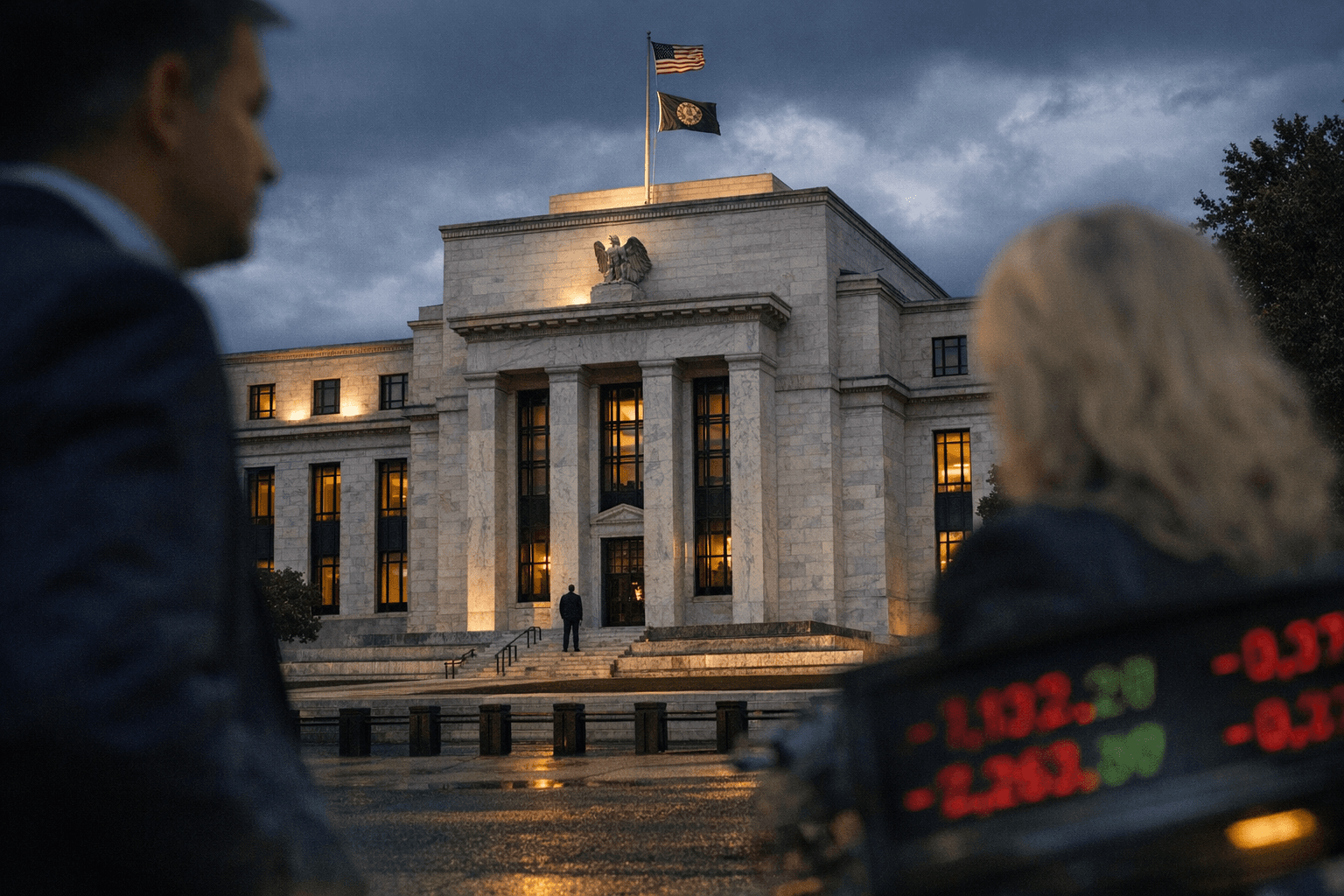
The Federal Open Market Committee held its target range for the federal funds rate at 3.50% to 3.75% following its January meeting, pausing an easing cycle that delivered three consecutive quarter-point cuts in the latter half of 2025. Policymakers said available indicators suggest economic activity has been "expanding at a solid pace," while the unemployment rate has "shown some signs of stabilization," language from the committee's statement that emphasized a cautious, data-dependent approach.
The decision was not unanimous. Governors Stephen Miran and Christopher Waller dissented, each favoring a 25 basis point cut at the meeting. Miran had previously pushed for a larger, 50 basis point decrease, and both dissents underscore an active debate within the committee about the timing and scale of further easing. Miran is a recent presidential appointee and Waller is widely discussed as a potential candidate to succeed Chair Jerome Powell when Powell's term expires in May.
Committee language pointed to a labor market that has cooled: officials noted that job gains have remained low even as unemployment stabilized, and they characterized inflation as remaining "somewhat elevated." Those phrases signal the dual concern guiding policy: to avoid derailing a fragile jobs recovery while preventing inflation from settling back above the central bank's comfort zone.
Chair Jerome Powell, speaking at the post-meeting news conference, described the economy as on "firm footing" and said the current rate level was not restrictive, framing the pause as an opportunity to assess how the cuts delivered in 2025 are affecting growth and labor markets. Earlier in the month Powell had publicly criticized a Department of Justice inquiry into Fed affairs as a "pretext" to intimidate the central bank; that dispute has added a political overlay to policy decisions and attention to Fed independence.
Markets interpreted the Fed's hold as consistent with expectations that officials would take stock before moving again. Traders are pricing a higher probability of a next cut in June 2026, with a smaller chance of another easing action in December. The committee's December projections had signaled one 25 basis point reduction for 2026, and officials appeared to leave that path intact while emphasizing that incoming data and the balance of risks would determine timing.
Economists and market strategists expected an uneventful policy statement but watched closely for shifts in tone. David Mericle, chief U.S. economist at Goldman Sachs, said the January meeting was likely to be "uneventful, with no change to the fed funds rate, only minor changes to the statement and few hints about the future policy path," adding that Powell would emphasize that three cuts should help stabilize the labor market. Michael Gapen, chief U.S. economist at Morgan Stanley, framed the central question as whether Powell would signal a "dovish hold" that keeps the door open to further cuts or a more durable pause; Gapen said he expected the former.
One technical note complicated immediate interpretation: the Fed's publicly released implementation note included a truncated fragment reading "The Board of Governors approved implementation decisi" and did not contain the detailed operational text that often accompanies policy actions. Market participants and analysts said they would await the full documentation and Powell's remarks for clarity on operational steps and the committee's next moves.
This article was produced by Prism’s automated news system from verified source data, official records, and press releases, then run through automated quality and moderation checks before publishing. The system is built and supervised by the people who set the standards it runs under. Read our full AI policy.
Did this article answer your question?