Fed weighs rising inflation risks against stable jobs outlook
Inflation heated up to 3.5% in March just as the Fed held rates at 3.5% to 3.75%, widening the case for higher-for-longer policy. Traders awaited jobs data for the next clue.
The Federal Reserve is being pulled in two directions at once: inflation has re-accelerated, but the labor market still looks steady enough to keep the central bank from panicking. That tension is leaving mortgage rates, credit-card borrowing costs and business loans pinned near restrictive levels, while hiring plans face a slower, more cautious policy backdrop.
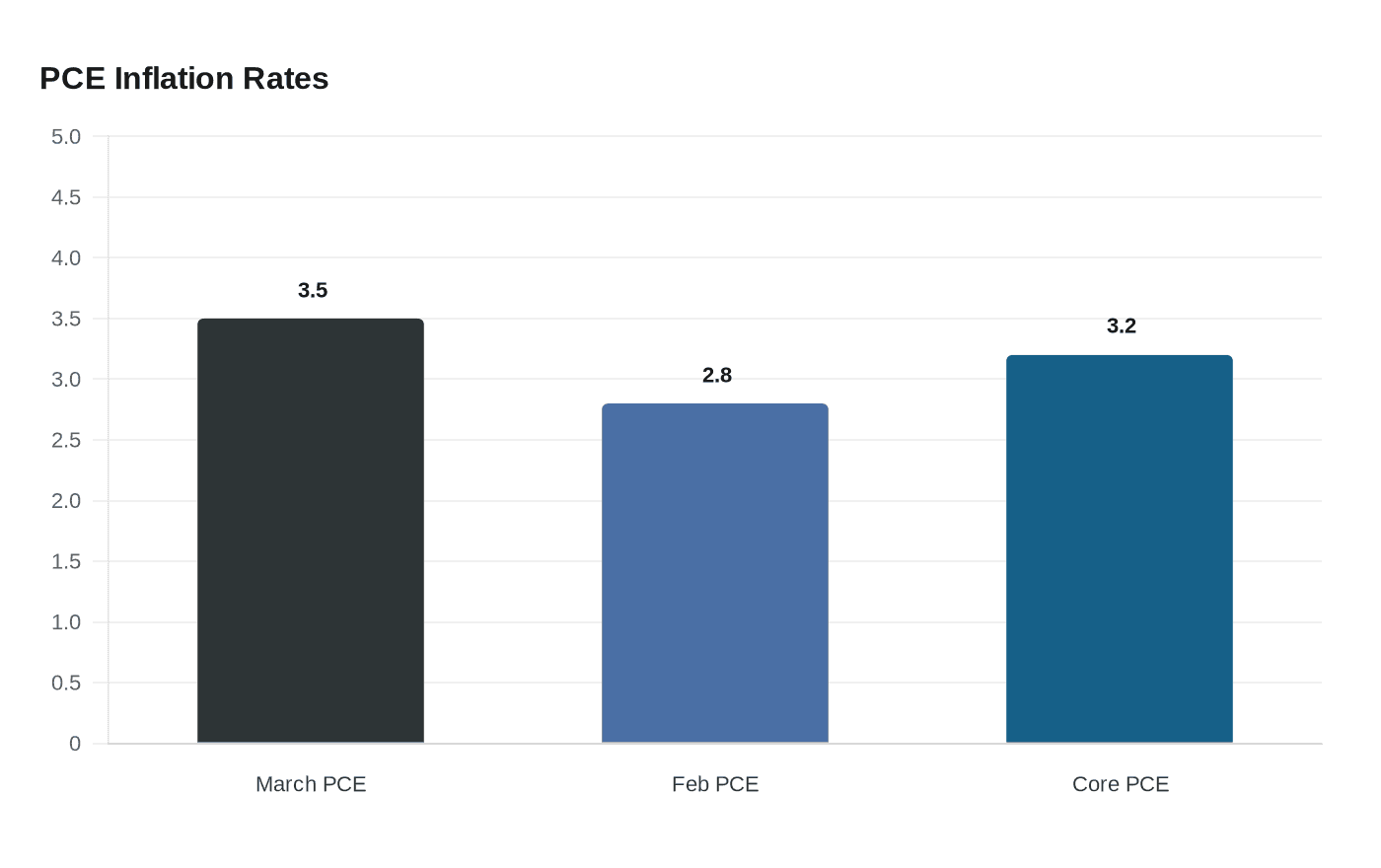
The warning signs sharpened after the Bureau of Economic Analysis said the PCE price index, the Fed’s preferred inflation gauge, rose 3.5% in March from a year earlier, up from 2.8% in February. Core PCE rose 3.2% year over year. At the same time, personal consumption expenditures increased $195.4 billion, or 0.9%, and personal income rose $149.2 billion, or 0.6%, showing that demand has not fallen apart even as price pressures have returned.
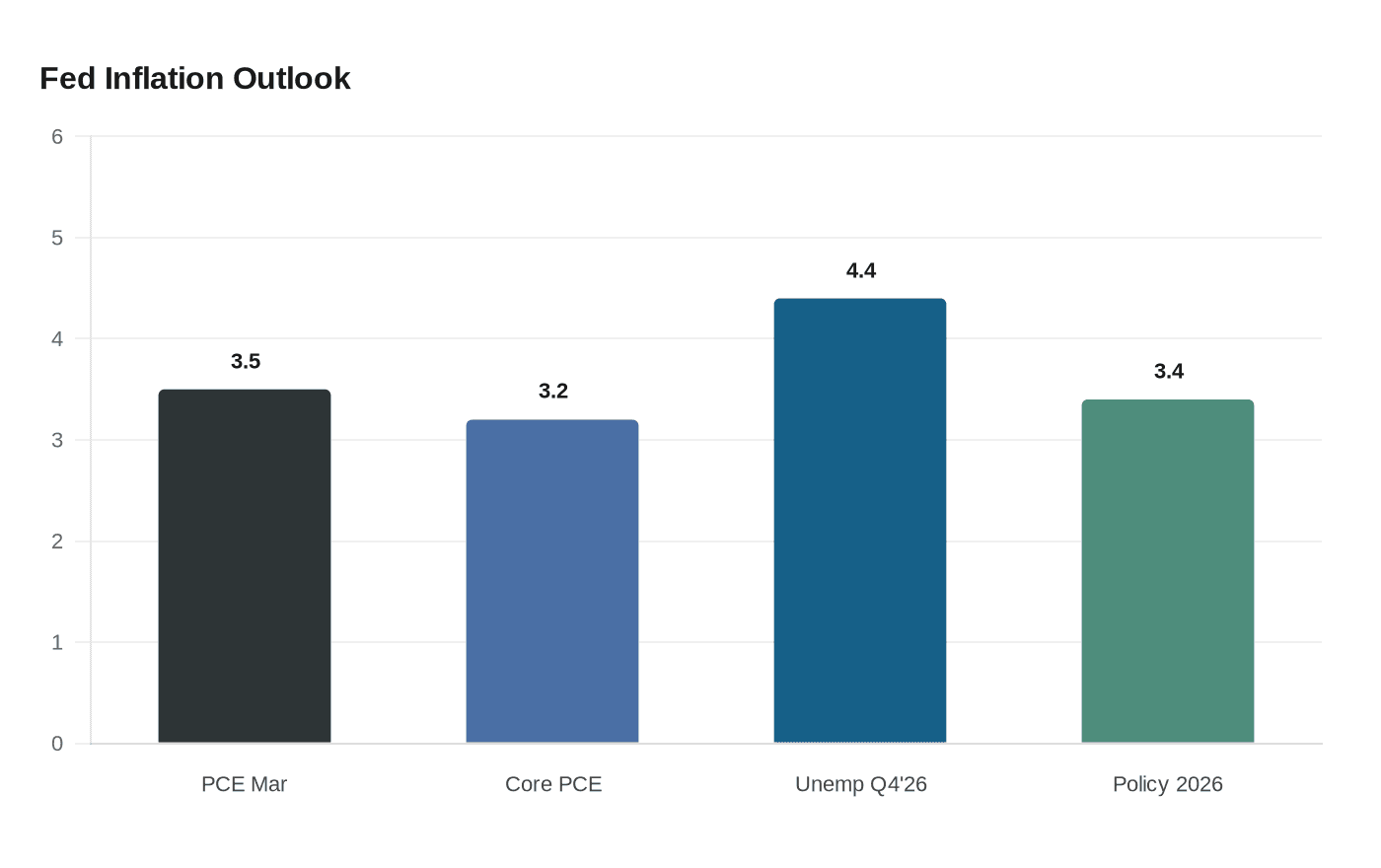
That data landed after the Fed kept its benchmark rate unchanged on April 29 in a split 8-4 vote, leaving the federal funds rate at 3.5% to 3.75%. CNBC said it was the most dissents at a meeting since October 1992, a sign of how unsettled the internal debate has become. The March 17-18 Summary of Economic Projections showed officials expecting unemployment at 4.4% in the fourth quarter of 2026 and the policy rate at 3.4% at year-end, implying only modest room for cuts.
New York Fed President John Williams tried to steady those expectations on May 4, saying policy is "well positioned" for uncertainty. He said the risks to both sides of the Fed’s mandate had increased, projected inflation around 3% this year before drifting back toward 2%, and said unemployment should stay between 4.25% and 4.50%. He saw no need for a near-term rate hike, but his comments underscored how little confidence officials have that either inflation or jobs will cooperate.
The labor market will get its next test Friday morning, when the Bureau of Labor Statistics was due to release the April employment report at 8:30 a.m. ET. Investors and policymakers have been treating that number as pivotal because a stable jobs picture gives the Fed room to stay put, while a softer reading could force officials to revisit the possibility of cuts or, if inflation stays hot, keep rates higher for longer.
That balancing act echoes the warnings Fed officials were already making a year earlier. In May 2025, minutes showed policymakers worried about "difficult tradeoffs" if inflation stayed persistent while growth and employment weakened. The St. Louis Fed said in March that unemployment had climbed to 4.3% in January from 3.4% in April 2023 and that inflation had stayed above the 2% target since March 2021. With energy shocks, tariff changes and volatile Treasury yields still clouding the outlook, the Fed’s room to ease is narrowing just as the job market remains the main reason it can afford to wait.
This article was produced by Prism’s automated news system from verified source data, official records, and press releases, then run through automated quality and moderation checks before publishing. The system is built and supervised by the people who set the standards it runs under. Read our full AI policy.
Did this article answer your question?

