Federal courts block Education Department’s nationwide anti‑DEI directives
Two federal judges invalidated Education Department memos and a Dear Colleague letter that threatened funding cuts over DEI, halting enforcement nationwide and easing schoolroom uncertainty.
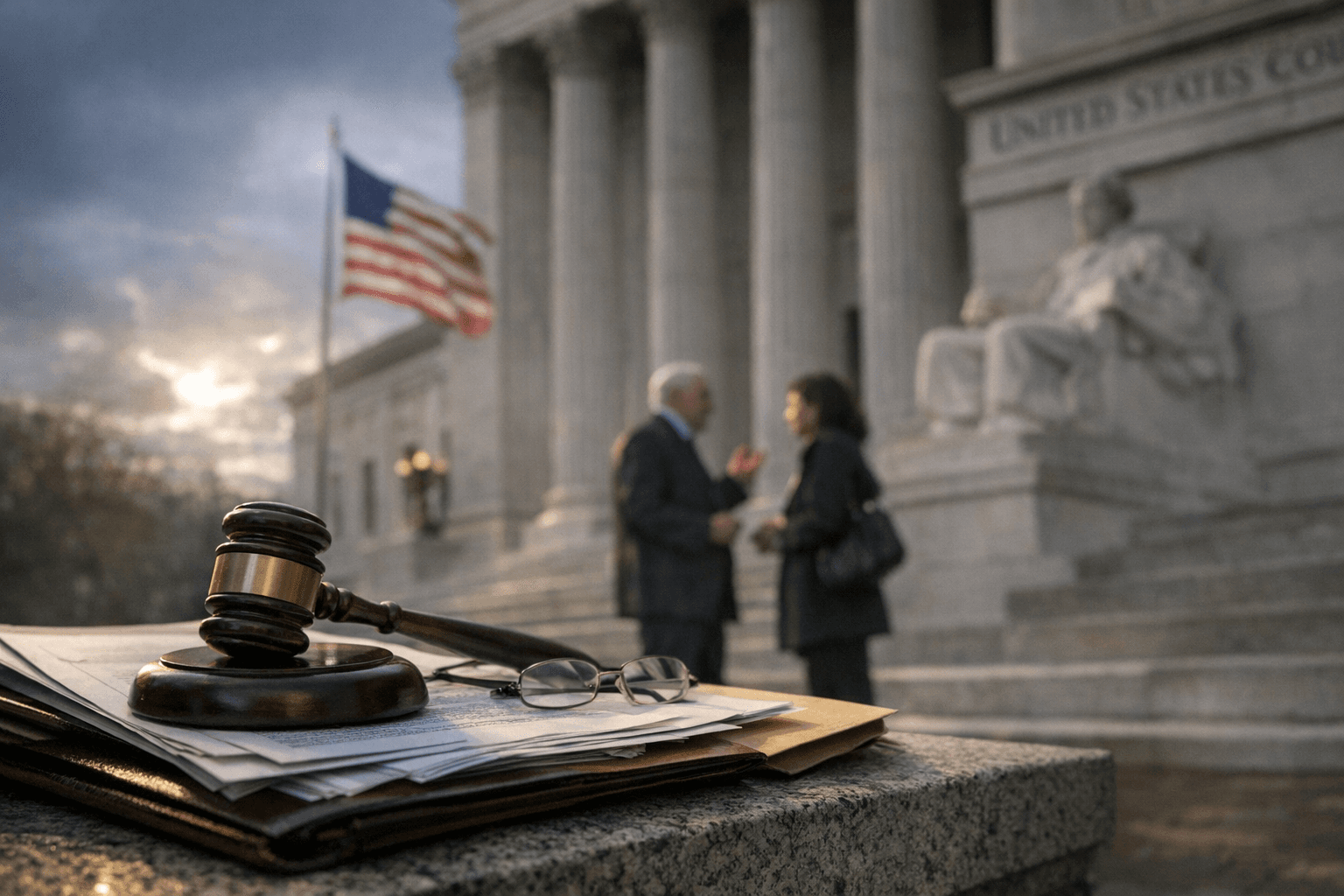
Federal courts in Maryland and New Hampshire have issued rulings that together neutralize a Trump administration campaign to bar diversity, equity and inclusion programming in K‑12 schools and higher education and to threaten federal funding for institutions that did not comply.
In Maryland, U.S. District Judge Stephanie Gallagher struck down two Education Department memos that ordered schools and universities to end all "race‑based decision‑making" or face penalties up to a total loss of federal funding. Gallagher concluded the department violated procedural requirements when it threatened funding cuts and ordered the agency to scrap the guidance, while expressly declining to weigh in on the policies’ merits. As Gallagher wrote in her opinion, she "took no view on whether the policies were 'good or bad, prudent or foolish, fair or unfair.'"
The Maryland ruling followed a motion for summary judgment filed by the American Federation of Teachers and the American Sociological Association in litigation that challenged the department’s directives. Courts in multiple districts had already put parts of the policies on hold in April after preliminary injunctions halted investigation and enforcement while litigation proceeded.
In New Hampshire, U.S. District Judge Landya McCafferty permanently invalidated a Feb. 14, 2025 "Dear Colleague" letter signed by Craig Trainor, then‑acting assistant secretary for Civil Rights. The letter had "told schools they had 14 days to comply with the directive or face consequences, including loss of funding," and cited the Supreme Court's 2023 Students for Fair Admissions v. Harvard decision. McCafferty had issued a preliminary injunction on April 24, 2025 blocking enforcement against certain districts and later concluded the letter mischaracterized DEI, finding its "isolated characterizations of unlawful DEI" conflicted with the term’s meaning. McCafferty observed that "DEI as a concept is broad; one can imagine a wide range of viewpoints on what values of diversity, equity, and inclusion mean when describing a program or practice," and described DEI as fostering "a group culture of equitable and inclusive treatment."
The challenges were brought by a coalition of education and civil‑rights groups. Plaintiffs named in the litigation include the American Federation of Teachers, the American Sociological Association, the American Civil Liberties Union and affiliates, the National Education Association, the Center for Black Educator Development and several New Hampshire school districts. Those groups argued the department had exceeded its authority, issued vague and procedurally flawed guidance, and in some filings raised constitutional concerns.
Practically, the twin rulings convert a sequence of preliminary stays into permanent obstacles to the department’s enforcement strategy. The guidance has been effectively on hold since courts began intervening in April, and the New Hampshire case was formally dismissed on Feb. 18, 2026 after the department "backed down" from the suit. Education officials have delayed investigations and, in at least one instance, declined to press appeals, narrowing the department’s immediate options to revive the directives.
Advocates for schools and educators welcomed the outcomes as protection for classroom autonomy and for existing diversity programs, saying the rulings reduce uncertainty about what districts can teach. Opponents who supported the department’s approach argued the measures were intended to end discriminatory practices they say disadvantage some students.
The litigation leaves open additional questions: the full text and legal rationale of the department memos remain central to any future appeal, and other state‑level bans and challenges are pending in parallel courts. For now, judges in Maryland and New Hampshire have substantially curtailed the department’s ability to condition federal funds on the elimination of DEI programs nationwide. Critics hailed the results as a win against bigotry, while legal advisers on both sides weigh next steps.
This article was produced by Prism’s automated news system from verified source data, official records, and press releases, then run through automated quality and moderation checks before publishing. The system is built and supervised by the people who set the standards it runs under. Read our full AI policy.
Did this article answer your question?

