Federal government removes lesser prairie-chicken from ESA protections, shifting oversight to three states
The U.S. Fish and Wildlife Service delisted the lesser prairie-chicken, ending federal protections and transferring primary management to Kansas, Oklahoma and Texas, reshaping energy and land use review.
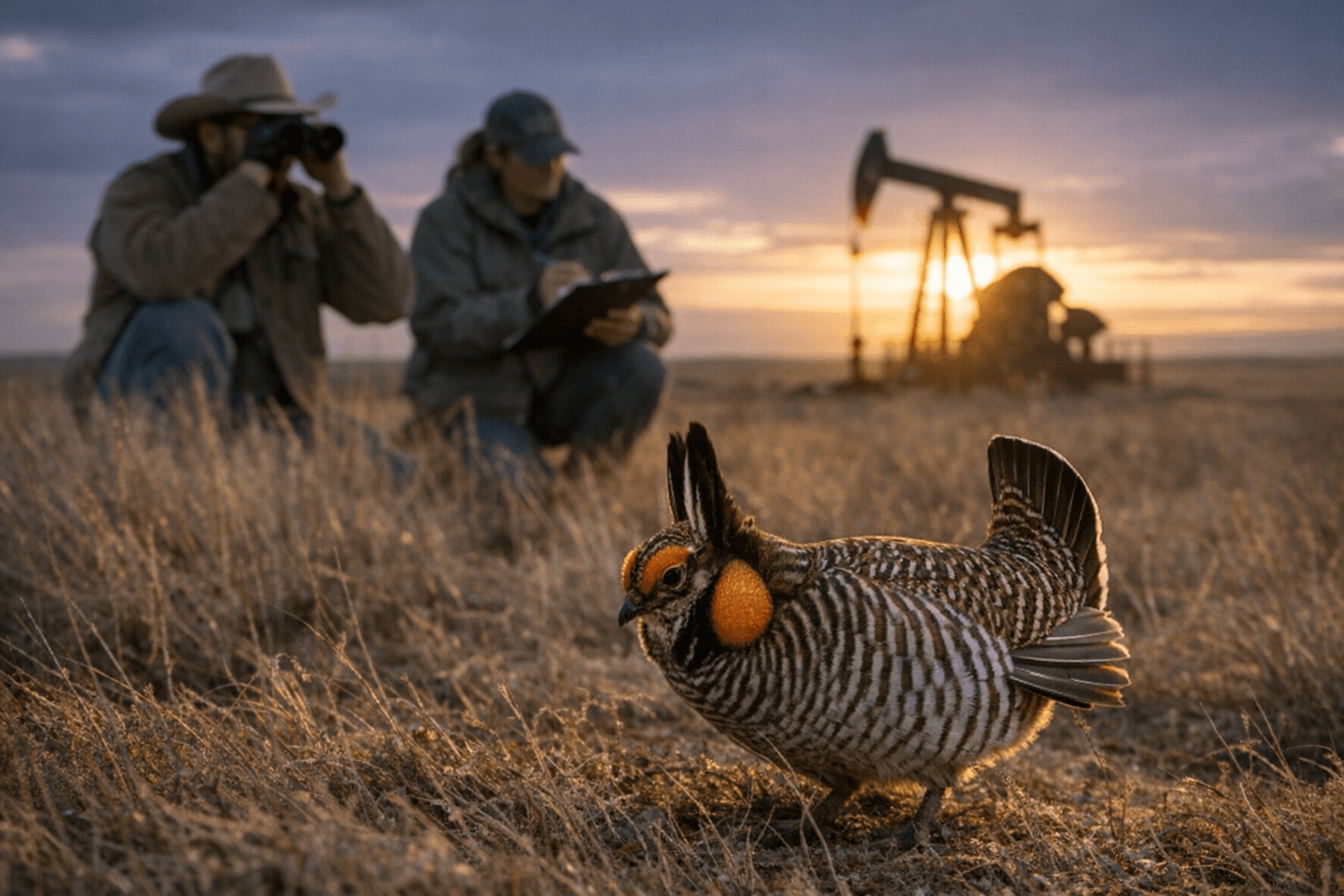
The U.S. Fish and Wildlife Service finalized the removal of the lesser prairie-chicken from the Endangered Species Act today, eliminating federal protections that had governed land use and project permitting across parts of the southern Great Plains and placing primary responsibility for the species with state governments in Kansas, Oklahoma and Texas. The decision removes a federal consultation requirement that has affected energy, ranching and infrastructure projects for more than a decade.
Federal officials framed the delisting as a shift toward state-led conservation, citing state plans and voluntary agreements with private landowners as the mechanism to maintain the bird’s habitat. Industry groups in the ranching and petroleum sectors welcomed the move as regulatory relief, saying it will reduce delays on pipelines, well pads and grazing permits that previously triggered federal review under Section 7 of the Endangered Species Act. State regulators in the three states will now be the main actors deciding on mitigation standards and permitting timelines.
For project developers, the immediate market implication is a narrowing of the scope of federal environmental reviews for activities that previously required formal interagency consultation to assess impacts on the species. Companies operating in the region are likely to see shorter permitting lead times and lower compliance costs where state plans are deemed sufficient by federal authorities. That change could accelerate energy-sector activity on federal and private lands in parts of the Great Plains, altering investment timing for projects that had been paused or modified because of potential impacts to lesser prairie-chicken habitat.
Conservation advocates criticized the move, arguing that the delisting weakens safeguards for a grassland bird whose range has been fragmented by decades of conversion to agriculture, oil and gas development, and infrastructure. Federal protection under the Endangered Species Act previously created a legal framework that tied federal funding and approvals to species survival, and many conservation scientists say shifting enforcement to patchwork state measures risks uneven protections across the bird’s historical range.
Policy implications run beyond this single species. The decision is the latest example of the federal government ceding enforcement authority to states through delisting or regulatory reinterpretation, a trend that changes how ecological risk is assessed, how mitigation is funded, and who bears the cost of habitat restoration. It also raises questions about long-term monitoring: without the statutory ESA trigger, ensuring consistent, transparent population tracking and habitat reporting will depend more heavily on state budgets and private conservation agreements.
Legally, the delisting is likely to prompt challenges and review of the administrative record used by the Fish and Wildlife Service to justify removal. Any litigation would focus on whether federal agencies correctly evaluated the best available science and whether state conservation commitments are enforceable and adequate to prevent extinction or severe declines.
For residents and landowners in the affected states, the decision will change the practical calculus of managing land and pursuing development. For federal policymakers and markets, it is a case study in how regulatory design and enforcement pathways influence the pace of energy and agricultural activity, the distribution of environmental risk, and the durability of species protections over time.
This article was produced by Prism’s automated news system from verified source data, official records, and press releases, then run through automated quality and moderation checks before publishing. The system is built and supervised by the people who set the standards it runs under. Read our full AI policy.
Did this article answer your question?

