Federal Judge Blocks Invalidation of Venezuelan Work Documents for Thousands
A federal judge in San Francisco temporarily barred the Trump administration from invalidating employment authorization and related documents for roughly 5,000 Venezuelans, preserving work rights for those who received paperwork during a brief January to February administrative window. The narrow injunction arrives amid a broader and unsettled legal fight over termination of Temporary Protected Status for hundreds of thousands of Venezuelans, with major economic and social stakes for workers, employers, and communities.
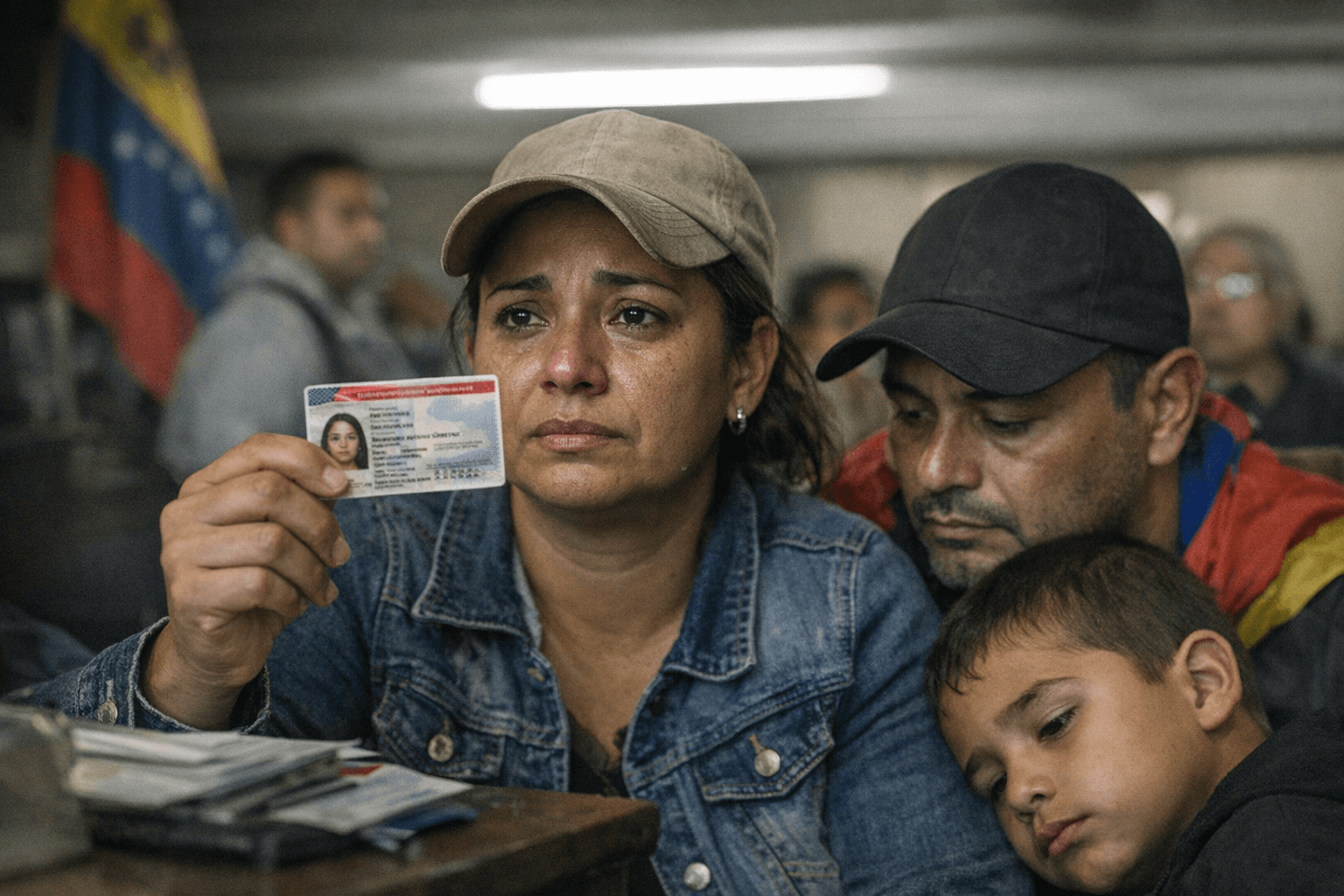
A U.S. district judge in San Francisco on December 20 temporarily prevented the federal government from revoking employment authorization documents and related proof of lawful status for about 5,000 Venezuelan beneficiaries while litigation continues over the wider termination of Temporary Protected Status for Venezuelans. Judge Edward E. Chen issued the injunction in the case captioned NTPSA v. Noem, finding that Homeland Security Secretary Kristi Noem likely exceeded her statutory authority when she invalidated documents issued during a short administrative window earlier this year.
The protected cohort received paperwork after then Homeland Security Secretary Alejandro Mayorkas extended TPS in January and before Secretary Noem terminated that extension in February. Chen’s order preserves the validity of those specific employment authorization documents, preventing the government from stripping work permission from those individuals while the underlying suit proceeds. The relief is preliminary and narrowly tailored, but it underscores the complex interplay between executive immigration decisions and judicial review.
In a 78 page opinion referenced by advocacy groups, Chen wrote that the Secretary’s action “threatens to: inflict irreparable harm on hundreds of thousands of persons whose lives, families, and livelihoods will be severely disrupted, cost the United States billions in economic activity, and injure public health and safety in communities throughout the United States.” The opinion concluded the government had not shown substantial countervailing harms that would justify immediate invalidation of the January issued documents.
The district court ruling sits against a turbulent appellate track. Earlier this month the U.S. Supreme Court allowed the administration to terminate TPS for Venezuelans, lifting a prior injunction from Judge Chen, a move that attracted a dissent from Justice Ketanji Brown Jackson. Reporting and advocacy statements have placed the number of Venezuelans affected at different levels depending on cohorts and expiration dates. One commonly cited figure is roughly 350,000 Venezuelan TPS holders whose protections were set to lapse in early April, while a broader grouping counting staggered expirations approaches 600,000 individuals.
The administration has argued that revoking TPS carries downstream effects beyond work authorization, asserting it can invalidate certain visas and other proof of lawful entry. That legal consequence is central to the challengers’ claim that abrupt revocations would cause immediate economic and humanitarian harms. Employers that rely on immigrant labor and communities with concentrated Venezuelan populations stand to face immediate disruptions if work authorizations are struck down, a risk the court weighed in its assessment of irreparable harm.
Economically the dispute has immediate and longer term implications. Judge Chen’s assertion that revocations could cost the United States billions in economic activity reflects concerns about lost wages, reduced consumer spending, and decreased tax receipts. The litigation also raises questions about business planning, labor supply in key industries, and the administrative reach of successive Homeland Security secretaries.
For now the impact of Chen’s order is narrow, protecting a specific group of roughly 5,000 beneficiaries. But the case remains active on appeal and the ultimate legal outcome will determine whether protections expand, contract, or remain in flux for hundreds of thousands of Venezuelans and for the businesses and local economies that employ them.
This article was produced by Prism’s automated news system from verified source data, official records, and press releases, then run through automated quality and moderation checks before publishing. The system is built and supervised by the people who set the standards it runs under. Read our full AI policy.
Did this article answer your question?

