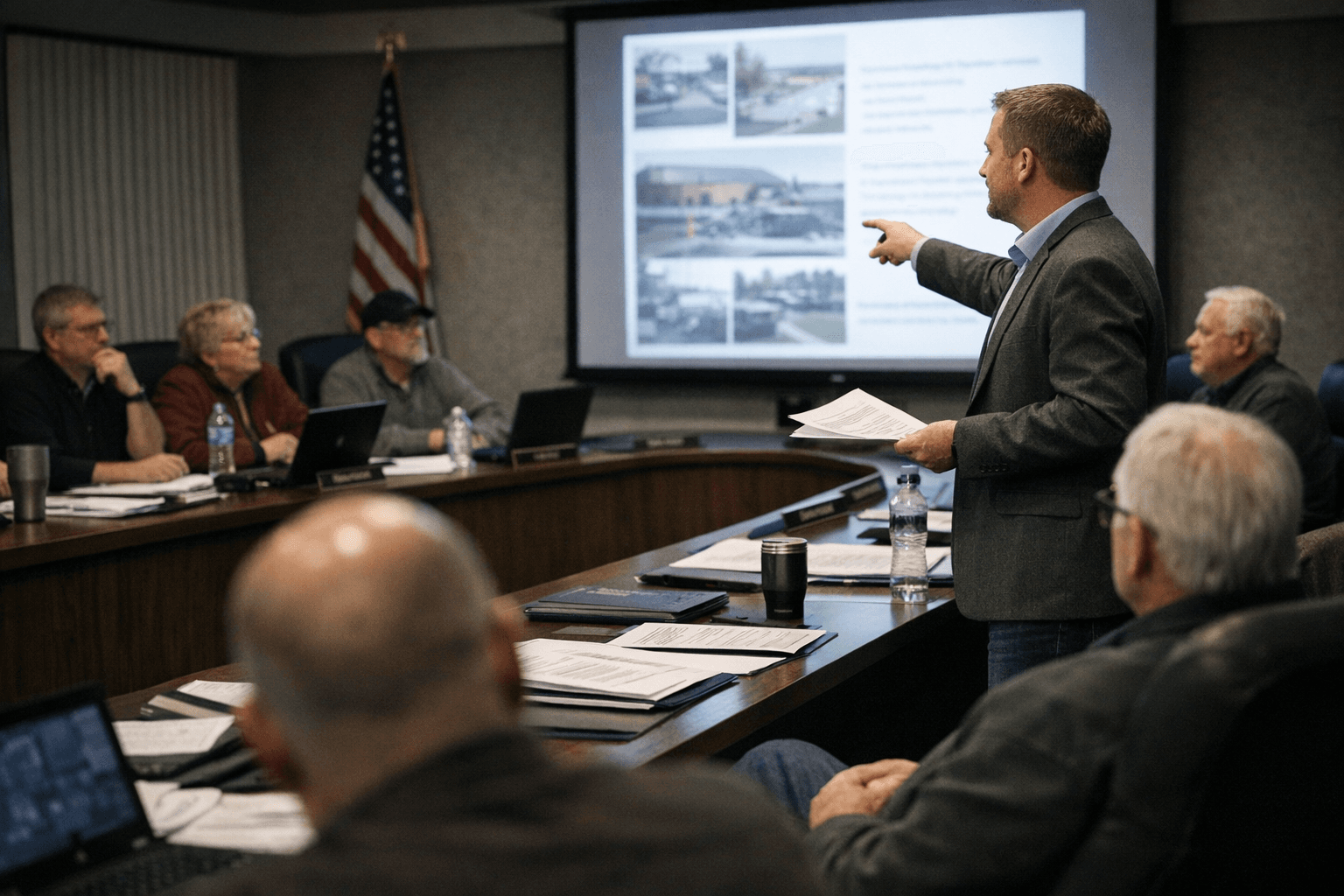
Fergus Falls City Council approves 2026 utility and landfill rate increases
Fergus Falls City Council approved increases to city utility and landfill rates for 2026 after staff presented a utility rate analysis; the changes will affect household and commercial disposal costs.

Fergus Falls City Council approved increases to city utility and landfill rates during its regular meeting on Feb. 2, 2026, following staff presentations described as the “2026 utility rate analysis.” The action sets the stage for higher household and commercial solid waste costs next year at a time when landfill disposal and operational pressures are already straining the refuse fund.
City sanitation expenses have risen sharply in recent years. The city sanitation division paid $1,185,759.90 for 38,462 tons in the fiscal year that ended June 30, 2023, and city staff is projecting $1,208,647 for “this budget year,” an increase of $35,541. Landfill rates change on January 1 annually, and staff identified wage increases, fuel and equipment costs as additional drivers of higher sanitation expenses. “A 4.75 wage increase through the collective bargaining agreement and fuel costs are also driving expenses and the need for a rate increase, according to staff.”
A separate consultant document labeled “2024 Utility Rate Analysis” is part of the materials staff used in planning. That analysis recommended recurring increases, including a “3.5% increase in residential/commercial collection and disposal fees in 2024, similar increases expected through 2033,” a “3.5% increase in landfill fees (garbage) in 2024, similar increases expected through 2033,” and a “10% increase in roll off fees in 2024, similar increases expected through 2026, 4.0% through 2033.” The analysis also notes that “MPCA requirements will likely drive future rate increases at those sites.” Refuse fund projections that assume revenue increases show operating revenues rising to $4,380,652 in 2026 with operating income remaining positive in out-years.
Historical and current landfill pricing show a steep climb in disposal charges per cubic yard: $15.40 in 2017, $24.40 in 2019, $33.40 in 2021, $47.40 in 2022, $49.40 in 2023 and $51.40 in 2024. Separately, per-ton billing language in city reports contains differing sequences - one set shows $30.31 per ton then $32.43 per ton within a budget year, while another states $32.43 then $33.44 - and the city has not, in the materials provided, reconciled those sequences.
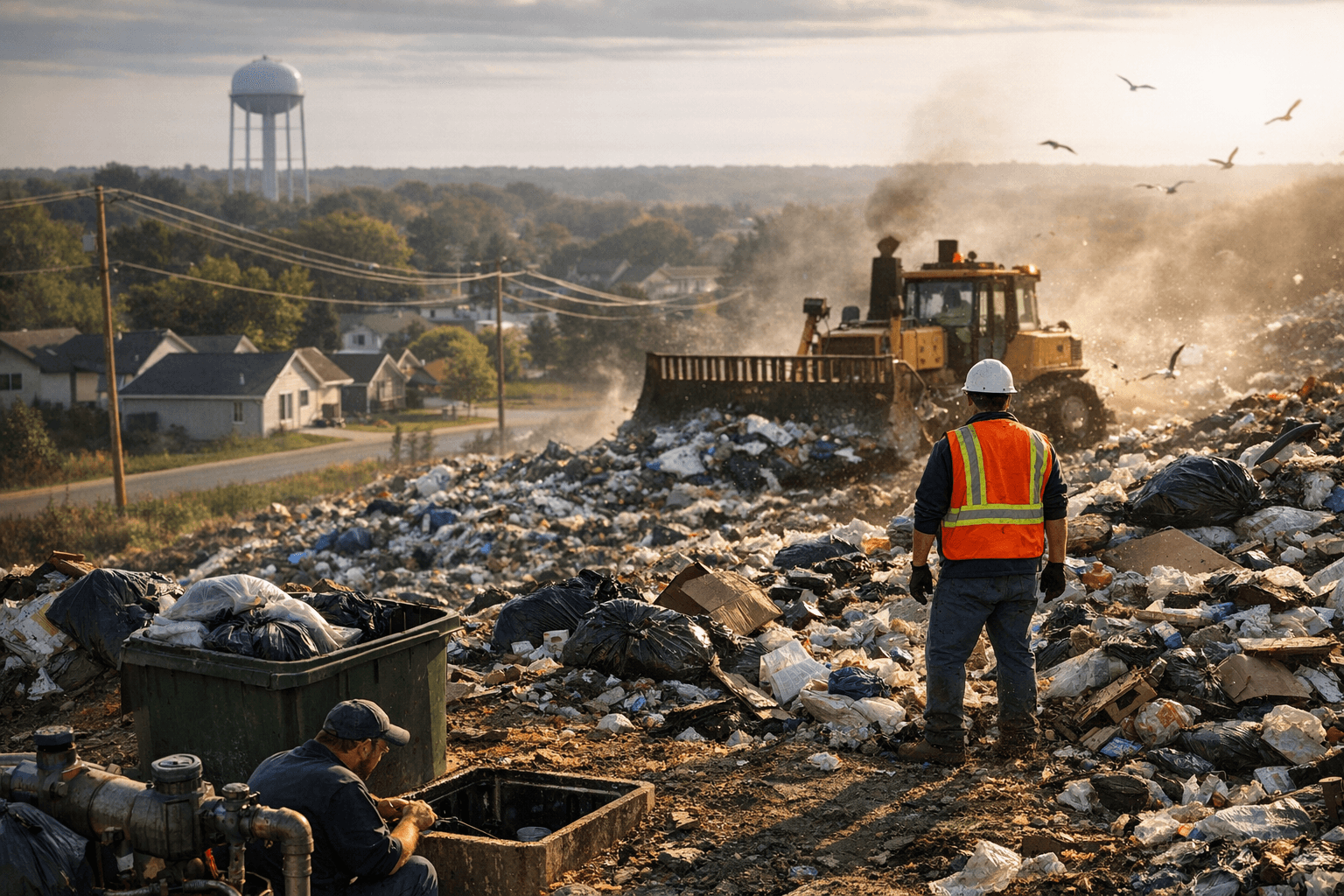
Fergus Falls’ published landfill fee schedule lists specific charges residents should expect for drop-off services. Key items include MSW (garbage) at $26.00 per cubic yard for city residents and $39.00 for non-residents; demolition debris at $48.00 and $72.00 per cubic yard; white goods $9.00 each for residents; televisions $20.00 each for residents; and a handling fee of $100.00 for residents ($150.00 non-residents). Compost and trees/brush are currently no charge for residents. The schedule also sets escalating fines for improper loads - first offense is a verbal warning, second offense $100 plus cleanup costs, third $300 plus cleanup costs, and fourth $500 plus cleanup costs.
City operations underpinning the rate decision are substantial. The sanitation division serves 18,784 residential and commercial customers - 85.6 percent of all city customers - with 20 full-time employees and plans to replace two residential side loaders and one commercial side loader. Republic Services continues to serve remaining customers and owns the landfill used by the city. Officials also considered a city-owned landfill but “decided against a city-owned landfill because didn’t financially pencil out, plus there were potential environmental liabilities and other risks associated with landfills,” a city official identified as Gaub told regional reporters.
Several technical items remain to be clarified publicly: the exact effective dates and billing cycles for the 2026 rate increases, how the “2026 utility rate analysis” presented at the meeting relates to the consultant’s “2024 Utility Rate Analysis,” and reconciliation of per-ton figures cited in budget documents. Residents should watch for the formal rate schedule and staff packet released by the city and may contact city hall for specifics or attend upcoming council meetings to review adopted ordinances and billing changes.
Sources:
Know something we missed? Have a correction or additional information?
Submit a Tip