FGCU Entrepreneur Recycles 1,000 Pounds of Pickleballs Into New Balls
Dillon Rosenthal, an FGCU entrepreneurship student, recycled more than 1,000 pounds of used pickleballs into new balls, creating a closed-loop system that cuts plastic waste and benefits local courts.

Dillon Rosenthal, a fourth-year entrepreneurship major at Florida Gulf Coast University, has turned cracked and spent pickleballs into playable equipment through his startup BounceBack Pickle. Partnering with country clubs, parks and local facilities, Rosenthal’s team places collection bins at courts, gathers the damaged balls, and recycles them into new, hollow seamless balls using a rotational molding process.
Rosenthal’s operation collected more than 1,000 pounds of used balls in partnership with The RePickle Project, and as of Jan. 14 had received a first test batch from a manufacturer in China. BounceBack Pickle has placed dozens of collection bins across Florida and in U.S. cities including Los Angeles and New York, establishing the logistics needed for a closed-loop system that keeps plastic out of landfills and back on the courts.
The recycling method grinds ball remnants into a plastic powder, then reshapes that powder into balls with uniform thickness. That manufacturing step is key for producing consistent bounce and durability for players used to the feel and flight of regulation pickleballs. Rosenthal built the model to address the sport’s waste problem, citing industry figures that show millions of balls are produced annually and contribute to plastic pollution.
Practical value for clubs and players is immediate. Country clubs and public facilities can reduce disposal costs and court-side clutter by swapping cracked balls into BounceBack bins. Recreational programs and beginners may eventually see lower-cost recycled options once product testing finishes and direct-to-consumer channels open. For tournament directors and league coordinators, a reliable recycling stream could also supply practice balls and reduce procurement expenses.
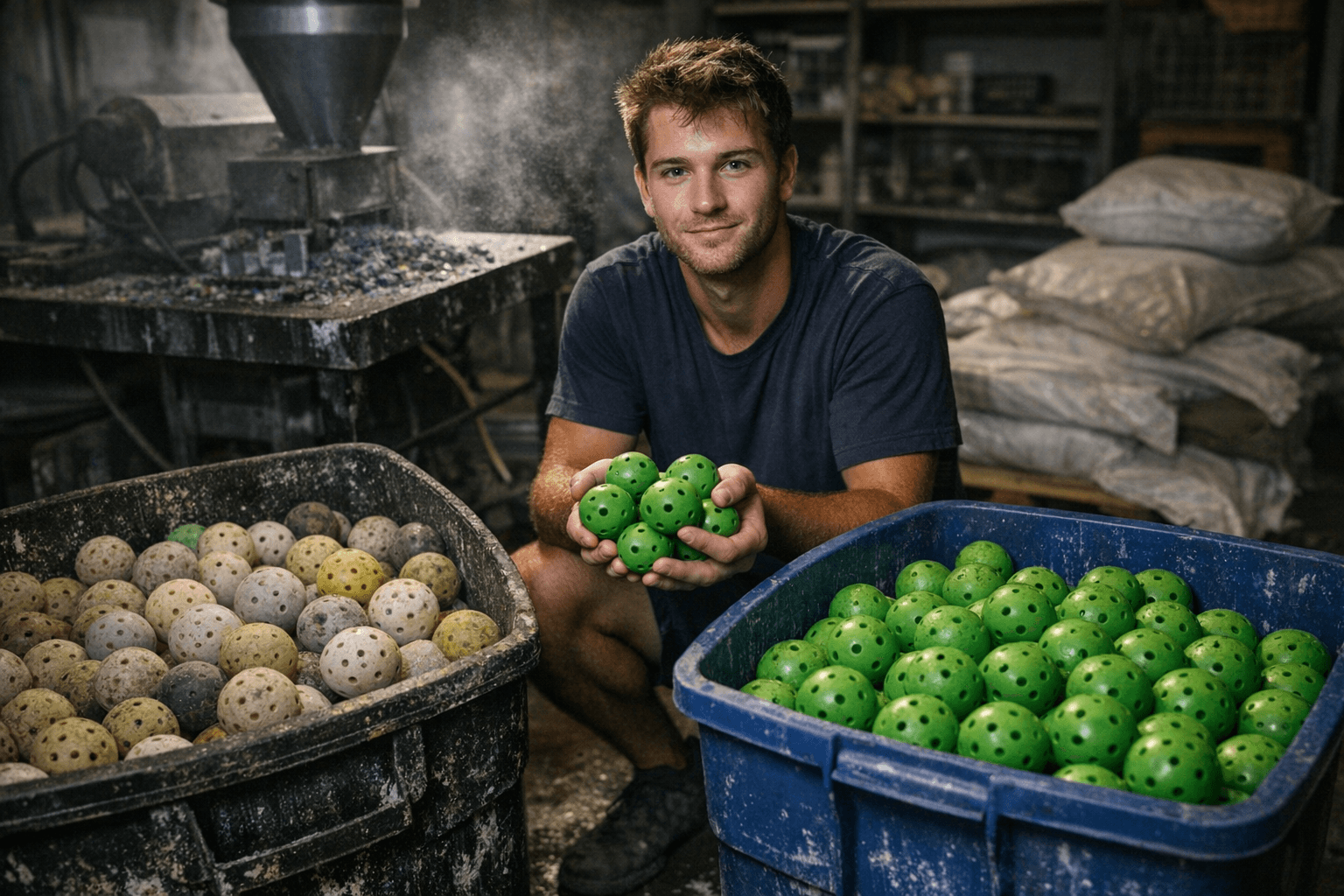
Rosenthal’s path to BounceBack Pickle included early funding from entrepreneurship competitions at FGCU, and he plans to scale through additional partnerships, social media outreach and direct sales once testing confirms performance standards. The startup’s emphasis on a closed-loop lifecycle and partnerships with existing court operators aims to make recycling straightforward for players and facilities.
For local players, the takeaway is straightforward: look for BounceBack bins at participating courts and drop off unusable balls instead of tossing them. For facility managers, contacting Rosenthal and BounceBack Pickle offers a way to cut waste while supporting community play. If testing and scaling go as planned, more courts could see recycled balls in rotation, keeping play consistent and reducing the sport’s environmental footprint.
Know something we missed? Have a correction or additional information?
Submit a Tip