Ficus Bonsai Growth Rates, Key Drivers, and Practical Vigor Controls
Ficus can add 12–24 inches of new growth a year; seed-grown trees may take 20+ years to reach maturity while pre-bonsai and nursery stock can be bonsai-ready in 1–5 years.

A well-shaped Ficus bonsai typically matures in about 5 to 10 years, yet growth expectations hinge on how you start the tree and how you manage vigor. Under optimal conditions, a Ficus can add roughly 12 to 24 inches of growth per year, and the vegetative growth stage generally lasts between 1 to 3 years, offering a rapid window for trunk and branch development if you push growth deliberately.
Timelines split sharply by propagation method. Germination for Ficus seeds typically spans 2 to 4 weeks, but seed-to-maturity forecasts climb steeply: seeds may take 5–10+ years to reach a bonsai shape and 20+ years to full maturity. Cuttings or saplings cut that window to about 2–5 years to shape and 5–10 years to maturity. Pre-bonsai or nursery stock can reach a bonsai shape in 1–2 years and maturity in roughly 3–5+ years. Name the baseline you started with before you set expectations.
Practical growers use grow-out strategies to compress visible development. Bonsaiempire documents placing a purchased Ficus in a large container and letting it grow unimpeded for 1-2 years so branches develop and trunks thicken, and notes that "the total time needed to develop the tree to the end result shown here was only about 2 years time." That same source warns many mass-produced imported Ficus carry production scars, trunks grown several meters then chopped back, producing small, thick-trunked specimens dubbed "Malsai."
Temperature, repotting and pruning are the levers to tune vigor. Bonsaimirai recommends nighttime temperatures above 60°F (15°C) for optimal growth, a general thriving range of 65–85°F (18°C to 29°C), and avoidance of temperatures below 50°F (10°C) or sudden drafts; exposure below 40°F (4°C) can cause leaf drop or dieback. Repotting guidance is concrete: repot every 2-3 years for younger Ficus and every 3-5 years for established trees, do this in spring, use a well-draining bonsai soil mix, and trim roots carefully to keep root-to-foliage balance.
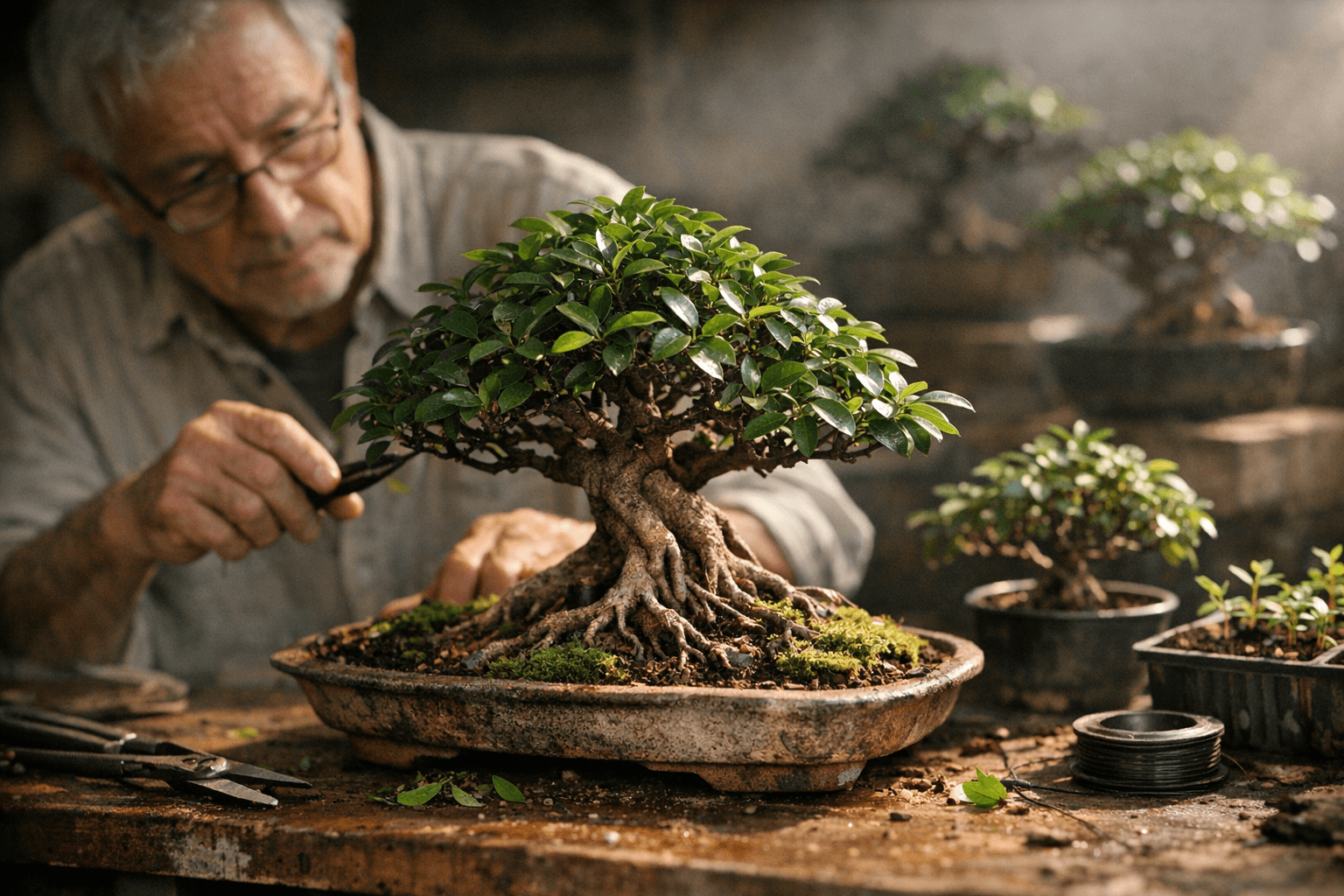
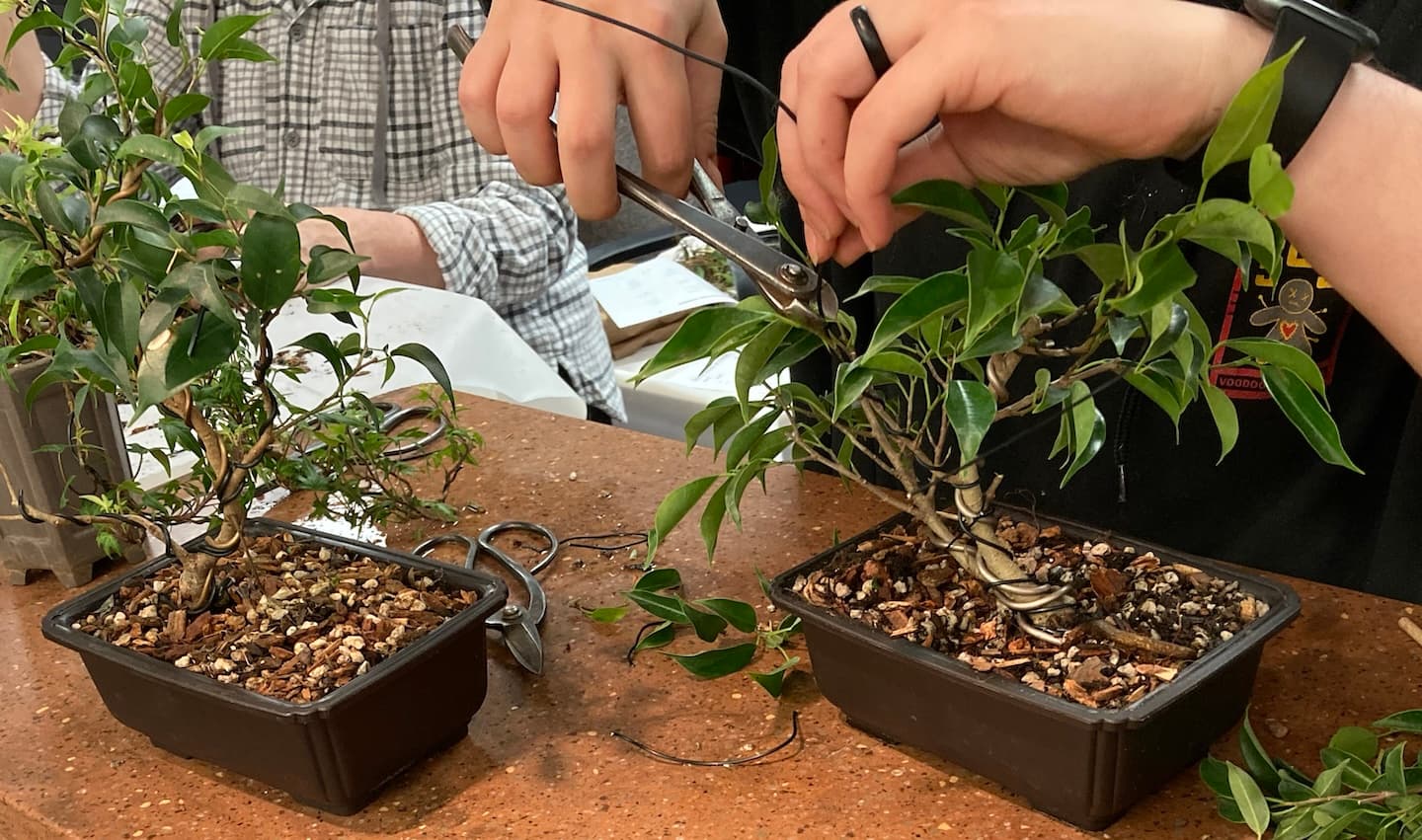
Pruning cadence is equally specific. "Regular pruning shapes the canopy, encourages new growth, and keeps bonsai trees compact and healthy," and significant pruning is done during active growth. Bonsaimirai advises heavy pruning spring through early fall with light touch-ups year-round; Bonsaiempire reports monthly pruning during spring to fall for maintenance. For structural work, wiring is effective but "avoid over-tightening to prevent damage."
Watch roots as a practical indicator. A Reddit r/Bonsai beginner reported owning a tree about 2 years and then seeing "really fast growth" and roots coming out of the tray, a common cue that repotting or a root prune is needed. Also account for safety: Bonsaimirai notes Ficus sap contains latex that can be mildly toxic if ingested, so keep plants away from children and pets.
Expect wide variance: Arborcraftaz emphasizes that "Ficus and some tropical species start growing faster, while pine and juniper require more years" to develop classic bonsai traits. Pick your starting material to match your timeline, use controlled grow-outs or root work to push vigor when you want size, and rely on scheduled repotting and seasonal pruning to slow or refine growth for long-term refinement.
Know something we missed? Have a correction or additional information?
Submit a Tip