FIFA World Cup 2026 expands to 48 teams across North America
The 2026 World Cup became FIFA’s biggest yet, with 48 teams, 104 matches and three hosts across North America. A record 1,248 players were named to final squads.
The 2026 FIFA World Cup brought 48 teams to Canada, Mexico and the United States for 104 matches from 11 June to 19 July, making it the first edition with three host countries and the largest field in the tournament’s history.
For Americans who do not follow soccer closely, the basic format is straightforward. Teams were divided into groups and played every other team in their group once, with three points awarded for a win and one for a draw. That group stage set up the stakes: finish well enough and a team advanced into the knockout rounds, where every loss ended the run. FIFA said the expanded 48-team structure added an additional knockout round, giving more nations a path into the later stages.
The scale marks a sharp contrast with the tournament’s roots. FIFA’s historical archive shows the first World Cup was held in Uruguay in 1930 and featured just 13 teams. The 2026 tournament was the 23rd edition, a sign of how far the event has grown from a compact global invitational into a mass sporting spectacle spread across North America.
The roster size underscored that expansion. FIFA confirmed on 2 June 2026 that final squad lists included a record 1,248 players representing 48 nations. The field included the three co-hosts, Canada, Mexico and the United States, along with teams from AFC, CAF, Concacaf, CONMEBOL, OFC and UEFA, reflecting the tournament’s reach across every major confederation.
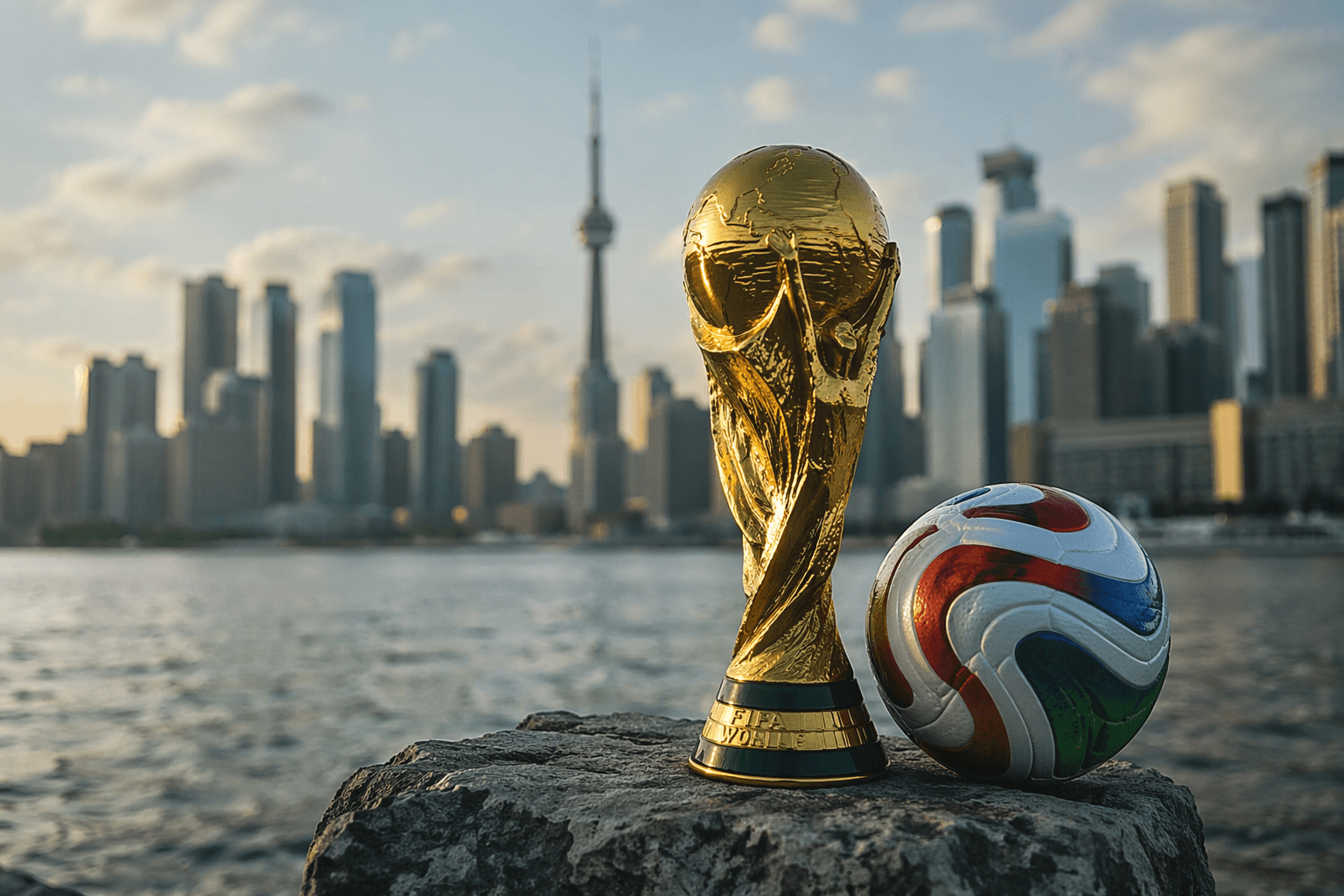
That breadth also helped explain why the World Cup has become a civic event as much as a sporting one. With matches spread across three countries and 104 games on the schedule, host cities turned into temporary hubs for traveling supporters, visiting teams and television audiences far beyond the soccer core. FIFA’s new format created more entry points for casual viewers, more knockout drama and a longer road to the final than the old 32-team model.
The result was a tournament built for scale: more nations, more players, more matches and more chances for first-time viewers to follow along from the opening group games to the elimination rounds.
This article was produced by Prism’s automated news system from verified source data, official records, and press releases, then run through automated quality and moderation checks before publishing. The system is built and supervised by the people who set the standards it runs under. Read our full AI policy.
Did this article answer your question?
.jpg&w=1920&q=75)