FIFA’s dynamic World Cup ticket pricing sparks fan backlash worldwide
Argentine supporters are facing airline-style World Cup pricing, where a $60 ticket can climb to $6,730 and loyalty may no longer guarantee access.
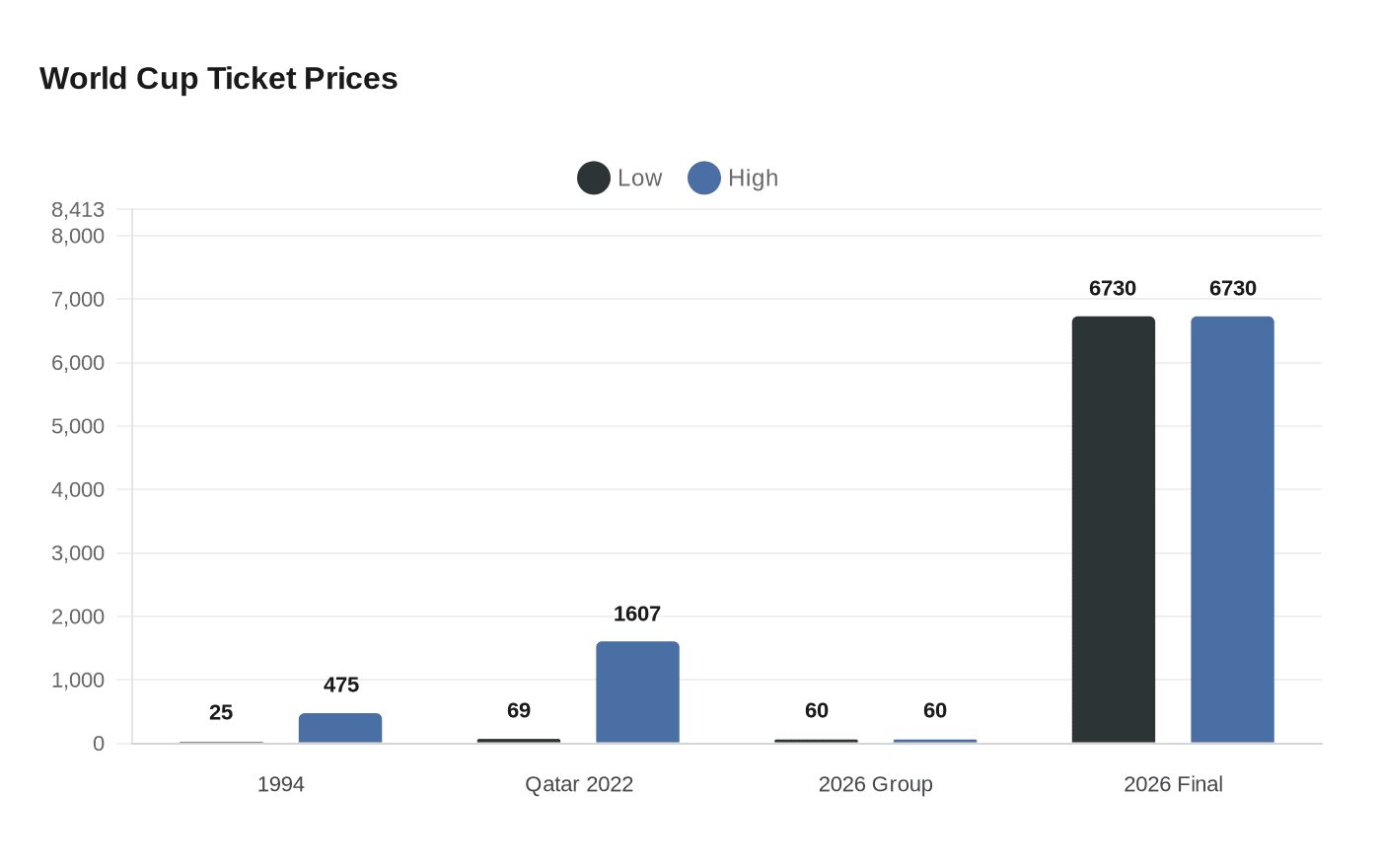
FIFA’s first dynamic-pricing World Cup has already turned the road to 2026 into an affordability test, with Argentine supporters among the fans bracing for tickets that can move like airfare. The opening price for group-stage matches was set at $60, but seats for the final were announced at as much as $6,730, a leap that has sharpened fears that a global tournament is drifting out of reach for ordinary fans.
The scale of the change is stark. At the 1994 World Cup in the United States, tickets ranged from $25 to $475. For Qatar in 2022, the announced range was about $69 to $1,607. FIFA confirmed in September 2025 that the 2026 tournament would be the first World Cup to use dynamic pricing, then capped purchases at four tickets per person per match and 40 tickets per person overall. The tournament is set to run from June 11 to July 19, 2026, across 16 host cities in the United States, Mexico and Canada, with the field expanding from 32 teams to 48 and the schedule stretching from 64 matches to 104.
Heimo Schirgi, FIFA’s World Cup 2026 chief operating officer, told fans to “get your tickets early” because prices could go up or down depending on demand. That logic has forced supporters to think less like traveling fans and more like shoppers trying to beat a surge charge. For Argentine followers, that has meant planning around uncertainty, hunting for cheaper early windows, and accepting that the lowest prices may disappear long before the tournament begins.
FIFA later moved to soften the backlash by creating a $60 Supporter Entry Tier for every game, distributed through national federations to loyal supporters who had attended previous matches at home and away. But the concession did not end the dispute. Football Supporters Europe said the revisions did not go far enough and criticized FIFA for failing to set a pricing structure for disabled fans and companion tickets.
The pricing model also reflects FIFA’s financial priorities. Schirgi said the organization wanted to balance revenue optimization with stadium attendance and funding for its 211 member associations. Yet the Club World Cup showed how sharply the system can swing: some semifinal tickets reportedly dropped from $473.90 to $13.40. For fans already being asked to stretch budgets, borrow, and commit early, the message is clear: in FIFA’s new market, loyalty is no guarantee and the cheapest seat may be the one that vanishes first.
This article was produced by Prism’s automated news system from verified source data, official records, and press releases, then run through automated quality and moderation checks before publishing. The system is built and supervised by the people who set the standards it runs under. Read our full AI policy.
Did this article answer your question?