Fifth Circuit Strikes Down 158-Year-Old Federal Ban on Home Distilling
A three-judge Fifth Circuit panel ruled April 10, 2026 that a Reconstruction-era ban on home distilling is unconstitutional, saying the law exceeded Congress’s taxing power.
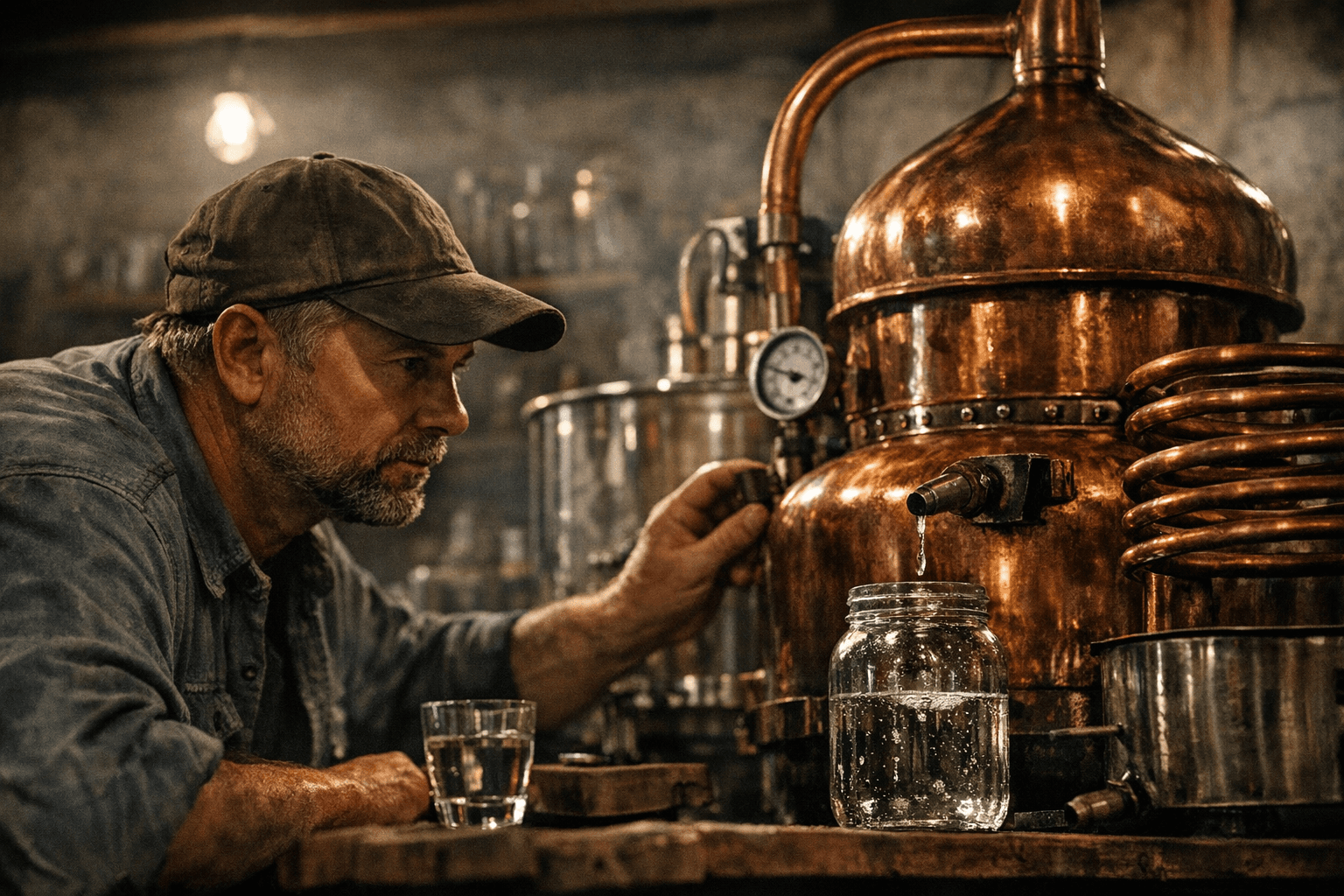
A federal appeals panel found that an almost 158-year-old federal prohibition on home distilling exceeded congressional authority and therefore cannot be enforced as written. In McNutt v. U.S. Department of Justice, No. 24-10760, the Fifth Circuit, in an opinion authored by Circuit Judge Edith Hollan Jones and filed April 10, 2026, held that the Act of July 20, 1868 and its modern codifications went beyond a proper exercise of the taxation power and the Necessary and Proper Clause.
Judge Jones’s opinion faulted the federal scheme for doing more than collect revenue: by outlawing private distillation outright rather than permitting regulated, taxable activity, the statute “suppressed tax revenue,” the court said, and therefore was not a necessary or proper means of levying taxes. The panel, which included Judge Graves and District Judge Rodriguez sitting by designation, affirmed in part and reversed in part the July 10, 2024 judgment of U.S. District Judge Mark T. Pittman in Hobby Distillers Association v. Alcohol and Tobacco Tax and Trade Bureau, No. 4:23-cv-01221.
The litigation began when the Hobby Distillers Association and four individual hobbyists, including plaintiff Scott McNutt, Rick Morris, Thomas O. Cowdrey III, and John Prince III, sued in the Northern District of Texas in December 2023. The HDA listed roughly 1,300 members as of 2023 in its filings. Judge Pittman declared 26 U.S.C. § 5601(a)(6) and 26 U.S.C. § 5178(a)(1)(B) unconstitutional on July 10, 2024 and stayed the injunction for 14 days to allow emergency appeal; oral argument before the Fifth Circuit took place August 4, 2025.
The statutes and regulatory provisions at issue include the location rules for distilled spirits plants in 26 U.S.C. § 5178, the criminal penalties in 26 U.S.C. § 5601, and the implementing regulation long codified at 27 C.F.R. § 19.51, which reads that a person may not produce distilled spirits at home for personal use. Under the pre-ruling federal scheme, violations tied to those provisions carried fines up to $10,000 and up to five years’ imprisonment per offense. The Fifth Circuit opinion also noted that McNutt previously distilled under a fuel-producer permit in a shed 261 feet from his house and that TTB continues to issue fuel-alcohol permits under 26 U.S.C. § 5181 and implementing rules such as 27 C.F.R. § 19.673.
Plaintiffs’ counsel hailed the decision. Andrew Grossman, who argued the appeal for the Hobby Distillers Association, called the ruling “an important victory for individual liberty” and said it will let hobbyists “pursue their passion to distill fine beverages in their homes.” Devin Watkins of the Competitive Enterprise Institute described the outcome as “an important decision about the limits of federal power and a victory for limited government.” Amici that filed briefs for the hobbyists included the Competitive Enterprise Institute, the Cato Institute, and the Liberty Justice Center. The Department of Justice and the TTB had not supplied an immediate public comment after the April 10 opinion.
The practical effect is circumscribed: state laws on distilling remain in force and the decision controls in the Fifth Circuit states, including Texas, Louisiana, and Mississippi, but federal enforcement of the specific statutes as applied has been curtailed unless the government secures rehearing en banc or Supreme Court review. The Congressional Research Service product LSB11305 catalogs legislative options, noting Congress could create a taxed-and-permitted model akin to the 1978 federal homebrew exemption for beer and wine. The near-term choice now falls to DOJ and Congress: either seek higher-court review to restore the 1868-based restrictions or craft an explicit statutory framework to permit and tax limited personal distillation while addressing safety and public-health risks.
This article was produced by Prism’s automated news system from verified source data, official records, and press releases, then run through automated quality and moderation checks before publishing. The system is built and supervised by the people who set the standards it runs under. Read our full AI policy.
Did this article answer your question?