Final phase of Myanmar junta election opens amid ongoing conflict
Polling stations opened in the third phase of Myanmar's junta-run election, intensifying concerns about public health, access to care and equity for displaced communities.
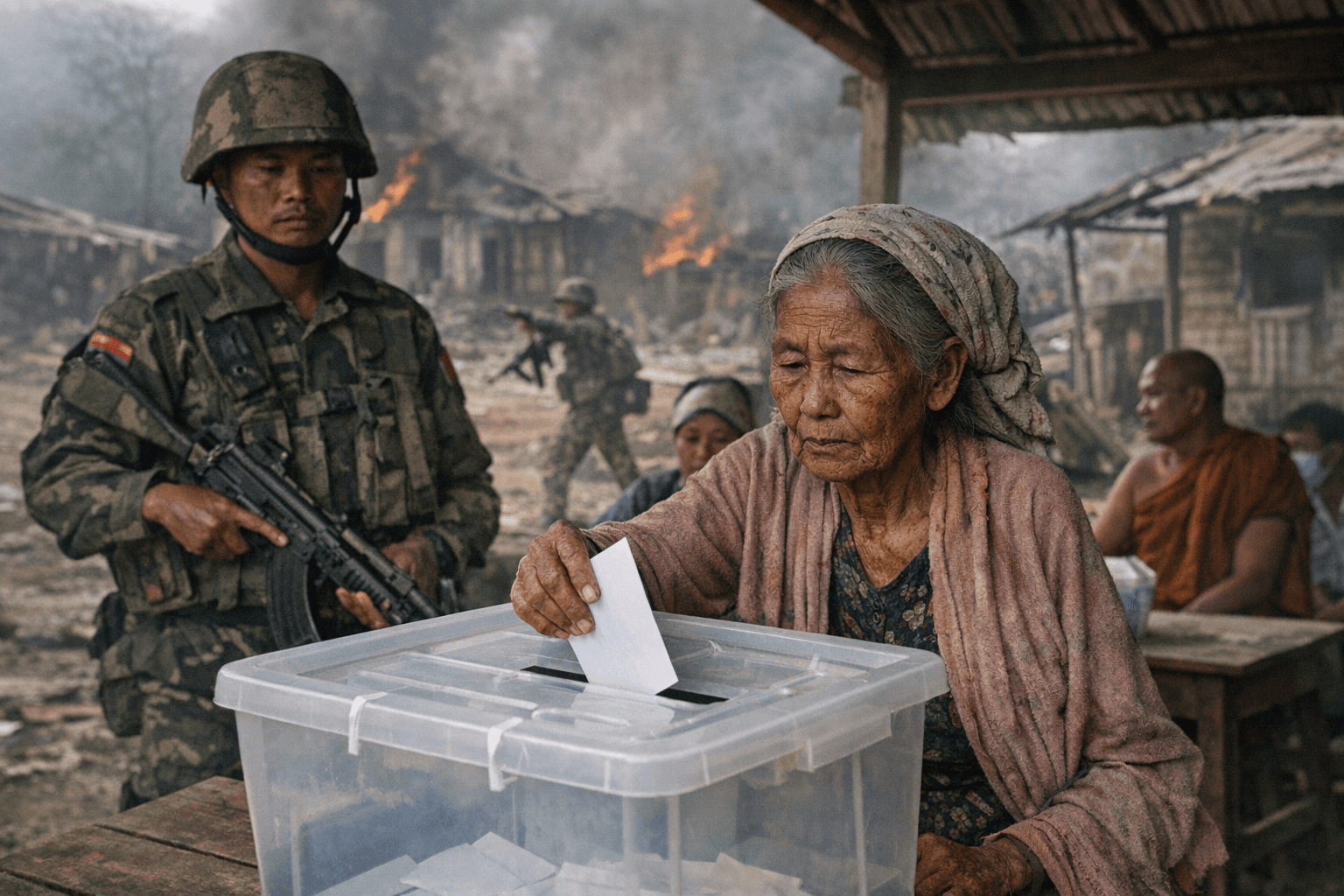
Polling stations opened across major townships in Myanmar today as the military junta moved forward with the third and final phase of a staggered general election that began on Dec. 28 and continued on Jan. 11. The vote is taking place amid persistent armed clashes, curfews and restrictions that have already reshaped who can participate and where voting is feasible.
The election, administered by authorities installed after the 2021 coup, has unfolded in a country where public services and humanitarian access remain severely constrained. In many areas, clinics and community health posts have closed or operate intermittently because of insecurity and staff shortages. That disruption has implications beyond the ballot box: routine immunizations, maternal and neonatal care, and treatment for chronic conditions have been delayed or interrupted for thousands of people who lack safe access to health facilities.
Internally displaced persons and communities in contested border areas face layered barriers. Large numbers of people who fled fighting in recent years live in camps or informal settlements with limited water, sanitation and health services. Those same populations often lack reliable access to polling centers, either because centers are not established near camps or because movement is restricted by security conditions. The result is a deepening of health inequities along lines of ethnicity, geography and economic status.
Health workers have been caught between professional obligations and the dangers of operating in conflict zones. Many clinics run by small NGOs and local providers rely on cross-line deliveries of medical supplies, which are complicated by checkpoint controls and shifting front lines. Where humanitarian organizations have managed to maintain operations, service delivery is frequently rationed, and outreach programs that address mental health, sexual and reproductive health, and noncommunicable diseases have been curtailed.
The public health consequences of conducting elections under such conditions extend to emergency preparedness and disease surveillance. Seasonal respiratory illnesses and vector-borne diseases place additional strain on fragile systems. Interruptions to vaccine campaigns and antenatal services risk worsening long-term outcomes for children and pregnant women, while the disruption of routine health data collection undermines the ability of authorities and aid groups to respond to outbreaks.
Policy choices surrounding the election will have direct effects on health and social equity. Donor governments and international agencies face difficult tradeoffs in calibrating pressure on the junta while preserving humanitarian space. Where sanctions restrict state capacity to deliver services, targeted measures and robust humanitarian exemptions are needed to prevent further deterioration of care. Equally, any settlement that sidelines ethnic health authorities or local governance structures risks entrenching disparities that the country has long struggled to address.
For communities on the front lines of the vote, the election is less a pathway to immediate stability than another chapter in a broader contest over control of territory and services. Restoring access to health care, protecting the safety of medical personnel and ensuring equitable delivery of basic services will require political steps to reduce violence, meaningful engagement with local health actors and sustained humanitarian commitment. Without those changes, the outcome of the ballot is unlikely to translate into measurable improvements in the health and well-being of the most vulnerable populations.
This article was produced by Prism’s automated news system from verified source data, official records, and press releases, then run through automated quality and moderation checks before publishing. The system is built and supervised by the people who set the standards it runs under. Read our full AI policy.
Did this article answer your question?