First-past-the-post helps Reform surge in English local elections
Reform turned 27% support into 1,454 councillors and 13 councils, while Labour lost 1,496 seats in a stark first-past-the-post distortion.

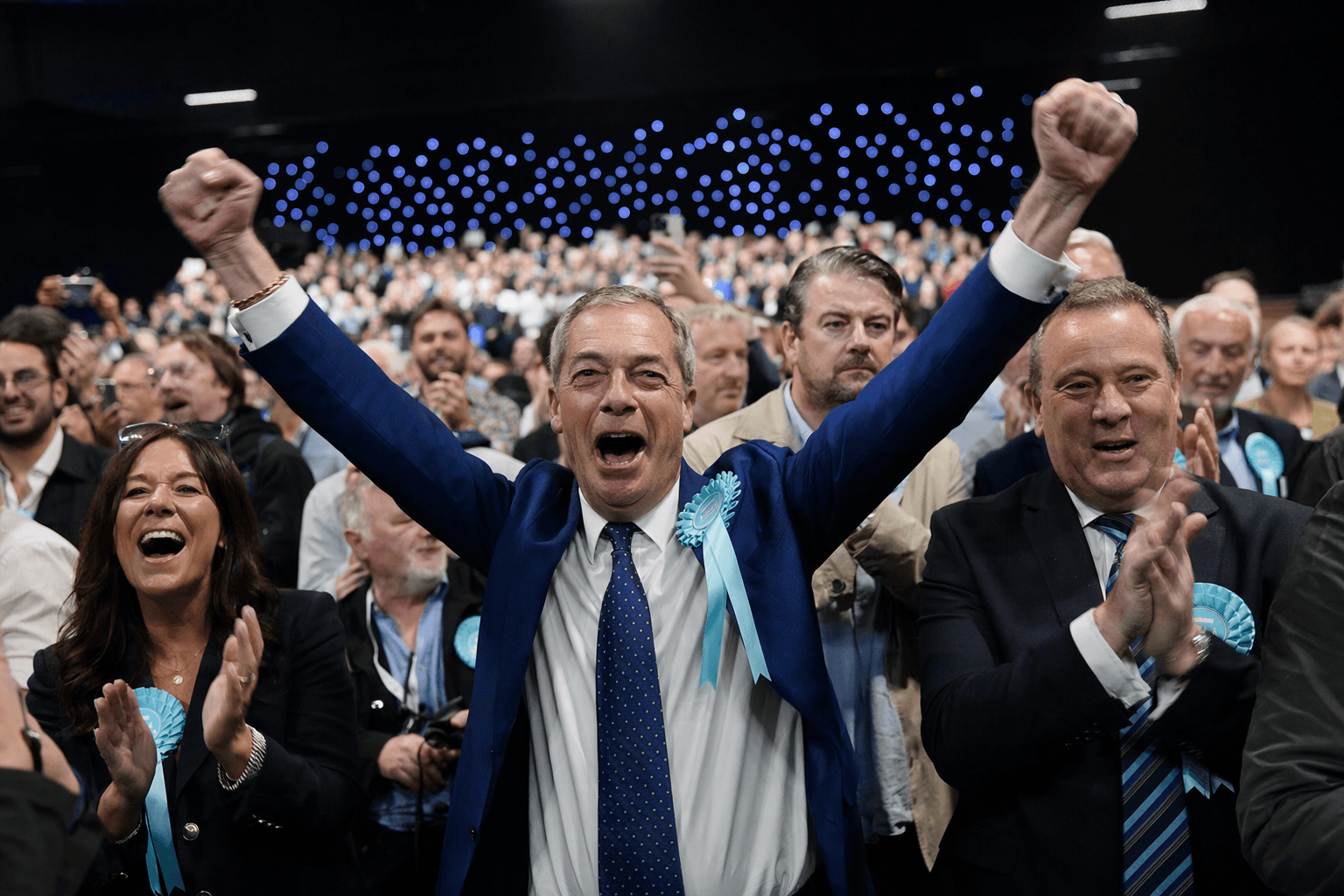
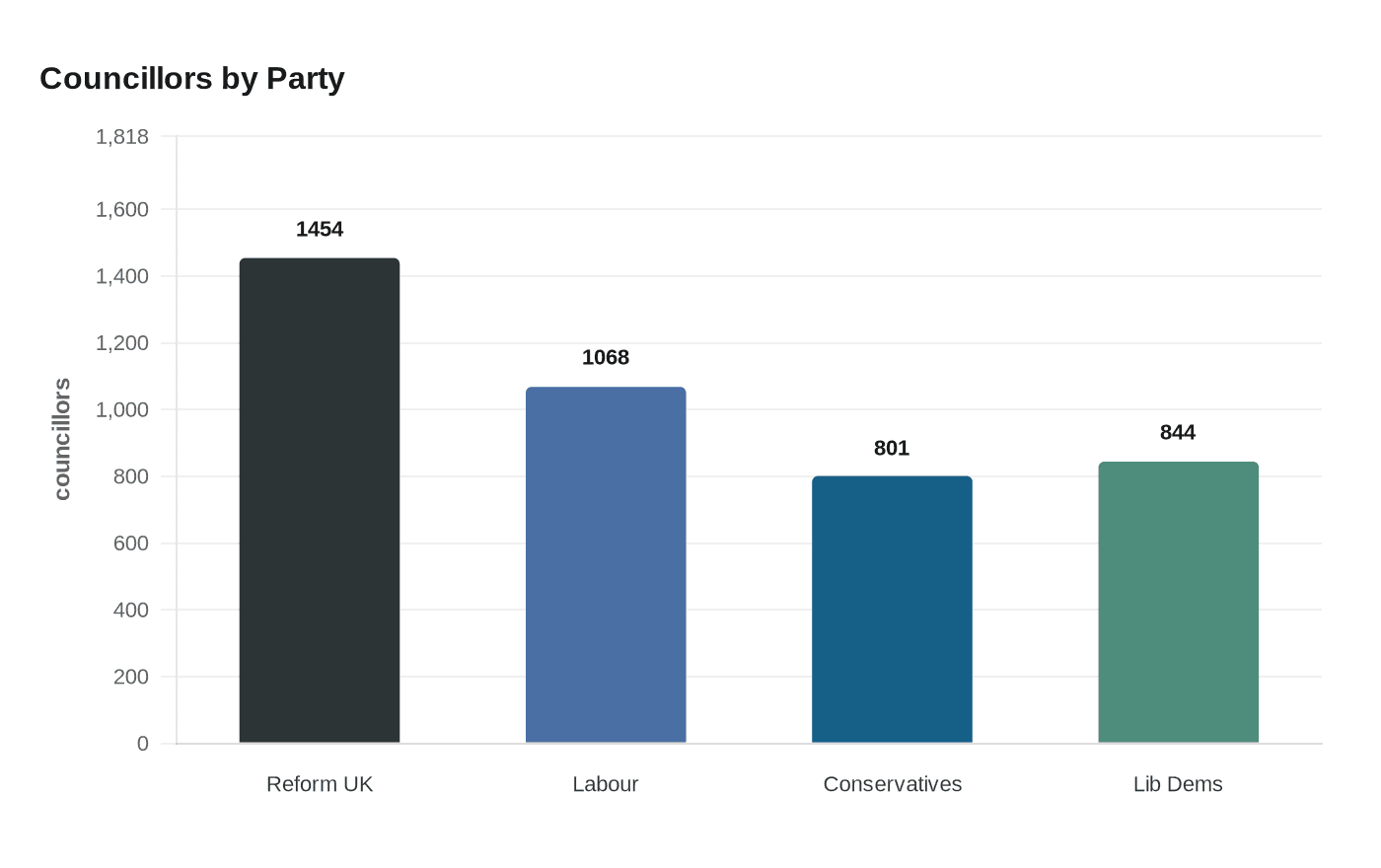
Reform UK’s advance in the English local elections exposed how first-past-the-post can magnify a scattered vote into a sweeping result. Across 136 English local authorities and 5,066 council seats contested on 7 May 2026, Reform emerged with 1,454 councillors and control of 13 councils, while Labour fell to 1,068 councillors after losing 1,496 seats and control of more than 30 councils.
The scale of the shift was uneven and politically punishing. Reform gained more than 1,300 council seats overall, mostly at Labour’s expense, and the Conservatives were also hit hard, ending on 801 councillors after losing 563. The Liberal Democrats reached 844 councillors, up 152, but the headline story was the speed with which Reform converted a national protest vote into local power. Labour had been defending 2,557 seats, far more than any other party, compared with 1,362 for the Conservatives and 684 for the Liberal Democrats, leaving Sir Keir Starmer’s party particularly exposed when the votes broke against it.
The distortion is part of the system. Sky’s National Equivalent Vote estimate put Reform on 27 percent and the Conservatives on 20 percent, showing that no party approached majority support even as Reform took the biggest prize count. In 2025, the same electoral mechanics had already produced eye-catching results: Reform won 677 seats, the largest number of any party, and electoral analysts Colin Rallings and Michael Thrasher said 75 candidates were elected with less than 30 percent of the vote. Rallings and Thrasher have argued that Reform and the Liberal Democrats disproportionately benefited from first-past-the-post in those contests, a warning that looked even more relevant after this year’s results.
That warning carries weight because the people assessing Britain’s local elections have spent decades mapping how votes are translated into seats. The Elections Centre, established by Rallings and Thrasher at the University of Exeter in 1985, has become the central reference point for local-election data and analysis in Britain. This year’s outcome will intensify the argument that Britain’s electoral rules no longer reflect voter intent cleanly, especially when fragmented support rewards the most efficient vote spread rather than the broadest public backing. Nigel Farage called the result a big historic night for Reform, while Starmer said he would not quit. The numbers, however, suggest the deeper issue is not just party leadership, but the democratic distortion built into the voting system itself.
This article was produced by Prism’s automated news system from verified source data, official records, and press releases, then run through automated quality and moderation checks before publishing. The system is built and supervised by the people who set the standards it runs under. Read our full AI policy.
Did this article answer your question?

