First Recorded Coyote Swims to Alcatraz, Biologists Call Unprecedented
A coyote paddled ashore on Alcatraz Island on Jan. 18, the first recorded swim to the former prison, prompting fresh questions about wildlife movement across the Bay.

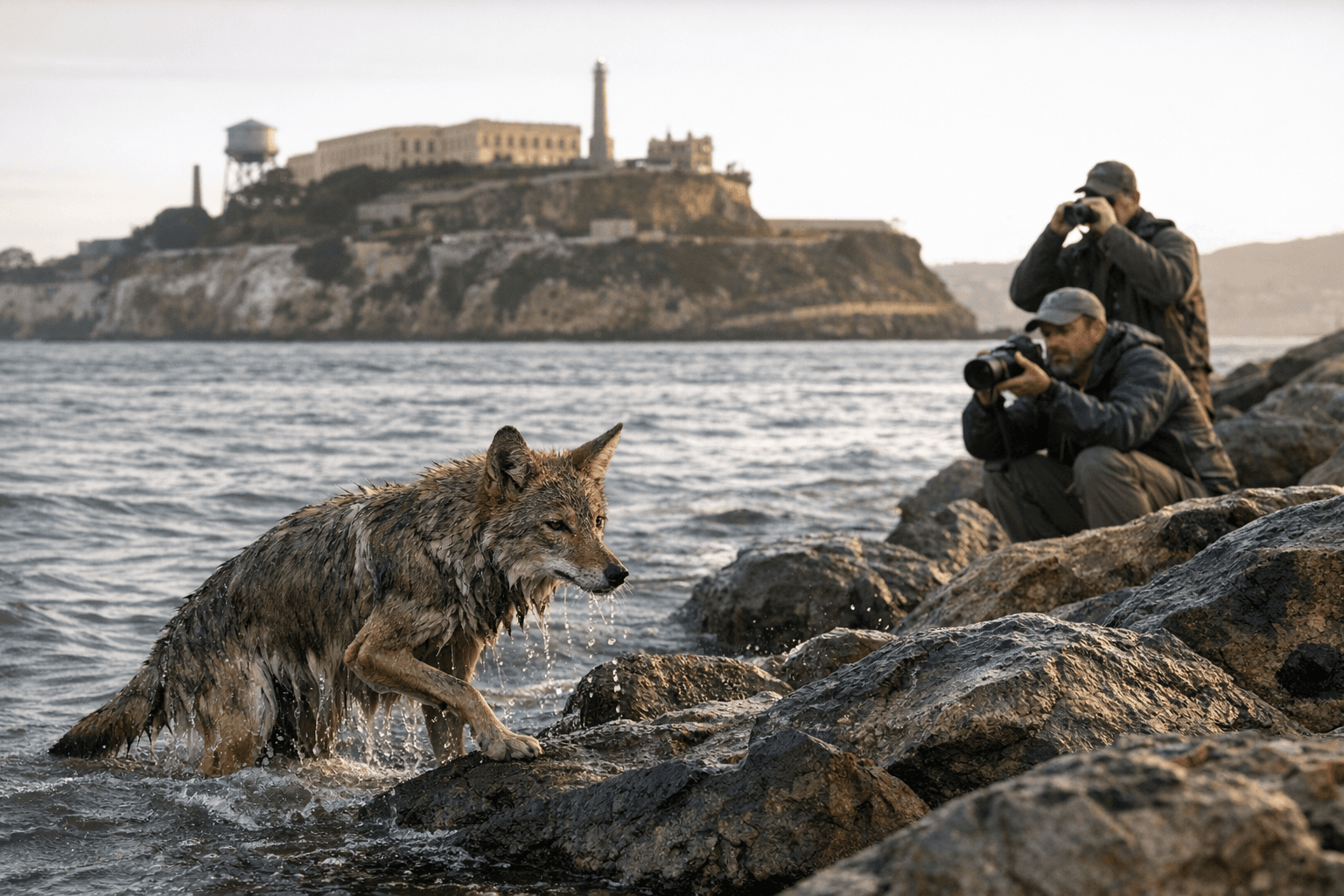
Park staff and visitors filmed a coyote paddling ashore on Alcatraz Island on Jan. 18, a sighting Golden Gate National Recreation Area officials confirmed as the first recorded instance of a coyote arriving on the former prison island by swimming. The animal appeared exhausted and shivering in video that an Alcatraz City Cruises guest relations employee received via AirDrop from a visitor after it made landfall near the Agave Trail and slipped into island cover.
Biologists called the arrival unprecedented. Experts who reviewed the footage and the scene said the animal may have been dispersing to find territory and could have come from San Francisco, Marin, or nearby Angel Island. They also flagged the possibility that unusual currents after recent storms carried the coyote across the water. At the time officials reported the sighting they had not yet located the animal, and its whereabouts remained unknown.
The encounter matters locally because Alcatraz is managed primarily as a cultural and natural resource within the Golden Gate National Recreation Area and attracts thousands of day visitors and ferry passengers. With few natural predators on the island now, biologists noted it could offer food resources for a transient coyote. The appearance therefore raises practical questions for park operations: how to monitor a new, potentially mobile predator on a small island, whether additional signage or visitor guidance is needed, and how to prioritize staff time and surveillance resources.
Researchers and residents have long tracked the Bay Area’s adaptive urban wildlife, but a swim to Alcatraz underscores how animals are navigating the fragmented landscapes and waterways around the city. The sighting adds to scientific curiosity about cross-bay movements and dispersal corridors, and it may prompt agencies to expand remote monitoring or coordinate surveys between mainland and island jurisdictions. For local managers, answers will come from follow-up field checks, camera review, and interagency sharing of observations.
There are modest policy and budget implications. Monitoring a single event requires limited resources, but repeated crossings would shift priorities for biologists and could affect management of nesting birds or other island species that have no established defenses against terrestrial predators. For residents and visitors, the episode is a reminder that urban wildlife can appear in unexpected places and that park staff balance public access with stewardship of natural systems.
What comes next is straightforward: biologists will continue to search the island and review visitor footage while agencies consider whether additional monitoring or public guidance is warranted. For San Franciscans, the coyote’s swim is both a curiosity and an early indicator of evolving wildlife patterns in the Bay that local agencies will need to track.
Sources:
Know something we missed? Have a correction or additional information?
Submit a Tip