Five Must-See Orange County Hikes and Outdoor Destinations
Five signature Orange County outdoor destinations — Minnewaska (and Sam’s Point), Schunnemunk, Storm King, Black Rock Forest, and Sam’s Point — offer distinct day‑hike experiences; verify trail routes, parking, and permits before you go.
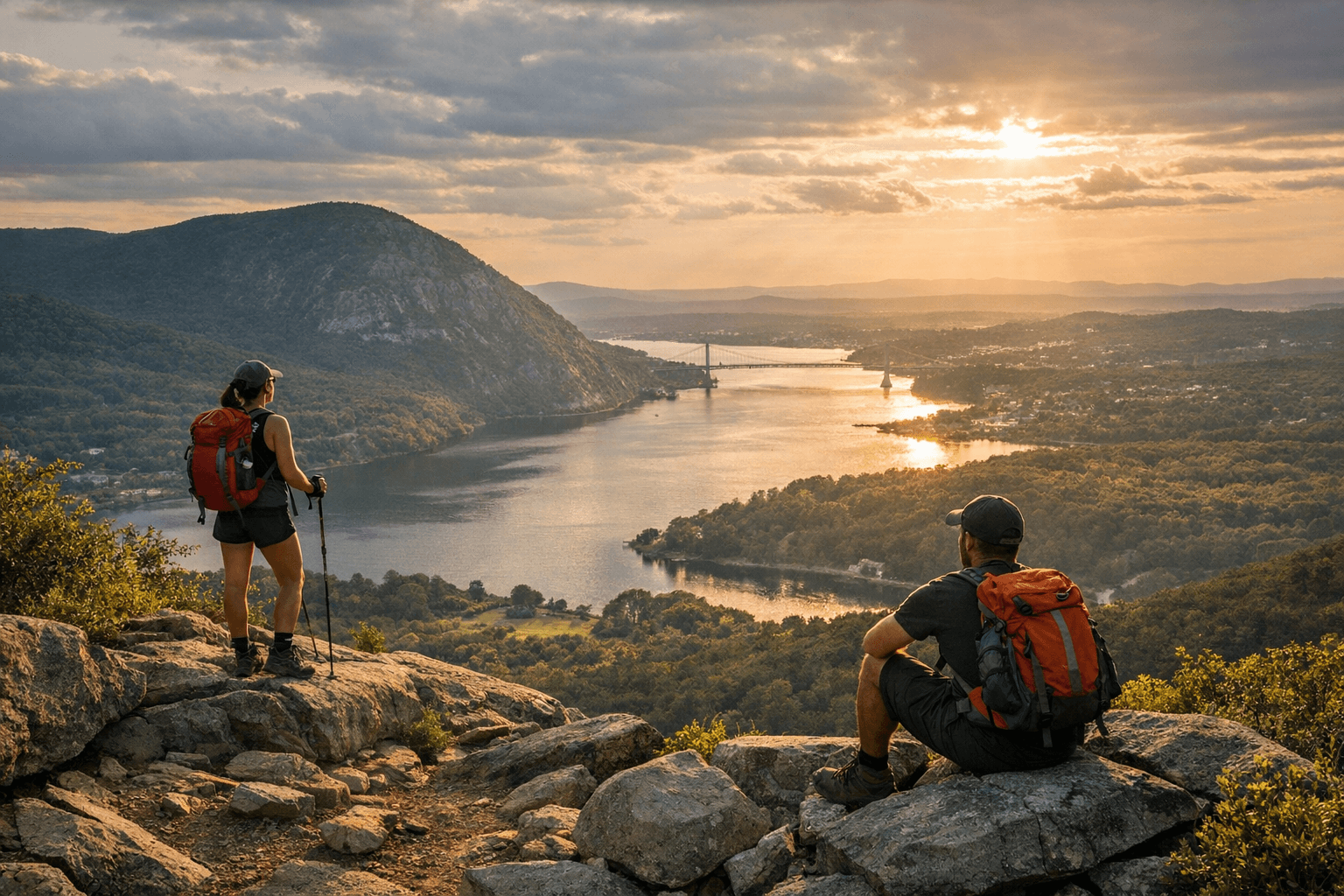
Orange County’s landscape concentrates a surprising variety of day‑hike experiences: state park cliffs and glacial lakes, a military‑scale ridge, outdoor sculpture amid meadows, a managed forest research area, and the distinct plateau known as Sam’s Point. The five destinations named for this guide are Minnewaska State Park Preserve (including Sam’s Point), Schunnemunk State Park, Storm King Art Center (outdoor sculpture and trails), Black Rock Forest (Cornwall), and Sam’s Point; official trail, parking, permit, and seasonal details should be confirmed with the land managers listed below.
Minnewaska State Park Preserve (including Sam’s Point) Minnewaska is one of Orange County’s principal state preserves and the brief roster for this story explicitly groups Sam’s Point within Minnewaska while also listing Sam’s Point separately—an administrative detail to confirm with New York State Parks. The research material does not include official trail names, mileages, or parking coordinates for Minnewaska; those operational specifics must be obtained from park management. Use the Minnewaska–Sam’s Point pairing as your planning anchor, and verify whether Sam’s Point features (for example, seasonal boardwalks or the often‑noted ice‑cave areas) have separate rules or closures. As a planning model, the Big Outside approach to presenting multiple distance options and timing (start early for wildlife and be prepared to shorten routes) is useful when you confirm exact Minnewaska routes.
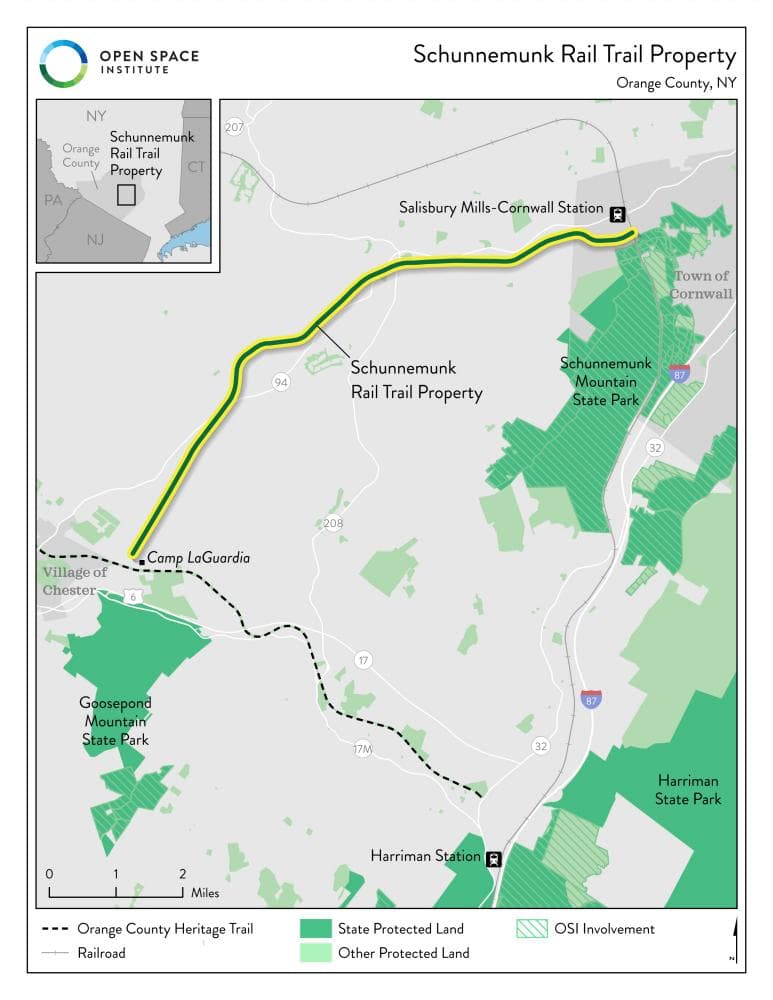
Schunnemunk State Park Schunnemunk State Park appears on the five‑site list as the county’s major ridge destination; the original brief names the park but provides no route names, vertical gains, or trailhead details. Before setting out, confirm the park’s recommended day‑hike loops, trailhead addresses, parking capacity, and any vehicle fees. Expect to prepare for season‑specific conditions—spring mud and lingering snow are cited in a firsthand trip report from another region as conditions that required microspikes and traction devices, a useful gear reminder until local winter‑to‑spring reports are checked. If you hike Schunnemunk early in the day, follow the Big Outside advice to “start early morning, before most hikers, for the best chances of seeing wildlife.”
Storm King Art Center (outdoor sculpture and trails) Storm King is explicitly described in the brief as an outdoor sculpture site with trails; its combination of large‑scale artworks and walkable meadows makes practical logistics—parking, photography and drone policies, accessibility, and trail routing—particularly important to confirm with the center’s administration. The research does not provide sculpture locations, trail distances, or any visitor rules; treat photography, commercial filming, and drone restrictions as likely to be formally regulated and check Storm King’s policy before pressing a shutter or launching gear. For trip planning, emulate the structured options recommended in longer‑form trail guides: identify a short loop for a 60–90 minute visit and a longer walk for a half‑day, and confirm whether timed entries or parking reservations apply during peak weekends.
Black Rock Forest (Cornwall) The original list truncates the Black Rock Forest entry as “Black Rock Forest (Cornwal…,” so confirm the full site name and jurisdictional details—Black Rock Forest is commonly associated with Cornwall, but clarifying the managing organization and contact is essential. Black Rock Forest functions as both a conservation and research area; before visiting, obtain the forest’s recommended day‑hike routes, trailheads, permitted uses, and vehicle guidance. The research brief’s recommended reporting steps include contacting the Black Rock Forest managing body for official maps and quotes; use that same process to confirm whether on‑site educational programming or seasonal access restrictions will affect a day visit.
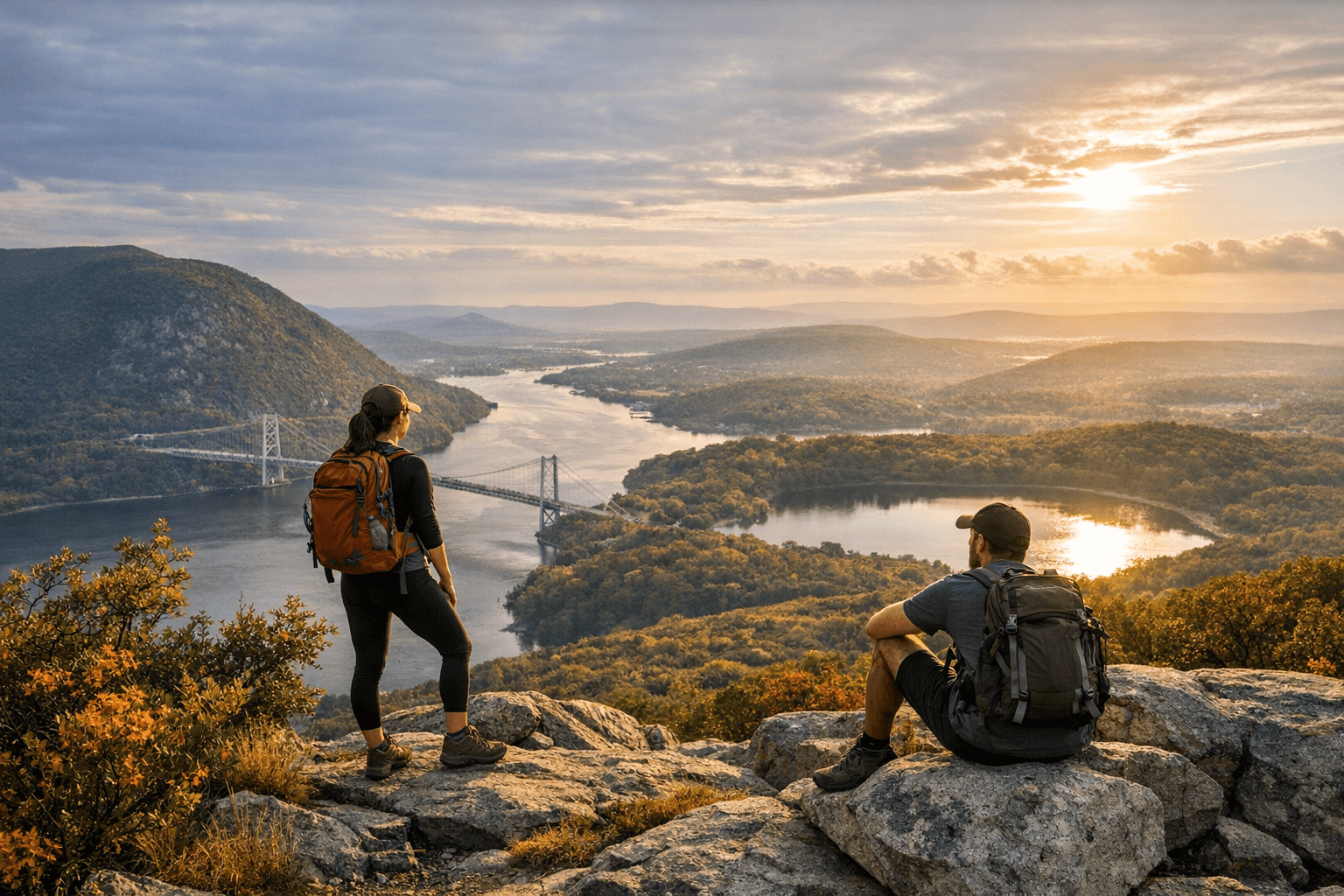
Sam’s Point (listed separately) Although Sam’s Point appears in the primary list and is also called out as part of Minnewaska, treat it as a distinct destination in planning until park authorities clarify whether Sam’s Point operates under separate rules or fees. The research explicitly flags Sam’s Point as requiring confirmation for seasonal features—examples identified for follow‑up include whether ice caves or boardwalks are open at given times of year and whether reservations or vehicle fees apply. Make those confirmations part of trip prep; in the absence of official details in the supplied material, rely on park communications for final route recommendations and safety advisories.
- Gear and seasonal caution: A firsthand hiking report on Handstandsaroundtheworld described navigating “quite a bit of mud” in April and using microspikes for “lingering snow and ice,” a useful preparation cue for early‑season outings in any northeastern park.
- Wildlife and timing: TheBigOutside recommends to “hike in daylight as a bear‑safety precaution, but start early morning, before most hikers, for the best chances of seeing wildlife.” Use that timing guidance while confirming actual wildlife advisories for each Orange County site.
- Permit and fee checklist: The blog report noted that a nearby area required a permit—“Part of the trail also passes through the Bergen Peak State Wildlife Area (for which a permit is now required).” Treat permit requirements as site‑specific until confirmed; don’t assume free public access for every trail.
- Maps and contact points: The research emphasizes the need to obtain official trail maps, GPS coordinates for trailheads, and park contact numbers—these are the items to request from New York State Parks, Storm King administration, and the Black Rock Forest managing organization.
Practical planning and safety guidance (what’s in the research and what to confirm)
What this guide leaves to confirm (essential reporter and visitor follow‑ups) The supplied material names the five Orange County destinations and offers models for presenting routes and seasonal tips, but it lacks the nuts‑and‑bolts details readers need. Before publishing or before you hike, secure the following for each site: official trail names, mileages and vertical gain, trailhead addresses/GPS coordinates, parking rules and fees, permit or reservation requirements, current seasonal conditions and closures, accessibility info, and any photography/drone policies. The research’s suggested reporting checklist identifies the specific questions to put to New York State Parks (for Minnewaska and Sam’s Point), the Storm King Art Center administration, and Black Rock Forest contacts.
Conclusion These five destinations—Minnewaska State Park Preserve (including Sam’s Point), Schunnemunk State Park, Storm King Art Center, Black Rock Forest (Cornwall), and Sam’s Point—represent a cross‑section of Orange County outdoor offerings: cliffs and plateaus, a long ridge, sculpture amid open landscape, and a managed forest research area. The source material establishes the sites by name and provides useful planning templates (distance options, seasonal gear, permit checks), but it does not supply route mileages, parking coordinates, or permit fees; obtaining those specifics from the managing agencies is the essential next step to make each day hike safe, legal, and enjoyable. When those confirmations are in hand, assemble the recommended short and half‑day routes, note peak‑season arrival times, and follow the local rules to protect both the landscape and the people who steward it.
Sources:
Know something we missed? Have a correction or additional information?
Submit a Tip